, to see if you have full access to this publication.
Monograph No access
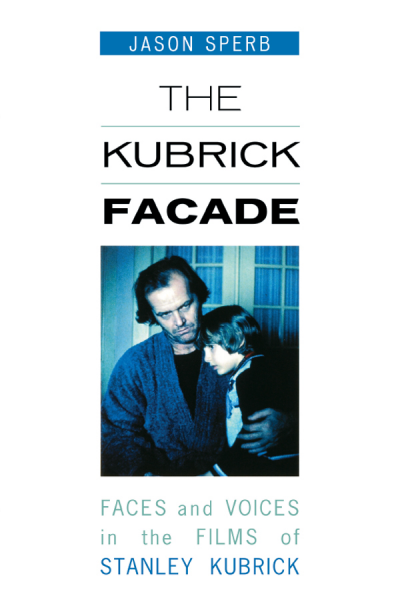
The Kubrick Facade
Faces and Voices in the Films of Stanley Kubrick
Authors:
Publisher:
2006
Summary
Many of Stanley Kubrick's films are often interpreted as cold and ambiguous. Whether viewing Barry Lyndon, 2001, The Shining, or Eyes Wide Shut, there is a sense in which these films resist their own audiences, creating a distance from them. Though many note the coldness of Kubrick's films, a smaller number attempt to explore exactly how his body of work elicits this particular reaction. Fewer still attempt to articulate what it might mean to "feel" Stanley Kubrick's films. In The Kubrick Facade, Jason Sperb examines the narrative ambiguity of the director's films—from the voice-over narration in early works, including the once forgotten Fear and Desire—to the blank faces of characters in his later ones. In doing so, Sperb shows how both devices struggle in vain to make sense of the chaos and sterility of the cinematic surface.
All thirteen of Stanley Kubrick's feature-length films are discussed in chronological order, from the little-seen and long-neglected Fear and Desire to the posthumous release of Eyes Wide Shut. Sperb also discusses Kubrick's importance to Steven Spielberg's AI. While exploring all of Kubrick's films, the author concentrates in particular on The Killing, Dr. Strangelove, 2001, The Shining, Full Metal Jacket, and Eyes Wide Shut.
This is also the first book-length study that focuses considerable attention on Fear and Desire and its relevance to Kubrick's larger body of work. In this respect, The Kubrick Facade is one of the first truly comprehensive books on narrative in the maverick director's films. It is also the first book to integrate a discussion of AI, and the first to fully explore the importance of the consistent visual emphasis on blank, silent faces in his post-Lolita films.
Search publication
Bibliographic data
Edition
1/2006
Copyright Year
2006
ISBN-Print
978-0-8108-5855-8
ISBN-Online
978-1-4616-7307-1
Publisher
Rowman & Littlefield, Lanham
Language
English
Pages
187
Product Type
Monograph
Table of contents
ChapterPages
Table of Contents No access
Preface No access
Acknowledgments No access
1: Introduction: Experiencing Faces and Voices No access Pages 1 - 16
2: We're All Islands: Seeing and Hearing the Country of the Mind in Fear and Desire 17 No access Pages 17 - 36
3: Taking Life too Seriously: Imposing Narrative Authority from Killer's Kiss to Lolita 37 No access Pages 37 - 62
4: He'll See the Big Board: Narration and the Magic of Words in Dr. Strangelove No access Pages 63 - 76
5: I Can Feel It: Sounds, Intensities, and Subjectivities in 2001 No access Pages 77 - 98
6: A Kubrickian Look: Narrating in a Voiceless Voice-Over No access Pages 99 - 124
7: Their Eyes Were Wide Shut: Bill Harford as Failed Narrator No access Pages 125 - 134
8: Conclusion: Sensing Stanley Kubrick No access Pages 135 - 154
Filmography No access Pages 155 - 172
Selected Bibliography No access Pages 173 - 178
Index No access Pages 179 - 186
About the Author No access Pages 187 - 187
Similar publications
from the topics "Medienwissenschaft, Kommunikationsforschung"