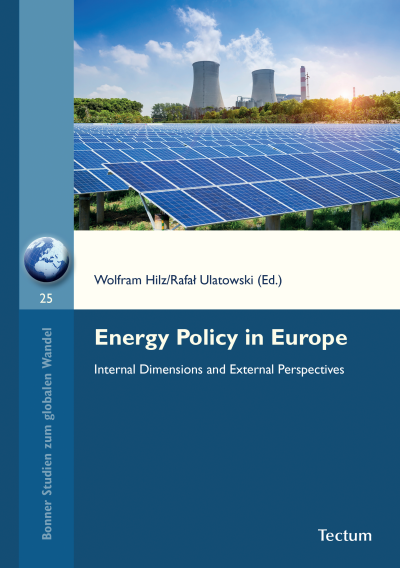
Energy Policy in Europe
Internal Dimensions and External Perspectives- Editors:
- |
- Series:
- Bonner Studien zum globalen Wandel, Volume 25
- Publisher:
- 2019
Summary
After two decades of rather moderate interest in European energy issues, the awareness for this policy area began to grow again in the early 21st century. This is due to several changes in the energy market. Firstly, the great powers increasingly compete for access to energy resources. Secondly, the second biggest exporter of energy resources, Russia, started to develop its energy diplomacy by trying to transform resource wealth into political power. After several gas crises in Ukraine, the effectiveness of Russia’s “energy weapon” became only too clear. Finally, the impact of climate change on energy policy became a current topic in international politics, since the energy sector is the largest producer of greenhouse gases.The European Union as organization and international player has significantly gained importance in the field of energy policy. At first, it concentrated on creating a single market for energy goods and services, but subsequently became an important player on the international energy market: building institutions, promoting norms and transforming into a “realist” actor interested in improving its own energy security. Today, the EU’s climate policy strongly affects its energy policy, driving a transformation from fossil fuels to renewables.The goal of this volume is to contribute to the ongoing discussion on energy in international relations by covering different aspects of energy policy in Europe. The analysis focuses on the national perspectives of three EU members – Germany, France and Poland – as well as on the perspective of the EU.Mit Beiträgen von Hubertus Bardt, Florian Engels, Wolfram Hilz, Timo Karl, Shushanik Minasyan, Maciej Ras, Rafał Ulatowski
Search publication
Bibliographic data
- Edition
- 1/2019
- Copyright Year
- 2019
- ISBN-Print
- 978-3-8288-4388-2
- ISBN-Online
- 978-3-8288-7373-5
- Publisher
- Tectum, Baden-Baden
- Series
- Bonner Studien zum globalen Wandel
- Volume
- 25
- Language
- English
- Pages
- 144
- Product Type
- Edited Book
Table of contents
- Titelei/Inhaltsverzeichnis No access Pages 1 - 6
- 1 Introduction No access Pages 7 - 12Authors: |
- Authors:
- 1 Introduction No accessAuthors:
- 2 The energy union: the Juncker model No accessAuthors:
- Authors:
- (a) Energy security, solidarity and trust No accessAuthors:
- (b) A fully integrated internal energy market No accessAuthors:
- (c) Energy efficiency No accessAuthors:
- (d) Climate action, decarbonizing the economy No accessAuthors:
- (e) Further efforts in research, innovation and competitiveness No accessAuthors:
- 4 National structural antagonisms and European implementation difficulties No accessAuthors:
- 5 Record of implementation steps: the annual reports on the energy union No accessAuthors:
- 6 Assessment and conclusion No accessAuthors:
- Authors:
- 1 History of electricity market regulation and competition No accessAuthors:
- 2 What is the energy transition? No accessAuthors:
- 3 Where are now? No accessAuthors:
- 4 Next challenges No accessAuthors:
- Authors:
- 1 Introduction No accessAuthors:
- 2 Research and status quo of the energy transition in France No accessAuthors:
- Authors:
- 3.1 Economic factors No accessAuthors:
- 3.2 Political factors No accessAuthors:
- 3.3 Systemic factors No accessAuthors:
- Authors:
- 4.1 Future price developments No accessAuthors:
- 4.2 Political changes No accessAuthors:
- 4.3 Energy transition ≠ electricity transition No accessAuthors:
- 5 Conclusion No accessAuthors:
- Authors:
- 1 Introduction No accessAuthors:
- 2 The shale revolution and the gas market No accessAuthors:
- 3 The energy policy of Poland No accessAuthors:
- 4 Shale gas development in Poland No accessAuthors:
- 5 United States–Poland gas contracts No accessAuthors:
- 6 Conclusions No accessAuthors:
- Authors:
- 1 Introduction No accessAuthors:
- 2 Multi-Level-Governance in European energy and climate politics No accessAuthors:
- 3 The negotiation process to the European 2030 climate and energy framework No accessAuthors:
- 4 The linkage to the UNFCCC process through the content of the climate framework No accessAuthors:
- 5 The linkage to the UNFCCC process through the time schedule of the climate framework No accessAuthors:
- 6 The linkage to the UNFCCC process through the governance system of the climate framework No accessAuthors:
- 7 Conclusion No accessAuthors:
- Authors:
- 1 Introduction No accessAuthors:
- 2 Asymmetry of potentials between the European Union and the Russian Federation No accessAuthors:
- 3 Political dimension of Russia-EU energy dialogue No accessAuthors:
- 4 Russia’s energy strategy and its political implications No accessAuthors:
- Authors:
- 1 Introduction No accessAuthors:
- 2 The European Southern Gas Corridor and the Caspian region No accessAuthors:
- 3 Azerbaijan as a substantial contributor to Europe’s Southern Gas Corridor? No accessAuthors:
- 4 Iran and the Southern Gas Corridor No accessAuthors:
- 5 Conclusion and recommendations No accessAuthors:
- Authors:
- 1 Introduction No accessAuthors:
- 2 EU and OPEC as actors in GEG No accessAuthors:
- 3 The market situation in the first and second decades of the 21st century No accessAuthors:
- 4 EU–OPEC cooperation No accessAuthors:
- 5 Conclusions No accessAuthors:
- Contributors No access Pages 143 - 144