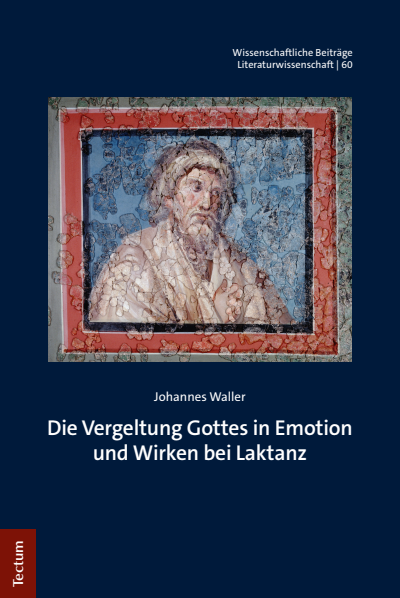
This book analyses the works of the late antique author Lactantius (c. 250–325 AD) according to the motif of divine retribution. Following a brief introduction to the vengeful God of the Old Testament, the political and religious context of the Tetrarchy in the Roman Empire during the early fourth century is outlined. The nature and workings of this God are then illustrated using specific passages from Latin texts. A philological comparison with the relevant sources and reference texts — some explicitly named, others presumed — reveals Lactantius's approach. The work concludes with an evaluation of his achievements. This book is intended for students, researchers, and teachers of classical philology, ancient history, and historical theology.
Keywords
Search publication
Bibliographic data
Edition
1/2026
Copyright Year
2026
ISBN-Print
978-3-68900-514-6
ISBN-Online
978-3-68900-515-3
Publisher
Tectum, Baden-Baden
Series
Wissenschaftliche Beiträge aus dem Tectum Verlag: Literaturwissenschaft
Volume
60
Language
German
Pages
529
Product Type
Monograph
Table of contents
ChapterPages
Danksagung No access
Abkürzungsverzeichnis No access
Einleitung No access Pages 1 - 6
Begriffserklärung: Motive und Motivik in Literatur und deren Analyse No access Pages 7 - 16
Ps 59: Klage über gottlose Menschen No access
Ps 60: Niederlage gegen Fremdvölker No access
Ps 74: Klage über die Tempelzerstörung No access
Ps 88: Klage in Krankheit, Todesgefahr und Vereinsamung No access
2. Zwei Entwürfe der Rationalisierung: Innerweltliche und eschatologische Dimension No access
3. Gottes Zorn in der pädagogischen, der affirmativen und der erklärenden Funktion No access
1.1 Das Zeugnis des Hieronymus und die nicht überlieferten Schriften No access
1.2 Lebensbeschreibung im Spiegel der modernen Forschungseit der frühen Neuzeit No access
1.3 Rezeption durch die Nachwelt und die Kirche No access
1.4.1 Christenverfolgungen unter Diokletians scheiternder Tetrarchie No access
1.4.2 Die beiden Toleranzedikte: Religionspolitische Zeitenwende unter Konstantin und deren Darstellung in de mort. No access
1.5.1 De opificio Dei No access
1.5.2 De ave Phoenice No access
1.5.3 Divinae Institutiones No access
1.5.4 De mortibus persecutorum No access
1.5.5 De ira Dei No access
1.5.6 Epitome No access
1.5.7 Einordnung der Werke in das Schaffen des Laktanz No access
2. Postfaktische Interpretation von Ereignissen als Wirken Gottes und die affirmative Funktion des Vergeltungsmotivs in de mort No access
Vorbemerkung No access
1.1 Gottesglaube führt zu Leben in Gerechtigkeit No access
1.2 Schöpfungstheologie und antikes hierarchisches Denken No access
1.3 Dualismus von Gut und Böse und die Theodizee No access
1.4 Affektenlehre beim Menschen: patientia, pietas und ira No access
1.5 Gottes Handeln am Ende der Zeiten als dualistisches Vergelten No access
2.1 Zorn als Gegenteil und als Erfüllung von Gnade: ira und gratia No access
2.2 Gottes Gerechtigkeit als Verantwortung für die Welt: administratio mundi und iudex No access
2.3 Zusammenhang von Gottes Zorn mit Religion und Gerechtigkeit der Menschen No access
2.4 Religion als Gesellschaftszweck No access
2.5 Kritische Bewertung der Lehrmeinung des Epikur und der Stoiker No access
2.6 Unterscheidung von Gut und Böse als Dualismus No access
2.7 Gute Affekte und kein furor in Gottes ewiger uirtus No access
Vorbemerkung No access
1.1 Altes Testament No access
1.2 Neues Testament No access
1.3 Beide Testamente No access
2.1.1 Epikur No access
2.1.2 Lukrez, De rerum natura No access
2.2 Stoa: Seneca, De Ira No access
2.3.1 De Natura Deorum No access
2.3.2 De officiis / De legibus No access
2.3.3 De republica No access
2.3.4 Tusculanae Disputationes No access
2.3.5 De Divinatione / In Verrem Actio Secunda No access
2.4 Sibyllinische Orakel No access
2.5 Corpus Hermeticum No access
2.6 Vergil No access
3.1.1 Quintus Septimius Florens Tertullianus No access
3.1.2 Marcus Minucius Felix No access
3.1.3 Cyprianus von Karthago No access
3.2.1 Didache No access
3.2.2 Der Hirte des Hermas No access
Vorbemerkung No access
1. Philosophie: Arnobius No access
2. Geschichtsschreibung: Eusebius von Caesarea No access
1. Vergeltung Gottes als innerweltliches Geschehen und als Emotionalität bei Laktanz und in der Bibel No access
2.1 Pädagogische Motivfunktion in De ira Dei und im AT No access
2.2 Affirmative und erklärende Motivfunktion in den Divinae institutiones und in De mortibus persecutorum No access
3. Zwei Bedeutungsebenen und drei Motivfunktionen No access
4. Die Leistung des Laktanz No access
Literaturverzeichnis No access Pages 485 - 506
Register No access Pages 507 - 510
Similar publications
from the series "Wissenschaftliche Beiträge aus dem Tectum Verlag: Literaturwissenschaft"