, to see if you have full access to this publication.
Monograph No access
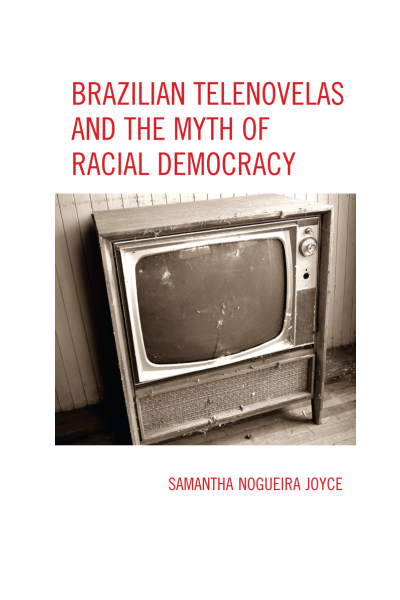
Brazilian Telenovelas and the Myth of Racial Democracy
Authors:
Publisher:
2012
Summary
Brazilian Telenovelas and the Myth of Racial Democracy, by Samantha Nogueira Joyce, examines what happens when a telenovela directly addresses matters of race and racism in contemporary Brazil. This investigation provides a traditional textual analysis of Duas Caras (2007-2008), a watershed telenovela for two main reasons: It was the first of its kind to present audiences with an Afro-Brazilian as the main hero, openly addressing race matters through plot and dialogue. Additionally, for the first time in the history of Brazilian television, the author of Duas Caras kept a web blog where he discussed the public's reactions to the storylines, media discussions pertaining to the characters and plot, and directly engaged with fans and critics of the program.
Joyce combines her investigation of Duas Caras with a study of related media in order to demonstrate how the program introduced novel ideas about race and also offered a forum where varying perspectives on race, class, and racial relations in Brazil could be discussed. Brazilian Telenovelas is not a reception study in the traditional sense, it is not a story of entertainment-education in the strict sense, and it is not solely a textual analysis. Instead, Joyce's text is a study of the social milieu that the telenovela (and especially Duas Caras) navigates, one that is a component of a contemporary progressive social movement in Brazil, and one that views the text as being located in social interactions. As such, this book reveals how telenovelas contribute to social change in a way that has not been fully explored in previous scholarship.
Search publication
Bibliographic data
Edition
1/2012
Copyright Year
2012
ISBN-Print
978-0-7391-6964-3
ISBN-Online
978-0-7391-6965-0
Publisher
Lexington, Lanham
Language
English
Pages
129
Product Type
Monograph
Table of contents
ChapterPages
Contents No access
Chapter One: Episode 1 No access Pages 1 - 22
Chapter Two: Black Flows No access Pages 23 - 44
Chapter Three: “My Little Whitey,” “My Big, Delicious Negro” No access Pages 45 - 68
Chapter Four: Deu no Blogão! (It Was in the Big Blog!) No access Pages 69 - 86
Chapter Five: Duas Caras as a New Approach to Social Merchandising No access Pages 87 - 112
Chapter Six: Conclusions No access Pages 113 - 118
Bibliography No access Pages 119 - 124
Index No access Pages 125 - 128
About the Author No access Pages 129 - 129
Similar publications
from the topics "Medienwissenschaft, Kommunikationsforschung"