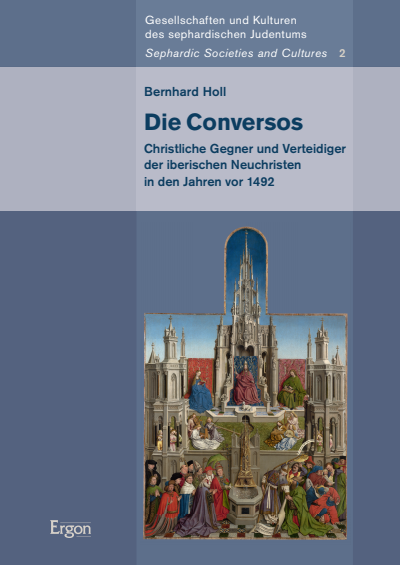
Die Conversos
Christliche Gegner und Verteidiger der iberischen Neuchristen in den Jahren vor 1492- Autor:innen:
- Reihe:
- Gesellschaften und Kulturen des sephardischen Judentums I Sephardic Societies and Cultures, Band 2
- Verlag:
- 2022
Zusammenfassung
Das 15. Jahrhundert ist das Zeitalter der letzten Massenkonversionen zum Christentum auf der Iberischen Halbinsel. Unter starkem Druck und zum Teil mit Gewalt wurde die zuvor große jüdische Bevölkerung gedrängt, sich taufen zu lassen. Gleichwohl akzeptierten große Teile der christlichen Mehrheit die Neubekehrten nicht als gleichwertig und bezweifelten ihre Rechtgläubigkeit. Gegen diese Diskriminierung wandten sich immer wieder Geistliche und Gelehrte mit Predigten, Briefen und Denkschriften. Die vorliegende Studie zeichnet erstmals detailliert die wesentlichen Inhalte ihrer Theologie nach, ihre spezielle Auslegung der Bibel und deren Wurzeln in Recht und Tradition der lateinischen Kirche.
Schlagworte
Publikation durchsuchen
Bibliographische Angaben
- Copyrightjahr
- 2022
- ISBN-Print
- 978-3-95650-965-0
- ISBN-Online
- 978-3-95650-966-7
- Verlag
- Ergon, Baden-Baden
- Reihe
- Gesellschaften und Kulturen des sephardischen Judentums I Sephardic Societies and Cultures
- Band
- 2
- Sprache
- Deutsch
- Seiten
- 343
- Produkttyp
- Monographie
Inhaltsverzeichnis
- Titelei/Inhaltsverzeichnis Kein Zugriff Seiten 1 - 8
- 1.1.1 Grundlagen- und Überblickswerke Kein Zugriff
- 1.1.2 Hypothesen zur Apologetik der Conversos Kein Zugriff
- 1.1.3 Weitere Studien zu einzelnen relevanten Quellen Kein Zugriff
- 1.2.1 Eine Theologie von oder für Neuchristen? Kein Zugriff
- 1.2.2 Methodische Überlegungen Kein Zugriff
- 1.2.3 Terminologische Anmerkungen Kein Zugriff
- 1.3.1 Quellen am Rande des Diskurses Kein Zugriff
- 1.3.2 Begrenzung und (fehlende) Gegenseite des Diskurses Kein Zugriff
- 1.3.3 Erhaltene und verlorene Quellen Kein Zugriff
- 1.3.4 Zeitliche und räumliche Abgrenzung Kein Zugriff
- 2.1.1 Der Prediger von Valladolid Kein Zugriff
- 2.1.2 Fernán Díaz de Toledo Kein Zugriff
- 2.1.3 Alonso Díaz de Montalvo Kein Zugriff
- 2.1.4 Juan de Torquemada Kein Zugriff
- 2.1.5 Alonso de Cartagena Kein Zugriff
- 2.2.1 Diego de Valera Kein Zugriff
- 2.2.2 Lope de Barrientos Kein Zugriff
- 2.2.3 Alonso de Oropesa Kein Zugriff
- 2.2.4 Gutierre de Palma Kein Zugriff
- 2.3.1 Fernando de Pulgar Kein Zugriff
- 2.3.2 Hernando de Talavera Kein Zugriff
- 2.3.3 Antonio de Ferrariis Kein Zugriff
- 3.1.1 Persönliche Beziehungen und gesellschaftliche Bruchlinien Kein Zugriff
- 3.1.2 Autorität und Ambiguität der Heiligen Schrift Kein Zugriff
- 3.1.3 Die Gegenseite: eine Irrlehre ohne Namen Kein Zugriff
- 3.1.4 Leerstellen als Konturen: Was nicht gesagt wird Kein Zugriff
- 3.2.1 Ein Sohn soll nicht die Sünde des Vaters tragen (Ez 18) Kein Zugriff
- 3.2.2 Die Passion Christi (Mt 26-27 par) Kein Zugriff
- 3.2.3 Vergebung – im Himmel wie auf Erden? Kein Zugriff
- 3.3.1 Der Stammbaum Jesu (Mt 1, Lk 3) Kein Zugriff
- 3.3.2 Kinder der Verheißung (Gal 4, Röm 9) Kein Zugriff
- 3.3.3 Geburt als Argument und Allegorie Kein Zugriff
- 3.4.1 Jude oder Grieche: kein Ansehen der Person (Röm 2) Kein Zugriff
- 3.4.2 Die kanaanäische Frau (Mt 15) Kein Zugriff
- 3.4.3 Die Rettung ganz Israels (Röm 11) Kein Zugriff
- 3.5.1 Alle sollen eins sein (Joh 17, Eph 2) Kein Zugriff
- 3.5.2 Getauft zu einem Leib (1Kor 12) Kein Zugriff
- 3.5.3 Einheit versus Reinheit Kein Zugriff
- 4.1 Eine diskursive Strategie? Kein Zugriff
- 4.2 Erfolg und Misserfolg Kein Zugriff
- 4.3 Inhärenter Antijudaismus Kein Zugriff
- A1 Verzeichnis der zitierten Editionen mittelalterlicher Quellen Kein Zugriff
- A2 Verzeichnis der Quellen ohne moderne Edition Kein Zugriff
- A3 Verzeichnis der verwendeten Literatur Kein Zugriff
- A4 Index wichtiger Personen Kein Zugriff
Literaturverzeichnis (971 Einträge)
Es wurden keine Treffer gefunden. Versuchen Sie einen anderen Begriff.
- Alonso de Cartagena: Defensorium unitatis christianae [ca. 1449-1450]. Hg. von Manuel Alonso, Madrid 1943, S. 61 370. Google Scholar öffnen DOI: 10.5771/9783956509667
- Alonso de Oropesa: Lumen ad revelationem gentium [1465]. Übersetzt ins Spanische von Luis A. Díaz y Díaz, Salamanca 1979 (Transkript des Lateinischen Originaltextes: https://www.cervantesvirtual.com/obra-visor/luz-para-conocimiento-de-los-gentiles--0/html/). Google Scholar öffnen DOI: 10.5771/9783956509667
- Alonso Díaz de Montalvo: Tractatus quidam levis, quem de mandato Illustrissimi Domini nostri Regis Ioannis II. super factis Toleti contingentibus invalide compilavi (auch: Glosa a la palabra tornadizo) [1449]. Hg. von Matilde Conde Salazar, Antonio Pérez Martín, Carlos del Valle Rodríguez. In: La causa conversa, Madrid 2008, S. 103 145. Google Scholar öffnen DOI: 10.5771/9783956509667
- Anonym: Sermo in die beati Augustini [1449]. Hg. von Tomás González Rolán und Pilar Saquero Suárez-Somonte. In: De la sentencia-estatuto de Pero Sarmiento a la Instrucción del Relator, Madrid 2012, S. 33 56. Google Scholar öffnen DOI: 10.5771/9783956509667
- Antonio Galateo de Ferrariis: Ad Belisarium Aquevivum, de neophytis [ca. 1496]. Hg. von Antonio Altamura. In: Antonio de Ferrariis Galateo. Epistole. Edizione critica, Lecce 1959, S. 220 225. Google Scholar öffnen DOI: 10.5771/9783956509667
- Diego de Valera: Espejo de verdadera nobleza [ca. 1451]. Hg. von Federica Accorsi. In: Estudio del »Espejo de verdadera nobleza« de Diego de Valera con edición crítica de la obra, Pisa 2011, S. 289 351. Google Scholar öffnen DOI: 10.5771/9783956509667
- Diego de Valera: Memorial de diversas hazañas. Hg. von Juan de Mata Carriazo, Madrid 1941, S. 3 295. Google Scholar öffnen DOI: 10.5771/9783956509667
- Fernán Díaz de Toledo: Instrucción del relator para Don Lope de Barrientos, obispo de Cuenca, sobre la çiçaña de Toledo contra Pero Sarmiento y el bachiller Macos Garçia de Mora [1449]. Hg. von Tomás González Rolán und Pilar Saquero Suárez-Somonte. In: De la sentencia-estatuto de Pero Sarmiento a la Instrucción del Relator, Madrid 2012, S. 95 120. Google Scholar öffnen DOI: 10.5771/9783956509667
- Fernán Pérez de Guzmán: Generaciones y semblanzas [1450]. Hg. von Robert B. Tate, London 1965. Google Scholar öffnen DOI: 10.5771/9783956509667
- Fernando de Pulgar: Claros varones de Castilla [ca. 1484]. Hg. von Robert B. Tate, Oxford 1971, S. 1 77. Google Scholar öffnen DOI: 10.5771/9783956509667
- Fernando de Pulgar: Letras [1486]. Hg. von Jesús Domínguez Bordona, Madrid 1929. Google Scholar öffnen DOI: 10.5771/9783956509667
- Fernando de Pulgar: Crónica de los Reyes Católicos [1492]. Hg. von Juan de Mata Carriazo, Madrid 1943. Google Scholar öffnen DOI: 10.5771/9783956509667
- Gutierre de Palma: Divina retribución sobre la caida de España en tiempo del noble rey Don Juan el primero. Compuesta por el Bachiller Palma, Hg. von J. M. Escudero de la Peña, Madrid 1879. Google Scholar öffnen DOI: 10.5771/9783956509667
- Hernando de Talavera: Católica impugnación del herético libelo maldito y descomulgado que en el año pasado del nacimiento de nuestro Señor Jesucristo de mil cuatrocientos y ochenta años fue divulgado en la ciudad de Sevilla [ca. 1481]. Ed. von Francisco Martín Hernández. Hg. von Stefania Pastore, Córdoba 2012, S. 3 181. Google Scholar öffnen DOI: 10.5771/9783956509667
- Hernando de Talavera: Colación muy provechosa de cómo se deven renovar en las ánimas todos los fieles cristianos en el sancto tienpo del Adviento [ca. 1476]. Hg. von Carmen Parrilla. In: Hernando de Talavera. Dos escritos destinados a la reina Isabel, Valencia 2014, S. 101 132. Google Scholar öffnen DOI: 10.5771/9783956509667
- Hernando de Talavera: Breve tractado, mas devoto y sotil, de loores del bienaventurado Sant Juan Evangelista [ca. 1476]. Hg. von Carmen Parrilla. In: Hernando de Talavera. Dos escritos destinados a la reina Isabel, Valencia 2014, S. 135 244. Google Scholar öffnen DOI: 10.5771/9783956509667
- Isaac Abravanel: Carta que o Barbanel mandou ao Conde de Faro sobre a morte do Conde de Odemira seu sogro, [1470]. Hg. von Cedric Cohen Skalli. In: Isaac Abravanel: Letters. Edition, Translation and Introduction, Berlin 2007, S. 81 98. Google Scholar öffnen DOI: 10.5771/9783956509667
- Jaime Pérez de Valencia: Tratado contra los judíos [1484]. Hg. von Justo Formantín Ibáñez und María José Villegas Sanz, Madrid 1998, S. 3 313. Google Scholar öffnen DOI: 10.5771/9783956509667
- José de Sigüenza: Historia de la Orden de San Jerónimo [ca. 1605], Bd. 2. Hg. von Juan C. García López, Madrid 1909. Google Scholar öffnen DOI: 10.5771/9783956509667
- Juan de Lucena: Diálogo sobre la vida feliz [1483]. Hg. von Jerónimo Miguel, Madrid 2014. Google Scholar öffnen DOI: 10.5771/9783956509667
- Juan de Torquemada: Tractatus contra Madianitas et Ismaelitas adversarios et detractores fidelium qui de populo Israelitico originem traxerunt [1449]. Hg. von Carlos del Valle Rodríguez, Madrid 2002, S. 125 239. Google Scholar öffnen DOI: 10.5771/9783956509667
- Lope de Barrientos: Quaesitum a domino Lupo de Barriento, espicopo Conchensi, illustrissimi domini nostri domini Enrici Castellae Legionisque confessore, cancellarioque maiore ac eiusdem regiae maiestatis consiliario, per quendam bacalarium eiusdem paternitatis familiarem et devotum – Responsio praedicti domini episcopi [ca. 1454-1458]. Hg. von Tomás González Rolán und Pilar Saquero Suárez-Somonte. In: De la sentencia-estatuto de Pero Sarmiento a la Instrucción del Relator, Madrid 2012, S. 144 165. Google Scholar öffnen DOI: 10.5771/9783956509667
- Lope de Barrientos: Contra algunos Çiçañadores de la nación de convertidos del pueblo de Israel [1449] Hg. von Tomás González Rolán und Pilar Saquero Suárez-Somonte. In: De la sentencia-estatuto de Pero Sarmiento a la Instrucción del Relator, Madrid 2012, S. 122 141. Google Scholar öffnen DOI: 10.5771/9783956509667
- Lope de Barrientos: Refundición de la crónica del halconero. Hg. von Juan de Mata Carriazo, Madrid 1946, S. 1 228. Google Scholar öffnen DOI: 10.5771/9783956509667
- Marcos García de Mora: Memorial [1449]. Hg. von Eloy Benito Ruano, Barcelona 1976. Google Scholar öffnen DOI: 10.5771/9783956509667
- Pero Sarmiento: Sentencia-Estatuto [1449]. Hg. von Eloy Benito Ruano, Madrid 2001. Google Scholar öffnen DOI: 10.5771/9783956509667
- Rodrigo Sánchez de Arévalo: Suma de la política [ca. 1455]. Hg. von Juan Beneyto Pérez, Madrid 1944. Google Scholar öffnen DOI: 10.5771/9783956509667
- Rui de Pina: Croniqua delrey dom Joham II [ca. 1504]. Hg. von Alberto Martins de Carvalho, Coimbra 1950, S. 1 306. Google Scholar öffnen DOI: 10.5771/9783956509667
- Alonso de Espina: Fortalitium fidei [ca. 1459]. Hg. von Anton Koberger, Nürnberg 1485. Google Scholar öffnen DOI: 10.5771/9783956509667
- Alonso Fernández de Madrigal: Commentaria in quartam partem Matthaei [vor 1455]. Hg. von Giovanni Battista und Giovanni Bernardo Sessa, Venedig 1595. Google Scholar öffnen DOI: 10.5771/9783956509667
- Gutierre de Palma: Breve reprehensorium [ca. 1465]. Manuskript 23-7, Archivo Capitular de Toledo. Google Scholar öffnen DOI: 10.5771/9783956509667
- Pablo de Santa María: Scrutinium scripturarum [ca. 1432]. Manuskript Pal. lat. 134, Bibliotheca Palatina. Google Scholar öffnen DOI: 10.5771/9783956509667
- Pedro de la Cavallería: Tractatus zelus Christi contra iudaeos, sarracenos et infideles [1450]. Hg. von Martin Alfonso Vivaldo, Venedig 1592. Google Scholar öffnen DOI: 10.5771/9783956509667
- Vidal ABRIL COSTELLÓ: Los derechos humanos en el tránsito del medievo a la modernidad: la escuela de Salamanca. In: José María Soto Rábanos (Hg.): Pensamiento medieval hispano. Homenaje a Horacio Santiago-Otero, Bd. 1, Madrid 1998, S. 513 561. Google Scholar öffnen DOI: 10.5771/9783956509667
- Anna S. ABULAFIA: The Bible in Jewish-Christian Dialogue. In: Richard Marsden (Hg.): The New Cambridge History of the Bible, Bd. 2: From 600 to 1450, Cambridge 2012, S. 616 637. Google Scholar öffnen DOI: 10.5771/9783956509667
- Federica ACCORSI: El Espejo de verdadera nobleza y la cuestión de los conversos. In: Cristina Moya García (Hg.): Mosén Diego de Valera. Entre las armas y las letras, Rochester 2014, S. 21 52. Google Scholar öffnen DOI: 10.5771/9783956509667
- Federica ACCORSI: Estudio del »Espejo de verdadera nobleza« de Diego de Valera con edición crítica de la obra, Pisa 2011. Google Scholar öffnen DOI: 10.5771/9783956509667
- Federica ACCORSI: La influencia de Alonso de Cartagena en la »Defensa de virtuosas mujeres« de Diego de Valera. In: Francisco Bautista Pérez, Jimena Gamba Corradine (Hgg.): Estudios sobre la Edad Media, el Renacimiento y la temprana Modernidad, San Millán de la Cogolla 2010, S. 15-23. Google Scholar öffnen DOI: 10.5771/9783956509667
- Ildefonso ADEVA: Juan de Torquemada y su »Tractatus contra principales errores perfidi Machometi et turcorum sive saracenorum(1459). In: Anuario de historia de la iglesia 16 (2007), S. 195 208. Google Scholar öffnen DOI: 10.5771/9783956509667
- William ADLER: On the Priesthood of Jesus. In: Tony Burke und Brent Landau (Hgg.): New Testament Apocrypha. More Noncanonical Scriptures. Bd. 1, Grand Rapids 2016, S. 69 108 Google Scholar öffnen DOI: 10.5771/9783956509667
- Michael AGNEW: The Silences of Fernando de Pulgar in his Crónica de los Reyes Católicos. In: Revista de Estudios Hispánicos 36 (2002), S. 477 499. Google Scholar öffnen DOI: 10.5771/9783956509667
- Jehoschua AHRENS: Ein Dialog auf Augenhöhe – Die orthodoxen jüdischen Erklärungen zum Christentum. In: Theologische Quartalsschrift 199 (2019), S. 321 334. Google Scholar öffnen DOI: 10.5771/9783956509667
- Gilbert N. ALARIBE: Ezekiel 18 and the Ethics of Responsibility. A Study in Biblical Interpretations and Christian Ethics, St. Ottilien 2006. Google Scholar öffnen DOI: 10.5771/9783956509667
- Michel ALBARIC: Hugues de Saint-Cher et les concordances bibliques latines (XIIIe-XVIIIe siècles). In: Louis-Jacques Bataillon u.a. (Hgg.): Hugues de Saint-Cher († 1263), bibliste et théologien: Etudes réunies, Turnhout 2004, S. 467 479. Google Scholar öffnen DOI: 10.5771/9783956509667
- Angel ALCALÁ: Los judeoconversos en la cultura y sociedad españolas, Madrid 2011. Google Scholar öffnen DOI: 10.5771/9783956509667
- Angel ALCALÁ: Tres cuestiones en busca de respuesta: invalidez del bautismo »forzado«, »conversión« de judíos, trato »cristiano« al converso. In: ders. (Hg.): Judíos, Sefarditas, Conversos. La expulsión de 1492 y sus consecuencias, Valladolid 1995, S. 523-544. Google Scholar öffnen DOI: 10.5771/9783956509667
- Angel ALCALÁ: El mundo converso en la literatura y la mística del Siglo de Oro. In: Manuscrits: Revista d’història moderna 10 (1992), S. 91-118. Google Scholar öffnen DOI: 10.5771/9783956509667
- Manuel ALONSO: Don Alfonso de Cartagena, Defensorium Unitatis Christianae. Tratado en favor de los judíos conversos. Edición, prólogo y notas, Madrid 1943. Google Scholar öffnen DOI: 10.5771/9783956509667
- Martín ALONSO: Diccionario medieval Español. Desde las Glosas Emilianenses y Silenses (s. X) hasta el siglo XV. 2 Bd., Salamanca 1986. Google Scholar öffnen DOI: 10.5771/9783956509667
- Antonio ALTAMURA: Antonio de Farrariis Galateo. Epistole. Edizione critica, Lecce 1959. Google Scholar öffnen DOI: 10.5771/9783956509667
- Gerd ALTHOFF: Rules and Rituals in Medieval Power Games. A German Perspective, Leiden 2019. Google Scholar öffnen DOI: 10.5771/9783956509667
- Gerd ALTHOFF: Genealogische und andere Fiktionen in mittelalterlicher Historiographie. In: Fälschungen im Mittelalter. Internationaler Kongreß der Monumenta Germaniae Historica, Hannover 1988, S. 417 441. Google Scholar öffnen DOI: 10.5771/9783956509667
- Vicente Á. ÁLVAREZ PALENZUELA: Una divina retribución: la batalla de Toro en la mentalidad castellana. In: Maria Helena da Cruz Coelho u.a. (Hgg.): VI Jornadas Luso-Espanholas de Estudos Medievais, Bd. 1, Coimbra 2009, S. 35 55. Google Scholar öffnen DOI: 10.5771/9783956509667
- Guillermo ALVAR NUÑO: La influencia de Alfonso de Cartagena en la »Compendiosa historia Hispanica« de Rodrigo Sánchez de Arévalo. In: Revista de Poética Medieval 32 (2018), S. 19 48. Google Scholar öffnen DOI: 10.5771/9783956509667
- José AMADOR DE LOS RÍOS: Historia social, política y religiosa de los judíos en España y Portugal. 3 Bd., Madrid 1960 (Original: 1875). Google Scholar öffnen DOI: 10.5771/9783956509667
- Marcelino V. AMASUNO SÁRRAGA: Alfonso Chirino, un médico de monarcas castellanos, Salamanca 1993. Google Scholar öffnen DOI: 10.5771/9783956509667
- Charles AMIEL: Los ritos judaicos en los edictos de fe ibéricos. In: Carlos Barros (Hg.): Xudeus e Conversos na Historia. Bd. 1: Mentalidades e Cultura, Santiago de Compostela 1994, S. 205 224. Google Scholar öffnen DOI: 10.5771/9783956509667
- Rica AMRAN: Acerca de Teresa de Cartagena y La arboleda de los enfermos: algunas puntualizaciones, preguntas e hipótesis. In: Rosa M. Alabrús u.a. (Hgg.): Pasados y presente. Estudios para el profesor Ricardo García Cárcel, Barcelona 2020, S. 569 582. Google Scholar öffnen DOI: 10.5771/9783956509667
- Rica AMRAN: Juan de Vergara y el estatuto de limpieza de sangre de la catedral de Toledo. In: eHumanista: Journal of Iberian Studies 33 (2016), S. 402 424. Google Scholar öffnen DOI: 10.5771/9783956509667
- Rica AMRAN: El Fuero real de Alonso Díaz de Montalvo y la problemática conversa a finales del siglo XV: ¿puntos de vista e influencias de una minoría? In: dies. und Antonio Cortijo Ocaña (Hgg.): Minorías en la España medieval y moderna (ss. XV-XVII), Santa Barbara 2016, S. 24-38. Google Scholar öffnen DOI: 10.5771/9783956509667
- Rica AMRAN: El tratado de Uceda, año 1586, y su oposición a los estatutos de limpieza de sangre. In: Erasmo. Revista de historia Bajomedieval y Moderna 2 (2015), S. 21 32. Google Scholar öffnen DOI: 10.5771/9783956509667
- Rica AMRAN: Los conversos Juan Ramírez de Lucena y Alfonso de Santa Cruz: puntos de encuentro y desencuentro con otros cristianos nuevos (siglos XV als XVI). In: Ruth Fine u.a. (Hgg.): Lo converso: orden imaginario y realidad en la cultura española (siglos XIV XVII), Madrid 2013, S. 93 117. Google Scholar öffnen DOI: 10.5771/9783956509667
- Rica AMRAN: La nación conversa según Lope de Barrientos y la proyección de sus ideas en el siglo XV. In: José Ignacio Ruiz Rodríguez und Igor Sosa Mayor (Hgg.): Construyendo identidades: del protonacionalismo a la nación, Madrid 2013, S. 225 242. Google Scholar öffnen DOI: 10.5771/9783956509667
- Rica AMRAN: La imagen de judíos y conversos en la Historia de los hechos de Rodrigo Ponce de León, primer marqués de Cádiz. In: eHumanista 20 (2012), S. 17 36. Google Scholar öffnen DOI: 10.5771/9783956509667
- Rica AMRAN: Judíos y conversos en el reino de Castilla. Propaganda y mensajes políticos, sociales y religiosos (siglos XIV-XVI), Valladolid 2009. Google Scholar öffnen DOI: 10.5771/9783956509667
- Rica AMRAN: El Tratado contra los Judíos de Jaime Pérez de Valencia. In: Revista de historia medieval 15 (2008), S. 57 74. Google Scholar öffnen DOI: 10.5771/9783956509667
- Rica AMRAN: De Pedro Sarmiento a Martínez Siliceo: la »génesis« de los estatutos de limpieza de sangre. In: dies. (Hg.): Autour de l’Inquisition. Etudes sur le Saint-Office, Paris 2002, S. 33 56. Google Scholar öffnen DOI: 10.5771/9783956509667
- Rica AMRAN: Judíos y conversos en las crónicas de los Reyes de Castilla (desde finales del siglo xiv hasta la expulsión). In: Espacio, Tiempo y Forma 9 (1996), S. 257 275. Google Scholar öffnen DOI: 10.5771/9783956509667
- Arnold ANGENENDT: »Lasst beides wachsen bis zur Ernte« – Toleranz in der Geschichte des Christentums, Münster 2018. Google Scholar öffnen DOI: 10.5771/9783956509667
- Arnold ANGENENDT: Pollutio: die »kultische Reinheit« in Religion und Liturgie. In: Archiv für Liturgiewissenschaft 52 (2010), S. 52-93. Google Scholar öffnen DOI: 10.5771/9783956509667
- Arnold ANGENENDT: Toleranz und Gewalt. Das Christentum zwischen Bibel und Schwert, Münster 2007. Google Scholar öffnen DOI: 10.5771/9783956509667
- Arnold ANGENENDT: Der eine Adam und die vielen Stammväter. Idee und wirklichkeit der Origo gentis im Mittelalter. In: Peter Wunderli (Hg.): Herkunft und Ursprung, Sigmaringen 1993, S. 27 52. Google Scholar öffnen DOI: 10.5771/9783956509667
- Gil ANIDJAR: Lines of Blood: Limpieza de Sangre as Political Theology. In: Mariacarla Gadebusch Bondio (Hg.): Blood in History and Blood Histories, Florenz 2005, S. 119 136. Google Scholar öffnen DOI: 10.5771/9783956509667
- Cristina ARBÓS AYUSO: Judíos y conversos. Un tema tópico en la poesía medieval. In: Francisco Ruiz Gómez und Manuel Espadas Burgos (Hgg.): Encuentros en Sefarad: Actas del Congreso Internacional »Los Judios en la Historia de España«, Ciudad Real 1987, S. 137 152. Google Scholar öffnen DOI: 10.5771/9783956509667
- Jon ARRIETA ALBERDI: Nobles, libres e iguales, pero mercaderes, ferrones... y frailes: en torno a la historiografía sobre la hidalguía universal. In: Anuario de historia del derecho español 84 (2014), S. 799 842. Google Scholar öffnen DOI: 10.5771/9783956509667
- María ASENJO GONZÁLEZ: La aristocratización política en Castilla y el proceso de participación urbana (1252-1520). In: José Manuel Nieto Soria (Hg.): La monarquía como conflicto en la Corona castellano-leonesa (1250-1450), Madrid 2006, S. 133 196. Google Scholar öffnen DOI: 10.5771/9783956509667
- Eugenio ASENSIO: La España imaginada de Américo Castro, Barcelona 1992. Google Scholar öffnen DOI: 10.5771/9783956509667
- Cecilia ASSO: La teologia e la grammatica. La controversia tra Erasmo e Edward Lee, Florenz 1993. Google Scholar öffnen DOI: 10.5771/9783956509667
- Jean-Christophe ATTIAS: Du thème du lignage dans le judaïsme en général, et dans le judaïsme sépharadeen particulier. In: Raphaël Carrasco u.a. (Hgg.): La pureté de sang en Espagne. Du linage à la »race«, Paris 2011, S. 37 48. Google Scholar öffnen DOI: 10.5771/9783956509667
- Juan B. AVALLE ARCE: Sobre fray Hernando de Talavera. In: ders.: Temas hispánicos medievales. Literatura e historia, Madrid 1974, S. 262 279. Google Scholar öffnen DOI: 10.5771/9783956509667
- Gemma AVENOZA: The Bible in Spanish and Catalan. In: Richard Marsden (Hg.): The New Cambridge History of the Bible, Bd. 2: From 600 to 1450, Cambridge 2012, S. 288 306. Google Scholar öffnen DOI: 10.5771/9783956509667
- Gemma AVENOZA: Biblias castellanas medievales, Cilengua 2011. Google Scholar öffnen DOI: 10.5771/9783956509667
- Jörg BABEROWSKI: Der Sinn der Geschichte. Geschichtstheorien von Hegel bis Foucault, München 2005. Google Scholar öffnen DOI: 10.5771/9783956509667
- Michael BACHMANN: Paul, Israel and the Gentiles: Hermeneutical and Exegetical Notes. In: Reimund Bieringer und Didier Pollefeyt (Hgg.): Paul and Judaism. Crosscurrents in Pauline Exegesis and the Study of Jewish-Christian Relations, London 2012, S. 72 105. Google Scholar öffnen DOI: 10.5771/9783956509667
- Yitzhak BAER: Historia de los judíos en la España cristiana, Barcelona 1998 (Original: Berlin 1936). Google Scholar öffnen DOI: 10.5771/9783956509667
- Patrick BAKER: Bartolomeo Facio. On Illustrious Men, »Poets« and »Orators«. In: ders. (Hg.): Biography, Historiography, and Modes of Philosophizing, Leiden 2017, S. 134 169. Google Scholar öffnen DOI: 10.5771/9783956509667
- Anthony BALE: Feeling Persecuted: Christians, Jews and Images of Violence in the Middle Ages, London 2010. Google Scholar öffnen DOI: 10.5771/9783956509667
- Nicolás BALUTET: Felipe II y la religión. Apuntes sobre la »Monarquía Católica«. In: Iberoromania 53 (2001), S. 1 8. Google Scholar öffnen DOI: 10.5771/9783956509667
- Patricia BANÈRES: Inquisiton et »pureté de sang« dans la royaume de Valence (1478-1516): aux origines d’une nouvelle forme d’exclusion. In: Raphaël Carrasco u.a. (Hgg.): La pureté de sang en Espagne. Du linage à la »race«, Paris 2011, S. 133 161. Google Scholar öffnen DOI: 10.5771/9783956509667
- José Antonio BARRIO SÁNCHEZ: Fernán Pérez de Guzmán. Generaciones y semblanzas, Madrid 1998. Google Scholar öffnen DOI: 10.5771/9783956509667
- Jürgen BÄRSCH: Antijüdische Deutungen liturgischer Vollzüge und Gebräuche im Mittelalter: Beobachtungen zu einem Phänomen der Liturgiegeschichte. In: Johannes Heil u.a. (Hgg.): Abrahams Erbe, Berlin 2015, S. 509 521. Google Scholar öffnen DOI: 10.5771/9783956509667
- Marcel BATAILLON: Erasmo y España. Estudios sobre la historia espiritual del siglo XVI, Buenos Aires 21966 (Original: Paris 1937). Google Scholar öffnen DOI: 10.5771/9783956509667
- Friedrich BATTENBERG: Das Europäische Zeitalter der Juden. Zur Entwicklung einer Minderheit in der nichtjüdischen Umwelt Europas, Darmstadt 1990. Google Scholar öffnen DOI: 10.5771/9783956509667
- Thomas BAUER: Die Vereindeutigung der Welt. Über den Verlust an Mehrdeutigkeit und Vielfalt, Stuttgart 2018. Google Scholar öffnen DOI: 10.5771/9783956509667
- Adam G. BEAVER: Nebuchadnezzar’s Jewish Legions: Sephardic Legends’ Journey from Biblical Polemic to Humanist History. In: Mercedes Garcia-Arenal (Hg.): After Conversion. Iberia and the Emergence of Modernity, Leiden 2016, S. 21 65. Google Scholar öffnen DOI: 10.5771/9783956509667
- Isabel BECEIRO PITA: Los cambios en el discurso político de la nobleza castellana durante la baja Edad Media. In: Cahiers d’études romanes 4 (2000), S. 45 62. Google Scholar öffnen DOI: 10.5771/9783956509667
- Isabel BECEIRO PITA: Entre el ámbito privado y las competencias públicas: la educación en el reino de Castilla (siglos XIII-XV). In: José María Soto Rábanos (Hg.): Pensamiento medieval Hispano. Homenaje a Horacio Santiago-Otero. Bd. 1, Madrid 1998, S. 861 885. Google Scholar öffnen DOI: 10.5771/9783956509667
- Isabel BECEIRO PITA: La conciencia de los antepasados y la gloria del linaje en la Castilla bajomedieval. In: Reyna Pastor (Hg.): Relaciones de poder, de producción y parentesco en la Edad Media y Moderna: aproximación a su estudio, Madrid 1990, S. 329 349. Google Scholar öffnen DOI: 10.5771/9783956509667
- Haim BEINART: The Expulsion of the Jews from Spain, Oxford 2002. Google Scholar öffnen DOI: 10.5771/9783956509667
- Haim BEINART: Los conversos ante el tribunal de la Inquisición, Barcelona 1983. Google Scholar öffnen DOI: 10.5771/9783956509667
- Vicente BELTRÁN DE HEREDIA: Cartulario de la universidad de Salamanca (1218-1600), Salamanca 1970. Google Scholar öffnen DOI: 10.5771/9783956509667
- Vicente BELTRÁN DE HEREDIA: Bulario de la universidad de Salamanca (1219-1549). 3 Bd., Salamanca 1966-1967. Google Scholar öffnen DOI: 10.5771/9783956509667
- Vicente BELTRÁN DE HEREDIA: Las bulas de Nicolás V acerca de los conversos de Castilla. In: Sefarad 21 (1961), S. 22 47. Google Scholar öffnen DOI: 10.5771/9783956509667
- Juan BENEYTO PÉREZ: Rodrigo Sánchez de Arévalo. Suma de la política. Edición y estudio, Madrid 1944. Google Scholar öffnen DOI: 10.5771/9783956509667
- Stephen BENIN: Jews and Christian History. Hugh of St. Victor, Anselm of Havelberg and William of Auvergn. In: Jeremy Cohen (Hg.): From Witness to Witchcraft. Jews and Judaism in Medieval Christian Thought, Wiesbaden 1996, 203 220. Google Scholar öffnen DOI: 10.5771/9783956509667
- Ana BENITO: Inquisition and the Creation of the Other. In: Amy Aronson-Friedman, Gregory B. Kaplan (Hgg.): Marginal Voices. Studies in Converso Literature of Medieval and Golden Age Spain, Leiden 2012, S. 43 67. Google Scholar öffnen DOI: 10.5771/9783956509667
- Eloy BENITO RUANO: Toledo y Jerusalén: hitos, mitos y utopías. In: Manuel Casado Velarde u.a. (Hgg.): Jerusalén y Toledo. Historias de dos ciudades, Frankfurt 2012, S. 33 40. Google Scholar öffnen DOI: 10.5771/9783956509667
- Eloy BENITO RUANO: Del problema judío al problema converso. In: ders.: Los orígines del problemo converso, Madrid 22001 (Original: Barcelona 1976), S. 15 38. Google Scholar öffnen DOI: 10.5771/9783956509667
- Eloy BENITO RUANO: La »otroidad« de los conversos. In: ders.: Los orígines del problemo converso, Madrid 22001, S. 197 216 (Original: De la alteridad en la Historia. Antrittsvorlesung an der Real Academia de la Historia, Madrid 1988) . Google Scholar öffnen DOI: 10.5771/9783956509667
- Eloy BENITO RUANO: »El fuego de la Magdalena«. Un pogrom contra los conversos de Toledo en 1467. In: ders.: Los orígines del problemo converso, Madrid 22001 (Original: Barcelona 1976), S. 141 158. Google Scholar öffnen DOI: 10.5771/9783956509667
- Eloy BENITO RUANO: La Sentencia-Estatuto de Pero Sarmiento. In: ders.: Los orígines del problemo converso, Madrid 22001, S. 39 82 (zuerst erschienen in: Revista de la Universidad de Madrid 6 (1957), S. 277 306). Google Scholar öffnen DOI: 10.5771/9783956509667
- Eloy BENITO RUANO: »Otros cristianos«. Conversos en España, siglo XV. In: ders.: Los orígines del problemo converso, Madrid 22001 (Original: Barcelona 1976), S. 177 196. Google Scholar öffnen DOI: 10.5771/9783956509667
- Eloy BENITO RUANO: Reinserción temprana de judíos expulsos en la sociedad española. In: José María Soto Rábanos (Hg.): Pensamiento medieval hispano. Homenaje a Horacio Santiago-Otero, Madrid 1998, S. 1625 1636. Google Scholar öffnen DOI: 10.5771/9783956509667
- Eloy BENITO RUANO: El memorial del bachiller »Marquillos de Mazarambroz«. In: ders.: Los orígines del problemo converso, Barcelona 1976, S. 93 132 (zuerst erschienen in: Sefarad 17 (1957), S. 314 351). Google Scholar öffnen DOI: 10.5771/9783956509667
- Eloy BENITO RUANO: Don Pero Sarmiento, repostero mayor de Juan II de Castilla. Datos biográfico-documentales. In: Hispania 69 (1957), S. 483 504. Google Scholar öffnen DOI: 10.5771/9783956509667
- Ram BEN-SHALOM: The Development of a New Language of Conversion in Fifteenth-Century Sephardic Jewry. In: Mercedes García-Arenal und Yonatan Glazer-Eytan (Hgg.): Forced Conversion in Christianity, Judaism and Islam. Coercion and Faith in Premodern Iberia and Beyond, Leiden 2019, S. 205 234. Google Scholar öffnen DOI: 10.5771/9783956509667
- Ram BEN-SHALOM: Conflict between Jews and Converts in Aragon Following the Persecution of 1391 New Testimonies from the Formulary of Yom Tov Ben Hannah of Montalbán. In: Sefarad 73 (2013), S. 97 131. Google Scholar öffnen DOI: 10.5771/9783956509667
- Ram BEN-SHALOM: The Typology of the Converso in Isaac Abravanel’s Biblical Exegesis. In: Jewish History 23 (2009), S. 281-292. Google Scholar öffnen DOI: 10.5771/9783956509667
- Ram BEN-SHALOM: Between Official and Private Dispute. The Case of Christian Spain and Provence in the Late Middle Ages. In: AJS Review 27 (2003), S. 23 71. Google Scholar öffnen DOI: 10.5771/9783956509667
- Ram BEN-SHALOM: The Converso as Subversive: Jewish Traditions or Christian Libel? In: Journal of Jewish Studies 1 (1999), S. 259 283. Google Scholar öffnen DOI: 10.5771/9783956509667
- Henriette-Rika BENVENISTE: Crossing the Frontier: Jewish Converts to Catholicism in European History. In: Diogo Ramada Curto (Hg.): From Florence to the Mediterranean and beyond. Essays in honour of Anthony Molho, Florenz 2009, S. 447 474. Google Scholar öffnen DOI: 10.5771/9783956509667
- Henriette-Rika BENVENISTE und Giorgos Plakotos: Converting Bodies, Embodying Conversion: The Production of Religious Identities in Late Medieval and Early Modern Europe. In: Yosi Yisraeli und Yaniv Fox (Hgg.): Contesting Inter-Religious Conversion in the Medieval World, London 2016, S. 245-267. Google Scholar öffnen DOI: 10.5771/9783956509667
- José L. BERMEJO CABRERO: Los primeros secretarios de los reyes. In: Anuario de historia del derecho español 49 (1979), S. 186-296. Google Scholar öffnen DOI: 10.5771/9783956509667
- Rainer BERNDT: Die Beziehungen zwischen Juden und Christen im Mittelalter: Theologische Deutungen einiger Aspekte. In: Theologie und Philosophie 68 (1993), S. 530 552. Google Scholar öffnen DOI: 10.5771/9783956509667
- Jörg J. BERNS: Baumsprache und Sprachbaum. Baumikonographie als topologischer Komplex zwischen 13. und 17. Jahrhundert. Kilian Heck und Bernhard Jahn (Hgg.): Genealogie als Denkform in Mittelalter und Früher Neuzeit, Tübingen 2000, S. 155 176. Google Scholar öffnen DOI: 10.5771/9783956509667
- Walter BERSCHIN: Griechisch-lateinisches Mittelalter. Von Hieronymus zu Nikolaus von Kues, Bern 1980. Google Scholar öffnen DOI: 10.5771/9783956509667
- Francisco BERTELLONI: La resemantización de la natura aristotélica en la argumentación de la teoría política medieval. In: José Luis Fuertes Herreros und Ángel Poncela González (Hgg.): De natura: la naturaleza en la Edad Media, Bd. 1, Ribeirão 2015, S. 17 38. Google Scholar öffnen DOI: 10.5771/9783956509667
- Helmut BEUMANN: Zur Nationenbildung im Mittelalter. In: Otto Dann (Hg.): Nationalismus in vorindustrieller Zeit, München 1986, S. 21 33. Google Scholar öffnen DOI: 10.5771/9783956509667
- Elias J. BICKERMANN: Origines Gentium. In: Classical Philology 47 (1952), S. 65 81. Google Scholar öffnen DOI: 10.5771/9783956509667
- Martin BIERSACK: Mediterraner Kulturtransfer am Beginn der Neuzeit. Die Rezeption der italienischen Renaissance in Kastilien zur Zeit der Katholischen Könige, München 2010. Google Scholar öffnen DOI: 10.5771/9783956509667
- Karl BINDER: Konzilsgedanken bei Kardinal Juan de Torquemada O. P., Wien 1976. Google Scholar öffnen DOI: 10.5771/9783956509667
- Alexander BIRKENMAJER: Der Streit des Alonso von Cartagena mit Leonardo Bruni Aretino, Münster 1922. Google Scholar öffnen DOI: 10.5771/9783956509667
- Elisabeth BIRNBAUM: Wenn ein Heiliger übersetzt. Hieronymus und die Vulgata. In: Bibel und Kirche 69 (2014), S. 14 19. Google Scholar öffnen DOI: 10.5771/9783956509667
- Hugo O. BIZZARRI: Grecia y sus filósofos en la Edad Media castellana. Cuatro retratos de sabios griegos: Apolonio, Aristóteles, Bías y Esopo. In: Studi Ispanici 34 (2009), S. 11 31. Google Scholar öffnen DOI: 10.5771/9783956509667
- Juan M. BLANCH NOUGUÉS: La filiación en el pensamiento jurídico Romano. In: Juan José Ayán Calvo u.a. (Hgg.): Filiación. Cultura pagana, religión de Israel, orígines del cristianismo, Madrid 2005, S. 21 54. Google Scholar öffnen DOI: 10.5771/9783956509667
- Bryan BLAZOSKY: The Role the Law does or does not play in the Condemnation of Gentiles in Rom 2:12-15. In: Journal of the Evangelical Theological Society 59 (2016), S. 83-97. Google Scholar öffnen DOI: 10.5771/9783956509667
- Joaquín BLÁZQUEZ HERNÁNDEZ: Sermón anónimo pro judíos conversos (siglo XV). In: Revista Española de Teología 34 (1974), S. 257 273. Google Scholar öffnen DOI: 10.5771/9783956509667
- Peter BLICKLE: Leibeigenschaft am Ende des Mittelalters. Ein Referenzsystem für den Umgang mit der Sklaverei? In: Matthias Kaufmann und Robert Schnepf (Hgg.): Politische Metaphysik. Die Entstehung moderner Rechtskonzeptionen in der Spanischen Scholastik, Frankfurt 2007, S. 287 302. Google Scholar öffnen DOI: 10.5771/9783956509667
- Howard BLOCH: Genealogy as a Medieval Mental Structure and Textual Form. In: Hans Ulrich Gumbrecht u.a. (Hgg.): La littérature historiographique des origines à 1500, Bd. 1, Heidelberg 1986, S. 135 156. Google Scholar öffnen DOI: 10.5771/9783956509667
- Karl A. BLÜHER: Seneca in Spanien: Untersuchungen zur Geschichte der Seneca-Rezeption in Spanien vom 13. bis 17. Jahrhundert, München 1969. Google Scholar öffnen DOI: 10.5771/9783956509667
- Philippe BOBICHON: Yosef Albo. Sefer ha-’Iqqarim. »Livre des Principes« III, 25. Un chapitre de la controverse judéo-chrétienne en Sefarad, au XVe siècle, Madrid 2015. Google Scholar öffnen DOI: 10.5771/9783956509667
- Philippe BOBICHON: Le thème du »Verus Israel«: est-il constitutif de la controverse entre christianisme et judaïsme? In: Annali di storia dell’esegesi 22 (2005), S. 421 444. Google Scholar öffnen DOI: 10.5771/9783956509667
- Miriam BODIAN: Américo Castro’s Conversos and the Question of Subjectivity. In: Culture & History Digital Journal 6 (2017), S. 1 14. Google Scholar öffnen DOI: 10.5771/9783956509667
- Miriam BODIAN: Men of the Nation. The shaping of converso identity in Early Modern Europe. In: Past and Present 143 (1994), S. 48-76. Google Scholar öffnen DOI: 10.5771/9783956509667
- Juan A. BONACHÍA HERNANDO: La iglesia de Castilla, la reforma del clero y el Concilio de Aranda de Duero de 1473. In: Biblioteca. Estudio e investigación 25 (2010), S. 269-298. Google Scholar öffnen DOI: 10.5771/9783956509667
- Robert BONFIL: Men of Knowledge and Power: A Tentative Profile of Medieval Rabbis. In: Walter Homolka und Heinz-Günther Schöttler (Hgg.): Rabbi-Pastor-Priest: Their Roles and Profiles Through the Ages, Berlin 2013, S. 55 66. Google Scholar öffnen DOI: 10.5771/9783956509667
- Francis BORCHARDT: The LXX Myth and the Rise of Textual Fixity. In: Journal for the Study of Judaism in the Persian, Hellenistic and Roman Period 43 (2012), S. 1 21. Google Scholar öffnen DOI: 10.5771/9783956509667
- Lukas BORMANN: Abraham as »Forefather« and his Family in Paul. In: ders. (Hg.): Abraham’s Family. A Network of Meaning in Judaism, Christianity, and Islam, Tübingen 2018, S. 207 233. Google Scholar öffnen DOI: 10.5771/9783956509667
- Arno BORST: Der Turmbau von Babel: Geschichte der Meinungen über Ursprung und Vielfalt der Sprachen und Völker, 4 Bände, München 21995 (1. Auflage 1957-1963). Google Scholar öffnen DOI: 10.5771/9783956509667
- Pierre BOURDIEU: Das Lachen der Bischöfe. In: Franz Schultheis und Stephan Egger (Hgg.): Religion. Schriften zur Kultursoziologie 5, Berlin 2011, S. 231 242. Google Scholar öffnen DOI: 10.5771/9783956509667
- Daniel BOYARIN: Border Lines. The Partition of Judaeo-Christianity, Philadelphia 2004. Google Scholar öffnen DOI: 10.5771/9783956509667
- Daniel BOYARIN: Justin Martyr Invents Judaism. In: Church History 70 (2001), S. 427 461. Google Scholar öffnen DOI: 10.5771/9783956509667
- Pilar BRAVO LLEDÓ und Miguel Fernando Gómez Vozmediano: El Alborayque: un impreso panfletario contra los conversos fingidos de la Castilla tardomedieval. In: Historia. Instituciones. Documentos 26 (1999), S. 57 84. Google Scholar öffnen DOI: 10.5771/9783956509667
- Gerald BRAY: The Bible and Canon Law. In: Richard Marsden (Hg.): The New Cambridge History of the Bible, Bd. 2: From 600 to 1450, Cambridge 2012, S. 722 734. Google Scholar öffnen DOI: 10.5771/9783956509667
- Alexander P. BRONISCH: Die Judengesetzgebung im katholischen Westgotenreich von Toledo, Hannover 2005. Google Scholar öffnen DOI: 10.5771/9783956509667
- Peter BROWE: Die Eucharistie im Mittelalter. Liturgiehistorische Forschungen in kulturwissenschaftlicher Absicht, Berlin 62011. Google Scholar öffnen DOI: 10.5771/9783956509667
- Peter BROWE: Die kirchenrechtliche Stellung der getauften Juden und ihrer Nachkommen. In: Archiv für katholisches Kirchenrecht 121 (1941), S. 1 22. Google Scholar öffnen DOI: 10.5771/9783956509667
- Gerald L. BRUNS: The Originality of Texts in a Manuscript Culture. In: Comparative Literature 32 (1980), S. 113-129. Google Scholar öffnen DOI: 10.5771/9783956509667
- Rachel L. BURK: Purity and Impurity of Blood in Early Modern Iberia. In: Javier Muñoz Basols u.a. (Hgg.): The Routledge Companion to Iberian Studies, London 2017, S. 173 183. Google Scholar öffnen DOI: 10.5771/9783956509667
- Charles BURNETT: Encounters with Razi the Philosopher: Constantine the African, Petrus Alfonsi and Ramón Martí. In: José María Soto Rábanos (Hg.): Pensamiento medieval Hispano. Homenaje a Horacio Santiago-Otero. Bd. 2, Madrid 1998, S. 973 992. Google Scholar öffnen DOI: 10.5771/9783956509667
- Caroline W. BYNUM: The Blood of Christ in the Later Middle Ages. in: Church History 71 (2002), S. 685 714. Google Scholar öffnen DOI: 10.5771/9783956509667
- John BYRON: Paul and the Background of Slavery. The status quaestionis in New Testament Scholarship. In: Currents in Biblical Research 3 (2004), S. 116-139. Google Scholar öffnen DOI: 10.5771/9783956509667
- Emily C. CAIRNS: Esther among Crypto-Jews and Christians. Queen Esther and the Inquisition Manuscripts of Isabel de Carvajal and Lope de Vega’s La hermosa Ester. In: Chasqui 42 (2013), S. 98 109. Google Scholar öffnen DOI: 10.5771/9783956509667
- Averil CAMERON: Jews and Heretics – A Category Error? In: Adam H. Becker und Annette Yoshiko Reed: The Ways that Never Partet. Jews and Christians in Late Antiquity and the Early Middle Ages, Tübingen 2003, S. 345 360. Google Scholar öffnen DOI: 10.5771/9783956509667
- Laura CANABAL RODRÍGUEZ: Conversos toledanos en un espacio de poder, la catedral Primada. Don Francisco Álvarez de Toledo canónigo y mecenas (ss. XV-XVI). In: Espacio, tiempo y forma 24 (2011), S. 13 32. Google Scholar öffnen DOI: 10.5771/9783956509667
- Marta CANESSA DE SANGUINETTI: El bien nacer. Limpieza de oficios y limpieza de sangre: raíces ibéricas de un mal latinoamericano. Del Siglo XIII al Último Tercio del Siglo XIX, Montevideo 2000. Google Scholar öffnen DOI: 10.5771/9783956509667
- Francisco CANTERA BURGOS: El cancionero de Baena: Judíos y conversos en él. In: Sefarad 27 (1967), S. 71 111. Google Scholar öffnen DOI: 10.5771/9783956509667
- Francisco CANTERA BURGOS: Álvar García de Santa María y su familia de conversos: Historia de la judería de Burgos y de sus conversos más egregios, Madrid 1952. Google Scholar öffnen DOI: 10.5771/9783956509667
- Francisco CANTERA BURGOS: Fernando de Pulgar y los conversos. In: Sefarad 4 (1944), S. 295 348. Google Scholar öffnen DOI: 10.5771/9783956509667
- Enrique CANTERA MONTENEGRO: El obispo Lope de Barrientos y la sociedad judeoconversa: su intervención en el debate doctrinal en torno a la »Sentencia-Estatuto« de Pero Sarmiento. In: Espacio, Tiempo y Forma 10 (1997), S. 11 29. Google Scholar öffnen DOI: 10.5771/9783956509667
- María M. CÁRCEL ORTÍ: Dispensas de ilegitimidad para ordenarse en la Diócesis de Valencia (Siglo XV). In: Marta Herrero de la Fuente u.a. (Hgg.): Alma littera: estudios dedicados al profesor José Manuel Ruiz Asencio, Valladolid 2014, S. 99-106. Google Scholar öffnen DOI: 10.5771/9783956509667
- Javier CÁRDENAS DÍAZ, Enver Torregroza Lara: La filosofía política de Alonso de Cartagena en su Defensorium Unitatis Christianae. In: Revista de Hispanismo Filosófico 16 (2011), S. 7 23. Google Scholar öffnen DOI: 10.5771/9783956509667
- Julio CARO BAROJA: Razas, pueblos, linajes, Murcia 21990 (Original: Madrid 1957). Google Scholar öffnen DOI: 10.5771/9783956509667
- Dwayne E. CARPENTER: Polémicos privilegios. Dos versiones de la primera sátira conocida en contra de los conversos. In: Sefarad 72 (2012), S. 295 324. Google Scholar öffnen DOI: 10.5771/9783956509667
- Dwayne E. CARPENTER: Alborayque. Estudio preliminar, edición y notas, Mérida 2005. Google Scholar öffnen DOI: 10.5771/9783956509667
- Carlos CARRETE PARRONDO: Convivencia judeo-cristiana en Castilla antes de 1492. In: El Olivo 2 (1977), S. 29 34. Google Scholar öffnen DOI: 10.5771/9783956509667
- Carlos CARRETE PARRONDO: Los conversos jerónimos ante el estatuto de limpieza de sangre. In: Helmantica: Revista de filología clásica y hebrea 26 (1975), S. 97 116. Google Scholar öffnen DOI: 10.5771/9783956509667
- Alberto MARTINS DE CARVALHO: Rui de Pina. Crónica de El-Rei D. João II, Coimbra 1950. Google Scholar öffnen DOI: 10.5771/9783956509667
- Charles CASPERS: Leviticus 12, Mary and Wax: Purification and Churching in Late Medieval Christianity. In: Marcel Poorthuis (Hg.): Purity and Holiness. The Heritage of Leviticus, Leiden 2000, S. 295 311 Google Scholar öffnen DOI: 10.5771/9783956509667
- Javier CASTAÑO: »Flüchtige Chimären der Convivencia«: die Juden in Kastilien und ihre Eliten (1418-1454). In: Klaus Herbers, Nikolas Jaspert (Hgg.): Integration – Segregation – Vertreibung. Religiöse Minderheiten und Randgruppen auf der Iberischen Halbinsel (7.-17. Jahrhundert), Berlin 2011, S. 179 212. Google Scholar öffnen DOI: 10.5771/9783956509667
- Javier CASTAÑO: Von der Grenze zu Sepharad bis zur Vertreibung. Die Juden unter der kastilischen Krone vom 11. bis zum 15. Jahrhundert. In: Alfred Haverkamp u.a. (Hgg.): Europas Juden im Mittelalter, Speyer 2004, S. 37 57. Google Scholar öffnen DOI: 10.5771/9783956509667
- Jesus L. CASTILLO VEGAS: Aristotelismo politico en la universidad de Salamanca del siglo XV: Alfonso de Madrigal y Fernado de Roa. In: La Corónica, 33 (2004), S. 39 52. Google Scholar öffnen DOI: 10.5771/9783956509667
- Américo CASTRO: España en su historia: Cristianos, moros y judíos, Barcelona 31984 (1. Auflage Buenos Aires 1948). Google Scholar öffnen DOI: 10.5771/9783956509667
- Pedro CÁTEDRA: Fray Vicente Ferrer y la predicación antijudía en la campaña castellana (1411 1412). In: Jeanne Battesti Pelegrin (Hg.): »Qu’un sang impur...«. Les Conversos et le pouvoir en Espagne à la fin du moyen âge, Aix-en-Provence 1997, S. 19 46. Google Scholar öffnen DOI: 10.5771/9783956509667
- Constanza CAVALLERO: Los demonios interiores de España. El obispo Lope de Barrientos en los albores de la demonología moderna: Castilla, Siglo XV, Buenos Aries 2011. Google Scholar öffnen DOI: 10.5771/9783956509667
- Constanza CAVALLERO: Supersticiosos y marranos. El discurso anti-mágico de Lope de Barrientos a la luz de la »cuestión conversa«. Cuadernos de Historia de España 84 (2010), S. 61 90. Google Scholar öffnen DOI: 10.5771/9783956509667
- Emilio CELA HEFFEL: La construcción de la imagen filial como herramienta de poder en la correspondencia entre don Juan Manuel y Jaime II de Aragón. In: Fundación para la Historia de España 12 (2015), S. 123-132. Google Scholar öffnen DOI: 10.5771/9783956509667
- Pancracio CELDRÁN GOMARIZ: El gran libro de los insultos. Tesoro crítico, etimológico e histórico de los insultos españoles, Madrid 2008. Google Scholar öffnen DOI: 10.5771/9783956509667
- Pedro J. CHACÓN DELGADO: La metáfora de la limpieza de sangre en el origen del nacionalismo vasco. In: Francois Godicheau und Pablo Sánchez León (Hgg.): Palabras que atan. Metáforas y conceptos del vínculo social en la história moderna y contemporánea, Madrid 2015, S. 245 271. Google Scholar öffnen DOI: 10.5771/9783956509667
- Robert CHAZAN: From Anti-Judaism to Anti-Semitism Ancient and Medieval Christian Constructions of Jewish History, Cambridge 2016. Google Scholar öffnen DOI: 10.5771/9783956509667
- Robert CHAZAN: The Jews of Medieval Western Christendom, 1000-1500, Cambridge 2006. Google Scholar öffnen DOI: 10.5771/9783956509667
- Robert CHAZAN: Fashioning Jewish Identity in Medieval Western Christendom, Cambridge 2004. Google Scholar öffnen DOI: 10.5771/9783956509667
- Robert CHAZAN: Undermining the Jewish Sense of Future: Alfonso de Valladolid and the New Christian Missionizing. In: Mark D. Meyerson und Edward D. English (Hgg.): Christians, Muslims, and Jews in Medieval and Early Modern Spain, Notre Dame 1999, S. 179 194. Google Scholar öffnen DOI: 10.5771/9783956509667
- Peter D. CLARKE: The interdict in the thirteenth century. A question of collective guilt, Oxford 2007. Google Scholar öffnen DOI: 10.5771/9783956509667
- Carlos CLAVERÍA: Reflejos del »goticismo« espanol en la fraseología del siglo de oro. In: Studia Philologica. Homenaje ofrecido a Dámaso Alonso, Bd. 1, Madrid 1960, S. 357 372. Google Scholar öffnen DOI: 10.5771/9783956509667
- Jeremy COHEN: A Historian in Exile. Solomon ibn Verga, Shevet Jehuda, and the Jewish-Christian Encounter, Philadelphia 2017. Google Scholar öffnen DOI: 10.5771/9783956509667
- Jeremy COHEN: The Blood Libel in Solomon ibn Verga’s Shevet Yehuda. In: Mitchell B. Hart (Hg.): Jewish Blood. Reality and Metaphor in History, Religion, and Culture, New York 2009, S. 116 135. Google Scholar öffnen DOI: 10.5771/9783956509667
- Jeremy COHEN: The Mystery of Israel’s Salvation: Romans 11:25-26 in Patristic and Medieval Exegesis. In: Harvard Theological Review 98 (2005), S. 247 281. Google Scholar öffnen DOI: 10.5771/9783956509667
- Jeremy COHEN: Living Letters of the Law: Ideas of the Jew in Medieval Christianity, Berkeley 1999. Google Scholar öffnen DOI: 10.5771/9783956509667
- Jeremy COHEN: The Jews as the Killers of Christ in the Latin Tradition. From Augustine to the friars. In: Traditio 39 (1983), S. 1 27. Google Scholar öffnen DOI: 10.5771/9783956509667
- Jeremy COHEN: The Friars and the Jews: The Evolution of Medieval Anti-Judaism, Ithaca 1982. Google Scholar öffnen DOI: 10.5771/9783956509667
- Mark R. COHEN: Anti-Jewish Violence and the Place of the Jews in Christendom and in Islam: a Paradigm. In: Anna Abulafia (Hg.): Religious Violence between Christians and Jews. Medieval Roots, Modern Perspectives, London 2002, S. 107 137. Google Scholar öffnen DOI: 10.5771/9783956509667
- Cedric COHEN SKALLI: Don Isaac Abravanel and the Conversos: Wealth, Politics, and Messianism. In: Journal of Levantine Studies 6 (2016,), S. 43-69. Google Scholar öffnen DOI: 10.5771/9783956509667
- Cedric COHEN SKALLI: Isaac Abravanel: Letters. Edition, Translation and Introduction, Berlin 2007. Google Scholar öffnen DOI: 10.5771/9783956509667
- Monique COMBESCURE THIRY und Miguel Ángel Motis Dolader: El libro verde de Aragón, Saragossa 2003. Google Scholar öffnen DOI: 10.5771/9783956509667
- Matilde CONDE SALAZAR u.a.: Alonso Díaz de Montalvo, La causa conversa, Madrid 2008. Google Scholar öffnen DOI: 10.5771/9783956509667
- Jaime CONTRERAS: Judíos, judaizantes y judeoconversos en la península ibérica en los tiempos de la expulsión. In: Ángel Alcalá (Hg.): Judíos, sefarditas, conversos. La expulsión de 1492 y sus consecuencias, Valladolid 1995, S. 457 477. Google Scholar öffnen DOI: 10.5771/9783956509667
- Joan COROMINAS: Diccionario crítico etimológica Castellano e Hispánico, 8 Bd., Madrid 1980. Google Scholar öffnen DOI: 10.5771/9783956509667
- Luis CORONAS-TEJADA: El motín antijudío de 1473 en Jaén. In: Proceedings of the Seventh World Congress of Jewish Studies, Bd 4, History of the Jews in Europe, Jerusalem 1981, S. 141 177. Google Scholar öffnen DOI: 10.5771/9783956509667
- Nuria CORRAL SÁNCHEZ: Dios salve a las reinas. Propaganda y legitimación en la Guerra de Sucesión castellana (1475-1479). in: Ammentu: Bollettino Storico e Archivistico del Mediterraneo e delle Americhe 12 (2018), S. 35 48. Google Scholar öffnen DOI: 10.5771/9783956509667
- Eladio CORTÉS: Visigodos y judíos: el origen del antijudaísmo en España. In: Mercedes Vidal Tibbitts (Hg.): Studies in Honor of Gilberto Paolini, Newark 1996, S. 1 9. Google Scholar öffnen DOI: 10.5771/9783956509667
- Antonio L. CORTÉS PEÑA: Sobre el absolutismo confesional de Felipe II. In: José Luis Betrán Moya u.a. (Hgg.): Religión y poder en la Edad Moderna, Granada 2005, S. 109 130. Google Scholar öffnen DOI: 10.5771/9783956509667
- Marithelma COSTA: Antón de Montoro. Poesía completa, Cleveland 1990. Google Scholar öffnen DOI: 10.5771/9783956509667
- William J. COURTENAY: The Bible in medieval universities. In: Richard Marsden (Hg.): The New Cambridge History of the Bible, Bd. 2: From 600 to 1450, Cambridge 2012, S. 555 578. Google Scholar öffnen DOI: 10.5771/9783956509667
- Sophie COUSSEMACKER: L’Ordre de Saint Jérôme en Espagne: 1373-1516, Paris 1994. Google Scholar öffnen DOI: 10.5771/9783956509667
- Sophie COUSSEMACKER: Convertis et judaïsants dans l’ordre de Saint-Jérôme. Un état de la question. In: Mélanges de la casa de Velázquez 27 (1991), S. 5 27. Google Scholar öffnen DOI: 10.5771/9783956509667
- Sophie COUSSEMACKER: Fray Alonso de Oropesa et Fray Hernando de Talavera, deux hieronymites du XVème siècle au service de l’État, Paris 1982. Google Scholar öffnen DOI: 10.5771/9783956509667
- Pablo L. CRESPO VARGAS: La inquisición Española y las supersticiones en el caribe Hispano a principios de siglo XVII: Un recuento de creencias según las relaciones de fe del tribunal de Cartagena de Indias, Bloomington 2011. Google Scholar öffnen DOI: 10.5771/9783956509667
- Baltasar CUART MONER: Colegiales mayores y limpieza de sangre durante la edad moderna. El estatuto de S. Clemenete de Bolonia (ss. XV XIX), Salamanca 1991. Google Scholar öffnen DOI: 10.5771/9783956509667
- Paloma CUENCA MUÑOZ: El tratado de la divinança de Fray Lope de Barrientos, edición crítica y estudio, Madrid 1992. Google Scholar öffnen DOI: 10.5771/9783956509667
- Élian CUVILLIER: Particularisme et universalisme chez Matthieu: quelques hypothèses à l’épreuve du texte. In: Biblica 78 (1997), S. 481 502. Google Scholar öffnen DOI: 10.5771/9783956509667
- Gilbert DAHAN: The Christian polemic against the Jews in the Middle Ages, Notre Dame 1998. Google Scholar öffnen DOI: 10.5771/9783956509667
- Gilbert DAHAN: Les intellectuels chrétiens et les juifs au moyen âge, Paris 1990. Google Scholar öffnen DOI: 10.5771/9783956509667
- Eliane DE ALCÂNTARA-TEIXEIRA: D. Sebastião: um Rei e um Mito. In: Razón y Palabra 20 (2016), S. 1202 1209. Google Scholar öffnen DOI: 10.5771/9783956509667
- Tarsicio DE AZCONA: Dictamen en defensa de los judíos conversos de la Orden de San Jerónimo a principios del siglo XVI. In: Pedro Sainz Rodríguez (Hg.): Studia Hieronymiana, Bd. 2, Madrid 1973, S. 347 380. Google Scholar öffnen DOI: 10.5771/9783956509667
- José A. DE BALENCHANA: Epístolas de Mosén Diego de Valera enbiadas en diversos tiempos é á diversas personas, Madrid 1878. Google Scholar öffnen DOI: 10.5771/9783956509667
- Sandra DEBENEDETTI STOW: The Modality of Interaction between Jewish and Christian Thought in the Middle Ages: the Problem of Free Will and Divine Wisdom in Dante Alighieri and Menahem Recanati as a Case Study. In: Marcel Poorthuis u.a. (Hg.): Interaction between Judaism and Christianity in History, Religion, Art and Literature, Leiden 2009, S. 165-179. Google Scholar öffnen DOI: 10.5771/9783956509667
- Manuel DE BOFARULL Y DE SARTORIO: Opúsculos inéditos del cronista Catalán Pedro Miguel Carbonell, Barcelona 1865. Google Scholar öffnen DOI: 10.5771/9783956509667
- Teresa DE CASTRO: El tratado sobre el vestir, calzar y comer del arzobispo Hernando de Talavera. In: Espacio, Tiempo y Forma 14 (2001), S. 11 92. Google Scholar öffnen DOI: 10.5771/9783956509667
- Salustiano DE DIOS: El consejo real de Castilla (1385-1522), Madrid 1982. Google Scholar öffnen DOI: 10.5771/9783956509667
- Jean Pierre DEDIEU: ¿Pecado original o pecado social? Reflexiones en torno a la constitución y a la definición del grupo judeo-converso en Castilla. In: Manuscrits: Revista d’història moderna 10 (1992), S. 61-76. Google Scholar öffnen DOI: 10.5771/9783956509667
- Gilles DELEUZE: Foucault, Frankfurt am Main 72013 (Original: Paris 1986). Google Scholar öffnen DOI: 10.5771/9783956509667
- Monique DE LOPE: Métaphores de l’identité conversa dans la poésie espagnole de XVe siècle. In: Jeanne Battesti Pelegrin (Hg.): »Qu’un sang impur...«. Les Conversos et le pouvoir en Espagne à la fin du moyen âge, Aix-en-Provence 1997, S. 109 121. Google Scholar öffnen DOI: 10.5771/9783956509667
- Henri DE LUBAC: Corpus mysticum: l’eucharistie et l’église au Moyen Age, Paris 32010 (Original: 1944). Google Scholar öffnen DOI: 10.5771/9783956509667
- Carlos DEL VALLE RODRIGUEZ: Tratado contra los madianitas e ismaelitas de Juan de Torquemada (contra la discriminación conversa), Madrid 2002. Google Scholar öffnen DOI: 10.5771/9783956509667
- María Isabel DEL VAL VALDIVIESO: Los conversos en la obra historiográfica de Alonso de Palencia. In: eHumanista / Conversos 1 (2013), S. 32 46. Google Scholar öffnen DOI: 10.5771/9783956509667
- María Isabel DEL VAL VALDIVIESO: La Farsa de Ávila en las crónicas de la época. In: Gregorio del Ser Quijano und Iñaki Martín Viso (Hgg.): Espacios de poder y formas sociales en la Edad Media. Estudios dedicados a Ángel Barrios, Salamanca 2007, S. 355-367. Google Scholar öffnen DOI: 10.5771/9783956509667
- Juan DE MATA CARRIAZO: Crónica de Juan II de Castilla. Edición, Madrid 1982. Google Scholar öffnen DOI: 10.5771/9783956509667
- Juan DE MATA CARRIAZO: Crónica del Halconero de Juan II (hasta ahora inédita). Pedro Carrillo de Huete. Edición y estudio, Madrid 1946. Google Scholar öffnen DOI: 10.5771/9783956509667
- Juan DE MATA CARRIAZO: Refundición de la crónica del halconero por el obispo Don Lope Barrientos (hasta ahora inédita). Edición y estudio, Madrid 1946. Google Scholar öffnen DOI: 10.5771/9783956509667
- Juan DE MATA CARRIAZO: Crónica de los Reyes Católicos, 2 Bd., Madrid 1943. Google Scholar öffnen DOI: 10.5771/9783956509667
- Juan DE MATA CARRIAZO: Memorial de diversas hazañas. Crónica de Enrique IV. Mosén Diego de Valera. Edición y estudio, Madrid 1941. Google Scholar öffnen DOI: 10.5771/9783956509667
- Juan DE MATA CARRIAZO: Crónica de Don Álvaro de Luna, Condestable de Castilla, Maestre de Santiago. Edición y Estudio, Madrid 1940. Google Scholar öffnen DOI: 10.5771/9783956509667
- Salvador DE MOXÓ: De la nobleza vieja a la nobleza nueva. La transformación nobiliaria castellana en la baja edad media. In: Cuadernos de historia 3 (1969), S. 1 210. Google Scholar öffnen DOI: 10.5771/9783956509667
- Luc DEQUEKER: Het Mysterie van het Lam Gods. Filips de Goede en de Rechtvaardige Rechters van Van Eyck, Leuven 2011. Google Scholar öffnen DOI: 10.5771/9783956509667
- Lucas DE TORRES Y FRANCO-ROMERO: Mosén Diego de Valera: Su vida y obras. Ensayo biográfico. In: Boletín de la Real Academia de la Historia 64 (1914), S. 50 83. Google Scholar öffnen DOI: 10.5771/9783956509667
- Thomas DEVANEY: Virtue, Virility, and History in Fifteenth-Century Castile. In: Speculum 88 (2013), S. 721 749. Google Scholar öffnen DOI: 10.5771/9783956509667
- Alan DEYERMOND: Poética figural. Usos de la Biblia en la literatura medieval española, Salamanca 2015. Google Scholar öffnen DOI: 10.5771/9783956509667
- José R. DÍAZ DE DURANA: Los difusos contornos de la hidalguía en Castilla a finales de la Edad Media. In: Arsenio F. Dacosta Martínez u.a. (Hgg.): Hidalgos e hidalguía en la península ibérica (siglos XII-XV), Madrid 2018, S. 243-265. Google Scholar öffnen DOI: 10.5771/9783956509667
- Fernando DÍAZ ESTEBAN: Alfonso de Cartagena, literato y política (siglo XV). In: Carlos Barros (Hg.): Xudeus e Conversos na Historia. Bd. 1: Mentalidades e Cultura, Santiago de Compostela 1994, S. 275 287. Google Scholar öffnen DOI: 10.5771/9783956509667
- Jorge DÍAZ IBÁÑEZ: El Arzobispo Alfonso Carrillo de Acuña (1412-1482). Una revisión historiográfica. In: Medievalismo 25 (2015), S. 135 196. Google Scholar öffnen DOI: 10.5771/9783956509667
- Jorge DÍAZ IBÁÑEZ: Alonso de Cartagena y la defensa de la exención del obispado burgalés frente al primado toledano. In: En la España Medieval 34 (2011), S. 325 342. Google Scholar öffnen DOI: 10.5771/9783956509667
- Antonio J. DÍAZ RODRÍGUEZ: Purity of Blood and the Curial Market in Iberian Cathedrals. In: eHumanista/Conversos 4 (2016), S. 38 63. Google Scholar öffnen DOI: 10.5771/9783956509667
- Luis A. DÍAZ Y DÍAZ: Luz para conocimiento de los gentiles. Alonso de Oropesa. Estudio, traducción y edición, Salamanca 1979. Google Scholar öffnen DOI: 10.5771/9783956509667
- Luis A. DÍAZ Y DÍAZ: Alonso de Oropesa y su obra. In: Pedro Sainz Rodríguez (Hg.): Studia Hieronymiana, Bd. 1, Madrid 1973, S. 253 313. Google Scholar öffnen DOI: 10.5771/9783956509667
- Ottavio DI CAMILLO: Humanism in Spain. in: Albert Rabil (Hg.): Renaissance Humanism. Foundations, Forms, and Legacy, Bd. 2: Humanism beyond Italy, Philadelphia 1988, S. 55 108. Google Scholar öffnen DOI: 10.5771/9783956509667
- Ottavio DI CAMILLO: El humanismo castellano del siglo XV, Valencia 1976. Google Scholar öffnen DOI: 10.5771/9783956509667
- Daria DITTMEYER: Gewalt und Heil. Bildliche Inszenierungen von Passion und Martyrium im späten Mittelalter, Köln 2014. Google Scholar öffnen DOI: 10.5771/9783956509667
- Christoph DOHMEN: Mehr als ein Kanon. Die Bibel als Grundlage unterschiedlicher Glaubensgemeinschaften. In: Karénina Kollmar-Paulenz u.a. (Hgg.): Kanon und Kanonisierung. Ein Schlüsselbegriff der Kulturwissenschaften im interdisziplinären Dialog, Basel 2011, S. 239 255. Google Scholar öffnen DOI: 10.5771/9783956509667
- Christoph DOHMEN: Vom vielfachen Schriftsinn. Möglichkeiten und Grenzen neuerer Zugänge zu biblischen Texten. In: Thomes Sternberg (Hg.): Neue Formen der Schriftauslegung?, Freiburg i. Br. 1992, S. 13–74; Google Scholar öffnen DOI: 10.5771/9783956509667
- Jesús DOMÍNGUEZ BORDONA: Fernando del Pulgar. Letras, Madrid 1929. Google Scholar öffnen DOI: 10.5771/9783956509667
- Jesús DOMÍNGUEZ BORDONA: Fernando del Pulgar. Claros varones de Castilla, Madrid 1923. Google Scholar öffnen DOI: 10.5771/9783956509667
- Antonio DOMÍNGUEZ ORTIZ: La clase social de los conversos en Castilla en la Edad Moderna, Granada 1991. Google Scholar öffnen DOI: 10.5771/9783956509667
- Antonio DOMÍNGUEZ ORTIZ: Historical research on Spanish conversos in the last 15 years. In: Marcel P. Hornik (Hg.): Collected Studies in Honour of Américo Castro’s Eightieth Year, Oxford 1965, S. 63 82. Google Scholar öffnen DOI: 10.5771/9783956509667
- Heinz-Martin DÖPP: Die Deutung der Zerstörung Jerusalems und des zweiten Tempels im Jahre 70 in den ersten drei Jahrhunderten n. Chr., Tübingen 1998. Google Scholar öffnen DOI: 10.5771/9783956509667
- Susanna DRAKE: Slandering the Jew: Sexuality and Difference in Early Christian Texts, Philadelphia 2013. Google Scholar öffnen DOI: 10.5771/9783956509667
- George DUBY: Die drei Ordnungen. Das Weltbild des Feudalismus, Frankfurt 1981 (Original: Paris 1978). Google Scholar öffnen DOI: 10.5771/9783956509667
- James D. G. DUNN: What was the Issue between Paul and »those of the Circumcision«? In: Ulrich Heckel und Martin Hengel (Hgg.): Paulus und das antike Judentum, Tübingen 1991, S. 295-317. Google Scholar öffnen DOI: 10.5771/9783956509667
- Daniel DURÁN I DUELT: La fi del sistema consular mallorquí i les seves repercussions en el català. El cas dels consolats de Pera i Constantinoble. In: Quaderns d’història 4 (2001), S. 155-164. Google Scholar öffnen DOI: 10.5771/9783956509667
- Ana ECHEVARRÍA: Better Muslim or Jew? The Controversy around Conversion across Minorities in Fifteenth-Century Castile. In: Medieval Encounters 24 (2018), S. 62 78. Google Scholar öffnen DOI: 10.5771/9783956509667
- Maria V. ECHEVERRÍA GAZTELUMENDI: Edición crítica del discurso de Alfonso de Cartagena. Propositio super altercatione preminentia sedium inter oratores regum castellae et angliae inconcilio basiliense: versiones en latin y castellano, Madrid 1991. Google Scholar öffnen DOI: 10.5771/9783956509667
- Stefan ECKHARD: Kanon und Geschichte. Trends in der neutestamentlichen Forschung. In: Theologische Quartalsschrift 200 (2020), S. 35 50. Google Scholar öffnen DOI: 10.5771/9783956509667
- John EDWARDS: New Light on the Converso Debate? The Jewish Christianity of Alonso de Cartagena and Juan de Torquemada. In: Simon Barton und Peter Linehan (Hgg.): Cross, Crescent and Conversion. Studies on Medieval Spain and Christendom in Memory of Richard Fletcher, Leiden 2008, S. 311 326. Google Scholar öffnen DOI: 10.5771/9783956509667
- John EDWARDS: The Beginnings of a Scientific Theory of Race? Spain, 1450-1600. In: Yedida K. Stillman und Norman A. Stillman (Hgg.): From Iberia to Diaspora. Studies in Sephardic History and Culture, Köln 1999, S. 179 213. Google Scholar öffnen DOI: 10.5771/9783956509667
- John EDWARDS: The »Massacre« of Jewish Christians in Córdoba, 1473-1474. In: Mark Levene und Penny Roberts (Hgg.): The Massacre in History, New York 1999, S. 55-68. Google Scholar öffnen DOI: 10.5771/9783956509667
- John EDWARDS: La prehistoria de los estatutos de »limpieza de sangre«. In: Carlos Barros (Hg.): Xudeus e Conversos na Historia. Bd. 1: Mentalidades e Cultura, Santiago de Compostela 1994, S. 351 357. Google Scholar öffnen DOI: 10.5771/9783956509667
- John EDWARDS: The Conversos: A Theological Approach. In: Bulletin of Hispanic Studies 62 (1985), S. 39 49. Google Scholar öffnen DOI: 10.5771/9783956509667
- Ernst L. EHRLICH: »Dabru emet« – Redet Wahrheit. In: Andreas Laun (Hg.): Unterwegs nach Jerusalem: die Kirche auf der Suche nach ihren jüdischen Wurzeln, Eichstätt 2004, S. 164 172. Google Scholar öffnen DOI: 10.5771/9783956509667
- Kaspar ELM: Die »Devotio moderna« und die neue Frömmigkeit zwischen Spätmittelalter und früher Neuzeit. In: Marek Derwich und Martial Staub (Hgg.): Die »Neue Frömmigkeit« in Europa im Spätmittelalter, Göttingen 2004, S. 15 30. Google Scholar öffnen DOI: 10.5771/9783956509667
- Michaela ENGELMANN: Unzertrennliche Drillinge? Motivsemantische Untersuchungen zum literarischen Verhältnis der Pastoralbriefe, Berlin 2012. Google Scholar öffnen DOI: 10.5771/9783956509667
- Ricardo ESCOBAR QUEVEDO: Inquisición y judaizantes en América española (siglos XVI-XVII), Bogotá 2008. Google Scholar öffnen DOI: 10.5771/9783956509667
- J. M. ESCUDERO DE LA PEÑA: Divina retribución sobre la caida de España en tiempo del noble rey Don Juan el primero. Compuesta por el Bachiller Palma, Madrid 1879. Google Scholar öffnen DOI: 10.5771/9783956509667
- Carlos ESPÍ FORCÉN: Intolerancia religiosa. Aseninos de niños y profanaciones de hostias. Acusaciones de renovación de la pasión de Cristo a judios durante la baja Edad Media. In: Arqueología, historia y viajes sobre el mundo medieval 26 (2008), S. 30-38. Google Scholar öffnen DOI: 10.5771/9783956509667
- Carlos ESPÍ FORCÉN: Cristianos y judios. Imágenes instigadoras de asesinatos rituales y profanación de hostias en la baja Edad Media. In: María de los Ángeles Delisau Jorge u.a. (Hgg.): La multiculturalidad en las Artes y en la Arquitectura: XVI Congreso Nacional de Historia del Arte, Bd. 1, Las Palmas de Gran Canaria 2006, S. 637-644. Google Scholar öffnen DOI: 10.5771/9783956509667
- Yolanda ESPINOSA FERNÁNDEZ: La Anacephaleosis de Alonso de Cartagena, Madrid 1989. Google Scholar öffnen DOI: 10.5771/9783956509667
- Colette ESTIN: Saint Jérôme, de la traduction inspirée à la traduction relativiste. In: Revue Biblique 88 (1981), S. 199 215. Google Scholar öffnen DOI: 10.5771/9783956509667
- Craig A. EVANS: Matthew, Cambridge 2012 Google Scholar öffnen DOI: 10.5771/9783956509667
- Gillian R. EVANS: Authority. In: Euan Cameron (Hg.): The New Cambridge History of the Bible, Bd. 3: From 1450 to 1750, Cambridge 2016, S. 387-417. Google Scholar öffnen DOI: 10.5771/9783956509667
- Noel FALLOWS: Tratados militares, Madrid 2006. Google Scholar öffnen DOI: 10.5771/9783956509667
- Noel FALLOWS: The Chivalric Vision of Alfonso de Cartagena: Study and Edition of the Doctrinal de los caualleros, Newark 1995. Google Scholar öffnen DOI: 10.5771/9783956509667
- Noel FALLOWS: Alonso de Cartagena and Chivalry, Ann Arbor 1991. Google Scholar öffnen DOI: 10.5771/9783956509667
- Margot E. FASSLER: The Virgin of Chartres. Making History Through Liturgy and the Arts, New Haven 2010. Google Scholar öffnen DOI: 10.5771/9783956509667
- Charles B. FAULHABER: Las bibliotecas españolas medievales. In: José María Soto Rábanos (Hg.): Pensamiento medieval Hispano. Homenaje a Horacio Santiago-Otero. Bd. 1, Madrid 1998, S. 785 800. Google Scholar öffnen DOI: 10.5771/9783956509667
- José FAUR: Four Classes of Conversos: A Typological Study. In: Revue des Etudes Juives 149 (1990), S. 113 124. Google Scholar öffnen DOI: 10.5771/9783956509667
- Verena FELDHANS: Wieso heißt der Papst eigentlich »Papst«? Die Rechtspositionen des Papstes und die Sicherung der Amtskontinuität. In: Theologie der Gegenwart 48 (2005), S. 290-296. Google Scholar öffnen DOI: 10.5771/9783956509667
- María Jesús FERNÁNDEZ CORDERO: Juan de Ávila en la tradición de defensa de los conversos. La pertenencia al »linaje espiritual de Jesucristo«. In: Miscelánea Comillas 76 (2018), S. 113-133. Google Scholar öffnen DOI: 10.5771/9783956509667
- Luis FERNÁNDEZ GALLARDO: Teología y derecho en el »Defensorium« de Alonso de Cartagena. In: José Manuel Nieto Soria und Oscar Villarroel González (Hgg.): Comunicación y conflicto en la cultura política peninsular, Madrid 2018, S. 559-588. Google Scholar öffnen DOI: 10.5771/9783956509667
- Luis FERNÁNDEZ GALLARDO: Alonso de Cartagena y el debate sobre la caballería en la Castilla del Siglo XV. In: Espacio, Tiempo y Forma 26 (2013), S. 77-118. Google Scholar öffnen DOI: 10.5771/9783956509667
- Luis FERNÁNDEZ GALLARDO: Alonso de Cartagena (1385-1456): Una biografía política en la Castilla del siglo XV, Valladolid 2002. Google Scholar öffnen DOI: 10.5771/9783956509667
- Isabel C. FERREIRA FERNANDES: Die Juden in Portugal: Bilanz und Perspektiven der Forschung. In: Klaus Herbers, Nikolas Jaspert (Hgg.): Integration – Segregation – Vertreibung. Religiöse Minderheiten und Randgruppen auf der Iberischen Halbinsel (7.-17. Jahrhundert), Berlin 2011, S. 231 259. Google Scholar öffnen DOI: 10.5771/9783956509667
- Jazmín FERREIRO: La emergencia de la vida y el lugar del cuerpo en la teoría política tardomedieval. In: Tópicos: revista de Filosofía 57 (2019), S. 287-306. Google Scholar öffnen DOI: 10.5771/9783956509667
- Maria J. P. FERRO TAVARES: Judeus e conversos castelhanos en Portugal. In: Anales de la Universidad de Alicante: Historia medieval 6 (1987), S. 341-368. Google Scholar öffnen DOI: 10.5771/9783956509667
- Maria J. P. FERRO TAVARES: Os Judeus em Portugal no século XV, Lissabon 1982. Google Scholar öffnen DOI: 10.5771/9783956509667
- Ruth FINE: Cervantes y la tradición judía. In: Vittoria Borsò und Santiago Navarro Pastor (Hgg.): Cervantes y las tradiciones judías, Buenos Aires 2013, S. 17 58. Google Scholar öffnen DOI: 10.5771/9783956509667
- Israel FINKELSTEIN: The Historical Reality Behind the Genealogical Lists in 1 Chronicles In: Journal of Biblical Literature 131 (2012), S. 65-83. Google Scholar öffnen DOI: 10.5771/9783956509667
- Reuven FIRESTONE: Hagar and Ismael in Literature and Tradition as a Foreshadow of their Islamic Personas. In: Lukas Bormann (Hg.): Abraham’s Family. A Network of Meaning in Judaism, Christianity, and Islam , Tübingen 2018, S. 397 420. Google Scholar öffnen DOI: 10.5771/9783956509667
- Bonifatius FISCHER: Zur Überlieferung altlateinischer Bibeltexte im Mittelalter. In: ders. (Hg.): Lateinische Bibelhandschriften im frühen Mittelalter, Freiburg 1985, S. 404-421. Google Scholar öffnen DOI: 10.5771/9783956509667
- Michael FISHBANE: Midrash and the Meaning of Scripture. In: ders. und Joanna Weinberg (Hgg.): Midrash Unbound. Transformations and Innovations, Oxford 2013, S. 13 24. Google Scholar öffnen DOI: 10.5771/9783956509667
- Kurt FLASCH: Das philosophische Denken im Mittelalter. Von Augustinus zu Machiavelli, Stuttgart 22000 (Original 1986). Google Scholar öffnen DOI: 10.5771/9783956509667
- Christoph FLÜELER: Rezeption und Interpretation der Aristotelischen »Politica« im späten Mittelalter, Amsterdam 1992. Google Scholar öffnen DOI: 10.5771/9783956509667
- Jesús R. FOLGADO GARCÍA: Fray Hernando de Talavera y la Orden Jerónima. Líneas para la renovación eclesiástica en la España de los Reyes Católicos. In: Rosa M. Cacheda Barreiro und Carla Fernández Martínez (Hgg.): Universos en orden. Bd. 1: Las órdenes religiosas y el patrimonio cultural iberoamericano, Santiago de Compostela 2016, S. 1101 1124. Google Scholar öffnen DOI: 10.5771/9783956509667
- Robert FOLGER: Generaciones y Semblanzas. Memory and Genealogy in Medieval Iberian Historiography, Tübingen 2003. Google Scholar öffnen DOI: 10.5771/9783956509667
- Robert FOLGER: The Anacephaleosis (1456) of Alfonso de Cartagena: How to Digest Chronicles. In: Helmut Zedelmaier, Martin Mulsow (Hgg.): Die Praktiken der Gelehrsamkeit in der frühen Neuzeit, Tübingen 2001, S. 31 49. Google Scholar öffnen DOI: 10.5771/9783956509667
- Jacques FONTAINE: Isidore philosophe? In: José María Soto Rábanos (Hg.): Pensamiento medieval hispano. Homenaje a Horacio Santiago-Otero. Bd. 2, Madrid 1998, S. 915 929. Google Scholar öffnen DOI: 10.5771/9783956509667
- Justo FORMENTÍN IBÁÑEZ und María José Villegas Sanz (Hgg.): Jaime Pérez de Valencia, Tratado contra los judíos, Madrid 1998. Google Scholar öffnen DOI: 10.5771/9783956509667
- Michel FOUCAULT: Die Ordnung des Diskurses, Frankfurt 122012 (Original Paris 1972). Google Scholar öffnen DOI: 10.5771/9783956509667
- Michel FOUCAULT: Archäologie des Wissens, Frankfurt 1981 (Original: L’archéologie du savoir, Paris 1969). Google Scholar öffnen DOI: 10.5771/9783956509667
- Michel FOUCAULT: Die Ordnung der Dinge, Frankfurt 1974 (Original: Les mots et les choses. Une archéologie des sciences humaines, Paris 1966). Google Scholar öffnen DOI: 10.5771/9783956509667
- José FRADEJAS LEBRERO: Bibliografía crítica de Fray Hernando de Talavera. In: José María Soto Rábanos (Hg.): Pensamiento medieval hispano. Homenaje a Horacio Santiago-Otero, Bd. 2, Madrid 1998, S. 1347 1357. Google Scholar öffnen DOI: 10.5771/9783956509667
- José M. FRADEJAS RUEDA: Literatura cetrera de la Edad Media y el Renacimiento español, London 1998. Google Scholar öffnen DOI: 10.5771/9783956509667
- Alfonso FRANCO SILVA: El arzobispo de Toledo, Alonso Carrillo. Un prelado belicoso del siglo XV apasionado por la riqueza y el poder, Cádiz 2014. Google Scholar öffnen DOI: 10.5771/9783956509667
- Alfonso FRANCO SILVA: La esclavitud en Andalucía a fines de la Edad Media. Problemas metodológicos y perspectivas de investigación. In: Studia 47(1989), S. 147-167. Google Scholar öffnen DOI: 10.5771/9783956509667
- Paula FREDRIKSEN: How Jewish Is God? Divine Ethnicity in Paul’s Theology. In: Journal of Biblical literature 137 (2018), S. 193 212. Google Scholar öffnen DOI: 10.5771/9783956509667
- Emil FRIEDBERG (Hg.): Decretum Magistri Gratiani, Leipzig 1879. Google Scholar öffnen DOI: 10.5771/9783956509667
- Roger FRIEDLEIN: Geleit auf dem Weg zur Wahrheit. Dialoge im Duecento. In: Klaus W. Hempfer (Hg.): Möglichkeiten des Dialogs. Struktur und Funktion einer literarischen Gattung zwischen Mittelalter und Renaissance in Italien, Stuttgart 2002, S. 39 74. Google Scholar öffnen DOI: 10.5771/9783956509667
- Udo FRIEDRICH: Menschentier und Tiermensch. Diskurse der Grenzziehung und Grenzüberschreitung im Mittelalter, Göttingen 2009. Google Scholar öffnen DOI: 10.5771/9783956509667
- Horst FUHRMANN: Die Fälschungen im Mittelalter. Überlegungen zum mittelalterlichen Wahrheitsbegriff. In: Historische Zeitschrift 197 (1963), S. 529 554. Google Scholar öffnen DOI: 10.5771/9783956509667
- Marian FÜSSEL: Rang, Ritual und Wissen. Zur Rolle symbolischer Kommunikation für die Formierung des Gelehrtenhabitus an der spätmittelalterlichen Universität. In: Frank Rexroth (Hg.): Beiträge zur Kulturgeschichte der Gelehrten im späten Mittelalter (Vorträge und Forschungen LXXIII), Ostfildern 2010, S. 219-241. Google Scholar öffnen DOI: 10.5771/9783956509667
- Jeffrey FYNN-PAUL: Tartars in Spain: Renaissance Slavery in the Catalan City of Manresa, c. 1408. In: Journal of Medieval History 34 (2008), S. 347 359. Google Scholar öffnen DOI: 10.5771/9783956509667
- Harry Y. GAMBLE: Pseudonymity and the New Testament Canon. In: Jörg Frey u.a. (Hgg.): Pseudepigraphie und Verfasserfiktion in frühchristlichen Briefen, Tübingen 2009, S. 333 362. Google Scholar öffnen DOI: 10.5771/9783956509667
- Benjamin R. GAMPEL: Los últimos judíos en suelo ibérico. Las juderías navarras 1479-1498, Pamplona 1997. Google Scholar öffnen DOI: 10.5771/9783956509667
- Mercedes GARCÍA-ARENAL RODRÍGUEZ und Felipe Pereda Espeso: On the Alumbrados. Confessionalism and Religious Dissidence in the Iberian World. In: Kimberly Lynn und Erin Kathleen Rowe (Hgg.): The Early Modern Hispanic World. Transnational and Interdiciplinary Approaches, Cambridge 2017, S. 121-152. Google Scholar öffnen DOI: 10.5771/9783956509667
- Ricardo GARCÍA CÁRCEL und Doris Moreno Martínez: Inquisición. Historia crítica, Madrid 2000. Google Scholar öffnen DOI: 10.5771/9783956509667
- Santiago GARCÍA-JALÓN DE LA LAMA: Interdependencia en el uso de »autoridad« en la obra de Lope de Barrientos, Alonso de Cartagena y Fernán Díaz de Montalvo. In: Helmantica 39 (1988), S. 383-390. Google Scholar öffnen DOI: 10.5771/9783956509667
- Santiago GARCÍA-JALÓN DE LA LAMA: Un dictamen de don Lope de Barrientos sobre la fórmula »ex iudaeis« del Cuarto Concilio de Toledo. In: El Olivo X/23 (1986), S. 39 71. Google Scholar öffnen DOI: 10.5771/9783956509667
- Juan C. GARCÍA LÓPEZ: José de Sigüenza. Historia de la Orden de San Jerónimo, Madrid 1907. Google Scholar öffnen DOI: 10.5771/9783956509667
- Julia GEBKE: (Fremd)Körper. Die Stigmatisierung der Neuchristen im Spanien der Frühen Neuzeit, Wien 2020. Google Scholar öffnen DOI: 10.5771/9783956509667
- Jane S. GERBER: The Jews of Spain. A History of the Sephardic Experience, New York 1992. Google Scholar öffnen DOI: 10.5771/9783956509667
- Marie-Claude GERBET: Les noblesses espagnoles au Moyen Âge. XI.-XV. siècle, Paris 1994. Google Scholar öffnen DOI: 10.5771/9783956509667
- E. Michael GERLI: Barrientos, Lope de. In: ders. (Hg.): Medieval Iberia. An Encyclopedia, New York 2003, S. 149 150. Google Scholar öffnen DOI: 10.5771/9783956509667
- E. Michael GERLI: Social Crisis and Conversion: Apostasy and Inquisition in the Chronicles of Fernando del Pulgar and Andrés Bernáldez. In: Hispanic Review 70 (2002), S. 147 167. Google Scholar öffnen DOI: 10.5771/9783956509667
- E. Michael GERLI: Performing Nobility. Mosén Diego de Valera and the Poetics of »Converso« Identity. In: La corónica 25 (1996), S. 19-36. Google Scholar öffnen DOI: 10.5771/9783956509667
- Luis G. A. GETINO: Vida y obras de fray Lope de Barrientos, Salamanca 1927. Google Scholar öffnen DOI: 10.5771/9783956509667
- Victor M. GIBELLO BRAVO: La imagen de la nobleza castellana en la baja edad media. Cáceres 1999. Google Scholar öffnen DOI: 10.5771/9783956509667
- Ursula GIESSMANN: Felix V, the Last Antipope. In: Michiel Decaluwe u.a. (Hgg.): A Companion to the Council of Basel, Leiden 2016, S. 443 467. Google Scholar öffnen DOI: 10.5771/9783956509667
- Juan GIL: Berenjeneros: The Aubergine Eaters. In: Kevin Ingram (Hg.): The Conversos and Moriscos in Late Medieval Spain and Beyond. Bd. 1: Departures and Change, Leiden 2009, S. 121 142. Google Scholar öffnen DOI: 10.5771/9783956509667
- Juan GIL: Los conversos y la inquisición Sevillana. 8 Bd., Sevilla 2000. Google Scholar öffnen DOI: 10.5771/9783956509667
- Luis GIL FERNÁNDEZ: Panorama social del humanismo español (1500-1800), Madrid 1997. Google Scholar öffnen DOI: 10.5771/9783956509667
- Carmen C. GIL ORTEGA: Alfonso Carrillo de Acuña. Un arzobispo proconverso en el siglo XV castellano. In: eHumanista/Conversos 3 (2015), S. 138 155. Google Scholar öffnen DOI: 10.5771/9783956509667
- Véronique GILLET-DIDIER: Généalogies anciennes, généalogies nouvelles. Formes et fonctions. In: Foi et vie 100 (2001), S. 3-12. Google Scholar öffnen DOI: 10.5771/9783956509667
- Carlos GILLY: The Council of Basel’s »De Neophytis« Decree as Immediate Cause of and Permanent Antidote to the Racial Purity Statutes. In: Kevin Ingram (Hg.): The Conversos and Moriscos in Late Medieval Spain and Beyond. Bd. 4: Resistance and Reform, Leiden 2021, S. 13 44. Google Scholar öffnen DOI: 10.5771/9783956509667
- Carlos GILLY: Spanien und der Basler Buchdruck bis 1600: Ein Querschnitt durch die spanische Geistesgeschichte aus der Sicht einer europäischen Buchdruckerstadt, Basel 1985. Google Scholar öffnen DOI: 10.5771/9783956509667
- Carlo GINZBURG: Der Käse und die Würmer. Die Welt eines Müllers um 1600, Berlin 62007 (Original: Turin 1976). Google Scholar öffnen DOI: 10.5771/9783956509667
- Maria L. GIORDANO: The Virus in the Language: Alonso De Cartagena’s Deconstruction of the »Limpieza De Sangre« in Defensorium Unitatis Christianae (1450). In: Medieval Encounters 24 (2018), S. 226 251. Google Scholar öffnen DOI: 10.5771/9783956509667
- Maria L. GIORDANO: Apologetas de la fe. Élites conversas entre Inquisición y patronazgo en España (siglos XV y XVI), Madrid 2004. Google Scholar öffnen DOI: 10.5771/9783956509667
- David M. GITLITZ: Secrecy and Deceit. The Religion of the Crypto-Jews, Albuquerque 2002. Google Scholar öffnen DOI: 10.5771/9783956509667
- David M. GITLITZ: Las presuntas profanaciones judías del ritual cristiano en el decreto de expulsión. In: Ángel Alcalá (Hg.): Judíos, sefarditas, conversos, Valladolid 1995, S. 150 169. Google Scholar öffnen DOI: 10.5771/9783956509667
- David M. GITLITZ: Hybrid Conversos in the »Libro llamado el Alboraique«. In: Hispanic Review 60 (1992), S. 1-17. Google Scholar öffnen DOI: 10.5771/9783956509667
- Yonatan GLAZER-EYTAN: Incriminating the Judaizer: Inquisitors, Intentionality, and the Problem of Religious Ambiguity after Forced Conversion. In: ders. und Mercedes García-Arenal (Hgg.): Forced Conversion in Christianity, Judaism and Islam. Coercion and Faith in Premodern Iberia and Beyond, Leiden 2019, S. 235-265. Google Scholar öffnen DOI: 10.5771/9783956509667
- Reinhold F. GLEI: Mit zweierlei Maß: Methodische Grundzüge der Islampolemik bei Juan de Torquemada OP (1388–1468). in: Thomas Honegger u.a. (Hgg.): Gottes Werk und Adams Beitrag. Formen der Interaktion zwischen Mensch und Gott im Mittelalter, Berlin 2014. Google Scholar öffnen DOI: 10.5771/9783956509667
- Hans-Werner GOETZ: Die Wahrnehmung anderer Religionen und christlich-abendländisches Selbstverständnis im frühen und hohen Mittelalter (5.-12. Jahrhundert), Berlin 2013. Google Scholar öffnen DOI: 10.5771/9783956509667
- Hans-Werner GOETZ: Leben im Mittelalter, München 72002. Google Scholar öffnen DOI: 10.5771/9783956509667
- Matt GOLDISH: Patterns in Converso Messianism. In: ders. und Richard H. Popkin (Hgg.): Jewish Messianism in the Early Modern World, Dordrecht 2001, S. 41 63. Google Scholar öffnen DOI: 10.5771/9783956509667
- Mariano GÓMEZ ARANDA: The Conflict between Jacob and Esau in Medieval Jewish Exegesis. Reinterpreting Narratives. In: Lukas Bormann (Hg.): Abraham’s Family. A Network of Meaning in Judaism, Christianity, and Islam , Tübingen 2018, S. 421 446. Google Scholar öffnen DOI: 10.5771/9783956509667
- Núria GÓMEZ LLAUGER: Auctor et auctoritas en el tratado Zelus Christi contra iudaeos, sarracenos et infideles de Pedro de la Cavallería. In: Edoardo D’Angelo und Jan M. Ziolkowski (Hgg.): Auctor et auctoritas in Latinis Medii Aevi litteris, Florenz 2014, S. 423-434. Google Scholar öffnen DOI: 10.5771/9783956509667
- Núria GÓMEZ LLAUGER: Radicalism and Pauline Thought in Pedro de la Cavallería’s Zelus Christi contra Iudaeos, Sarracenos et infideles. In: Cándida Ferrero Hernández und Linda G. Jones (Hgg.): Propaganda and (un)covered Identities in Treatises and Sermons: Christians, Jews, and Muslims in the Premodern Mediterranean, Barcelona 2020, S. 71 82. Google Scholar öffnen DOI: 10.5771/9783956509667
- José C. GÓMEZ-MENOR FUENTES: Linaje judío de escritores religiosos y místicos españoles del siglo XVI. In: Angel Alcalá (Hg.): Judíos. Sefarditas. Conversos: La expulsión de 1492 y sus consecuencias, Valladolid 1995S. 587-600. Google Scholar öffnen DOI: 10.5771/9783956509667
- José C. GÓMEZ-MENOR FUENTES: Sobre la familia toledana de Palma. In: Anales Toledanos XI (1976), S. 207 222. Google Scholar öffnen DOI: 10.5771/9783956509667
- Fernando GÓMEZ REDONDO: Diego de Valera, »hablistán y parabolano«. In: Cristina Moya García (Hg.): Mosén Diego de Valera. Entre las armas y las letras, Woodbridge 2014, S. 125 150. Google Scholar öffnen DOI: 10.5771/9783956509667
- Fernando GÓMEZ REDONDO: La Divina retribuçión: discurso político y texto histórico. In: Juan Salvador Paredes Núñez (Hg.): Medioevo y literatura. Actas del V Congreso de la Asociacion Hispánica de Literatura Medieval, Bd. 2, Granada 1995, S. 413-432. Google Scholar öffnen DOI: 10.5771/9783956509667
- Manuel GONZÁLEZ HERRERO: Consideración de don Enrique IV de Castilla. In: Estudios Segovianos 65-66 (1970), S. 235 255. Google Scholar öffnen DOI: 10.5771/9783956509667
- Silvia GONZÁLEZ-QUEVEDO: El Oracional de Alonso de Cartagena. Edición crítica (comparación del Manuscrito 160 de Santander y el Incunable de Murcia), Valencia 1983. Google Scholar öffnen DOI: 10.5771/9783956509667
- Silvia GONZÁLEZ-QUEVEDO: Alfonso de Cartagena, una expresión de su tiempo. In: Crítica Hispánica 4 (1982), S. 1 20. Google Scholar öffnen DOI: 10.5771/9783956509667
- Tomás GONZÁLEZ ROLÁN und Pilar Saquero Suárez-Somonte: De la sentencia-estatuto de Pero Sarmiento a la instrucción del relator. Estudio introductorio, edición crítica y notas de los textos contrarios y favorables a los judeoconversos a raíz de la rebelión de Toledo de 1449, Madrid 2012. Google Scholar öffnen DOI: 10.5771/9783956509667
- Santiago GONZÁLEZ SÁNCHEZ: El Consejo Real de Castilla durante la minoría de Juan II. In: En la España Medieval 34 (2011), S. 181 214. Google Scholar öffnen DOI: 10.5771/9783956509667
- David GONZALO MAESO: Sobre la etimología de la voz »marrano« (criptojudío). In: Sefarad 15 (1955), S. 373 385. Google Scholar öffnen DOI: 10.5771/9783956509667
- Ramón GONZÁLVEZ RUIZ: Cisneros y la reforma del rito hispano-mozárabe. In: Anales toledanos 40 (2004), 165-207. Google Scholar öffnen DOI: 10.5771/9783956509667
- Ramón GONZÁLVEZ RUIZ: El Bachiller Palma y su obra de polémica proconversa. In: Jeanne Battesti Pelegrin (Hg.): »Qu’un sang impur...«. Les Conversos et le pouvoir en Espagne à la fin du moyen âge, Aix-en-Provence 1997, S. 47 59. Google Scholar öffnen DOI: 10.5771/9783956509667
- Ramón GONZÁLVEZ RUIZ: La persistencia del rito hispánico o mozárabe en Toledo después del año 1080. in: Anales toledanos 27 (1990), S. 9-34. Google Scholar öffnen DOI: 10.5771/9783956509667
- Ramón GONZÁLVEZ RUIZ: El bachiller Palma, autor de una obra desconocida en favor de los conversos. In: Simposio »Toledo Judaico«, Bd. 2, Toledo 1973, S. 31 48. Google Scholar öffnen DOI: 10.5771/9783956509667
- Jeffrey GORSKY: Exiles in Sepharad: The Jewish Millennium in Spain, Lincoln 2015. Google Scholar öffnen DOI: 10.5771/9783956509667
- Hans-Georg GRADL: Johanneisch lernen und verstehen: Licht und Leben, Fleisch und Geist, Stunde und Herrlichkeit. In: Zur Debatte 45 (2015), S. 2-4. Google Scholar öffnen DOI: 10.5771/9783956509667
- David GRAIZBORD: Who and what was a Jew? Some Considerations for the Historical Study of the New Christians. In: Anais de História de Além-Mar 14 (2013), S. 15 43. Google Scholar öffnen DOI: 10.5771/9783956509667
- David GRAIZBORD: Religion and Ethnicity Among »Men of the Nation«. Toward a Realistic Interpretation. In: Jewish Social Studies: History, Culture, Society 15(2008), S. 32 65. Google Scholar öffnen DOI: 10.5771/9783956509667
- Robert GRAMSCH-STEHFEST: Bildung, Schule und Universität im Mittelalter, Berlin 2019. Google Scholar öffnen DOI: 10.5771/9783956509667
- František GRAUS: Nationale Deutungsmuster der Vergangenheit in spätmittelalterlichen Chroniken. In: Otto Dann (Hg.): Nationalismus in vorindustrieller Zeit, München 1986, S. 35 53. Google Scholar öffnen DOI: 10.5771/9783956509667
- František GRAUS: Lebendige Vergangenheit: Überlieferung im Mittelalter und in den Vorstellungen vom Mittelalter, Köln 1975. Google Scholar öffnen DOI: 10.5771/9783956509667
- Moshe GREENBERG: Ezechiel 1 20, Freiburg 2001. Google Scholar öffnen DOI: 10.5771/9783956509667
- Marianne GROHMANN: Rezeption und Übersetzung. Jüdische und Christliche Transformationen der Hebräischen Bibel. In: dies. und Ursula Ragacs (Hgg.): Religion übersetzen. Übersetzung und Textrezeption als Transformationsphänomene von Religion, Göttingen 2012, S. 13 30. Google Scholar öffnen DOI: 10.5771/9783956509667
- Marianne GROHMANN: Sara und Hagar: Anfragen an die Exegese von Gal 4,21-31 von der Wirkungsgeschichte her. In: Protokolle zur Bibel 7 (1998), S. 53-74. Google Scholar öffnen DOI: 10.5771/9783956509667
- Klaus GRUBMÜLLER: Etymologie als Schlüssel zur Welt? Bemerkungen zur Sprachtheorie des Mittelalters. In: Hans Fromm u.a. (Hgg.): Verbum et Signum, Festschrift für Friedrich Ohly zum 60. Geburtstag, Bd. 1: Beiträge zur mediävistischen Bedeutungsforschung, München 1975, S. 209 230. Google Scholar öffnen DOI: 10.5771/9783956509667
- Roger GRYSON u.a. (Hgg.): Biblia sacra. Iuxta Vulgatam versionem, Stuttgart 52007. Google Scholar öffnen DOI: 10.5771/9783956509667
- Susana GUIJARRO GONZÁLEZ: La universidad en la España medieval (ss. XIII-XV). In: Pedro Reques Velasco (Hg.): Universidad, sociedad y territorio, Santander 2009, S. 23 50. Google Scholar öffnen DOI: 10.5771/9783956509667
- Susana GUIJARRO GONZÁLEZ: Las escuelas catedralicias castellanas y su aportación a la historia del pensamiento medieval (1200-1500). In: José María Soto Rábanos (Hg.): Pensamiento medieval Hispano. Homenaje a Horacio Santiago-Otero. Bd. 1, Madrid 1998, S. 703 735. Google Scholar öffnen DOI: 10.5771/9783956509667
- Michèle GUILLEMONT: El Tractado muy provechoso contra el común e muy continuo pecado que es detraher o murmurar y decir mal de alguno en su absencia de Hernando de Talavera (Granada, 1496): ¿el texto de un »converso«? In: Ruth Fine u.a. (Hgg.): Lo converso: orden imaginario y realidad en la cultura española (siglos XIV XVII), Madrid 2013, S. 119 141. Google Scholar öffnen DOI: 10.5771/9783956509667
- Jean-Noël GUINOT: La frontière entre allégorie et typologie. École alexandrine, école antiochienne. In: Recherches de science religieuse 99 (2011), S. 207 228. Google Scholar öffnen DOI: 10.5771/9783956509667
- Jacqueline GUIRAL-HADZIIOSSIF: Krise und Anpassung der iberischen Kirchen vom 13. bis zum 15. Jahrhundert. In: Norbert Brox u.a. (Hg.): Die Geschichte des Christentums. Bd. 6: Die Zeit der Zerreißproben (1274-1449), Freiburg 1991, S. 750 764. Google Scholar öffnen DOI: 10.5771/9783956509667
- Jacqueline GUIRAL-HADZIIOSSIF: Christen und Nichtchristen im Schoß der römischen Christenheit: Araber und Juden. In: Norbert Brox u.a. (Hg.): Die Geschichte des Christentums. Bd. 6: Die Zeit der Zerreißproben (1274-1449), Freiburg 1991, S. 840 854. Google Scholar öffnen DOI: 10.5771/9783956509667
- Eleazer GUTWIRTH: Pablo de Santa María y Jerónimo de Santa Fe: hacia una relectura de la Epístola de Lorqui. In: Estudios de historia de España 17 (2015), S. 1 30. Google Scholar öffnen DOI: 10.5771/9783956509667
- Eleazer GUTWIRTH: History and Intertextuality in Late Medieval Spain. In: Mark D. Meyerson und Edward D. English (Hgg.): Christians, Muslims, and Jews in Medieval and Early Modern Spain, Notre Dame 1999, S. 161 178. Google Scholar öffnen DOI: 10.5771/9783956509667
- Eleazer GUTWIRTH: Gender, History and the Judeo-Christian Polemic. In: Ora Limor und Guy G. Stroumsa (Hgg.): Contra Iudaeos. Ancient and Medieval Polemics between Christians and Jews, Tübingen 1996, S. 257 278. Google Scholar öffnen DOI: 10.5771/9783956509667
- Eleazer GUTWIRTH: Conversions to Christianity Amongst Fifteenth-Century Spanish Jews: An Alternative Explanation. In: Daniel Carpi (Hg.): Shlomo Simonsohn Jubilee Volume: Studies on the History of the Jews in the Middle Ages and Renaissance Period, Tel Aviv 1993, S. 97-121. Google Scholar öffnen DOI: 10.5771/9783956509667
- Eleazer GUTWIRTH: Hacia la expulsión: 1391-1492. In: Elie Kedourie (Hg.): Los judíos de España. La diáspora sefardí desde 1492, Barcelona 1992, S. 47 72. Google Scholar öffnen DOI: 10.5771/9783956509667
- Eleazer GUTWIRTH: Dyl’twr o ryl’twr: Fernán Díaz de Toledo y los judíos. In: Sefarad 46 (1986), S. 229 234. Google Scholar öffnen DOI: 10.5771/9783956509667
- Alain GUY: La philosophie espagnole au Moyen Âge. In: José María Soto Rábanos (Hg.): Pensamiento medieval Hispano. Homenaje a Horacio Santiago-Otero. Bd. 1, Madrid 1998, S. 3 20. Google Scholar öffnen DOI: 10.5771/9783956509667
- Malachi HACOHEN: Jacob & Esau. Jewish European History Between Nation and Empire, Cambridge 2019. Google Scholar öffnen DOI: 10.5771/9783956509667
- Stephan HAERING: Gratian und das Kirchenrecht in der mittelalterlichen Theologie. In: Münchener theologische Zeitschrift 57 (2006), S. 21 34. Google Scholar öffnen DOI: 10.5771/9783956509667
- Wolfgang HAGE: Das orientalische Christentum, Stuttgart 2007. Google Scholar öffnen DOI: 10.5771/9783956509667
- Wolfgang HAGE: Ramón Llull y su obra polémica contra los judíos. In: Carlos del Valle Rodríguez (Hg.): La Controversia judeocristiana en España (desde los orígenes hasta el siglo XIII). Homenaje a Domingo Muñoz León, Madrid 1998, S. 317 344. Google Scholar öffnen DOI: 10.5771/9783956509667
- Michael HAREN: Confession, Social Ethics and Social Discipline in the Memoriale presbiterorum. In: Peter Biller und Alastair J. Minnis (Hgg.): Handling Sin: Confession in the Middle Ages, York 1998, S. 109 122. Google Scholar öffnen DOI: 10.5771/9783956509667
- Jennifer HARRIS: Enduring Covenant in the Christian Middle Ages. In: Journal of Ecumenical Studies 44 (2009), S. 563 586. Google Scholar öffnen DOI: 10.5771/9783956509667
- James R. HARRISON: Why did Josephus and Paul Refuse to Circumcise? In: Pacifica 17 (2004), S. 137-158. Google Scholar öffnen DOI: 10.5771/9783956509667
- Jennifer HART WEED: Aquinas on the Forced Conversion of Jews: Belief, Will, and Toleration. In: Kristine T. Utterback und Merral Llewelyn Price (Hgg.): Jews in Medieval Christendom. »Slay them Not«, Leiden 2013, S. 129 146. Google Scholar öffnen DOI: 10.5771/9783956509667
- Kilian HECK: Das Fundament der Machtbehauptung. Die Ahnentafel als genealogische Grundstruktur der Neuzeit. In: Sigrid Weigel (Hg.): Genealogie und Genetik. Schnittstellen zwischen Biologie und Kulturgeschichte, Berlin 2002, S. 45 56. Google Scholar öffnen DOI: 10.5771/9783956509667
- Kilian HECK und Bernhard Jahn: Einleitung: Genealogie in Mittelalter und Früher Neuzeit. Leistungen und Aporien einer Denkform. In: dies. (Hgg.): Genealogie als Denkform in Mittelalter und Früher Neuzeit, Tübingen 2000, S. 1 12. Google Scholar öffnen DOI: 10.5771/9783956509667
- Claudia HEIMANN: Nicolaus Eymerich OP. Der Inquisitor und die Juden im Aragon des 14. Jahrhunderts. In: Elias H. Füllenbach und Gianfranco Miletto (Hgg.): Dominikaner und Juden. Personen, Konflikte und Perspektiven vom 13. bis zum 20. Jahrhundert, Berlin 2015, S. 135 154. Google Scholar öffnen DOI: 10.5771/9783956509667
- Claudia HEIMANN: »Quod Iudaei a Deo non excusantur...« Nicolaus Eymerichs Kommentar zum Johannes-Evangelium. In: Revista Catalana de Teología 29 (2004), S. 397-419. Google Scholar öffnen DOI: 10.5771/9783956509667
- Claudia HEIMANN: Nicolaus Eymerich (vor 1320-1399) praedicator veridicus, inquisitor intrepidus, doctor egregius. Leben und Werk eines Inquisitors, Münster 2001. Google Scholar öffnen DOI: 10.5771/9783956509667
- Johannes HELMRATH: Das Basler Konzil 1431-1449. Forschungsstand und Probleme, Köln 1987. Google Scholar öffnen DOI: 10.5771/9783956509667
- Johannes HELMRATH: Rangstreite auf Generalkonzilien des 15. Jahrhunderts als Verfahren. In: Vormoderne politische Verfahren. Zeitschrift für Historische Forschung, Beiheft 25 (2001), S. 139 173. Google Scholar öffnen DOI: 10.5771/9783956509667
- Klaus HERBERS: Geschichte des Papsttums im Mittelalter, Darmstadt 2012. Google Scholar öffnen DOI: 10.5771/9783956509667
- Klaus HERBERS: Die Vielfalt der Minderheiten und Randgruppen auf der Iberischen Halbinsel. In: ders. und Nikolas Jaspert (Hgg.): Integration – Segregation – Vertreibung. Religiöse Minderheiten und Randgruppen auf der Iberischen Halbinsel (7. bis 17. Jahrhundert), S. 45 63. Google Scholar öffnen DOI: 10.5771/9783956509667
- Klaus HERBERS: Geschichte Spaniens im Mittelalter. Vom Westgotenreich bis zum Ende des 15. Jahrhunderts, Stuttgart 2006. Google Scholar öffnen DOI: 10.5771/9783956509667
- Klaus HERBERS: Peripherie oder Zentrum? Spanien zwischen Europa und Afrika. In: Rainer C. Schwinges u.a. (Hgg.): Europa im späten Mittelalter. Politik – Gesellschaft – Kultur, München 2006, S. 99 124. Google Scholar öffnen DOI: 10.5771/9783956509667
- Michelle HERDER: Serving in the Cloister: Slaves, Servants, and Discipline in Late Medieval Nunneries. In: Thomas W. Barton u.a. (Hgg.): Boundaries in the Medieval and Wider World. Essays in Honour of Paul Freedman, Turnhout 2017, S. 137 151. Google Scholar öffnen DOI: 10.5771/9783956509667
- Max S. HERING TORRES: Purity of Blood. Problems of Interpretation. In: ders. u.a. (Hgg.): Race and Blood in the Iberian World, Wien 2012, S. 11 38. Google Scholar öffnen DOI: 10.5771/9783956509667
- Max S. HERING TORRES: Limpieza de sangre en España. Un modelo de interpretación. In: Nikolaus Böttcher u.a. (Hgg.): El peso de la sangre. Limpios, mestizos y nobles en el mundo hispánico, Mexiko 2011, S. 29 62. Google Scholar öffnen DOI: 10.5771/9783956509667
- Max S. HERING TORRES: Judenhass, Konversion und genealogisches Denken im Spanien der Frühen Neuzeit. In: Historische Anthropologie 15 (2007), S. 42 64. Google Scholar öffnen DOI: 10.5771/9783956509667
- Max S. HERING TORRES: Rassismus in der Vormoderne. Die »Reinheit des Blutes« im Spanien der Frühen Neuzeit, Frankfurt 2006. Google Scholar öffnen DOI: 10.5771/9783956509667
- Juan HERNÁNDEZ FRANCO: Construcción y deconstrucción del converso a través de los memoriales de limpieza de sangre durante el reinado de Felipe III. In: Sefarad 72 (2012), S. 325 350. Google Scholar öffnen DOI: 10.5771/9783956509667
- Juan HERNÁNDEZ FRANCO: Sangre limpia, sangre española. El debate de los estatutos de limpieza (siglos XV XVII), Madrid 2011. Google Scholar öffnen DOI: 10.5771/9783956509667
- Juan HERNÁNDEZ FRANCO: El pecado de los padres: Construcción de la identidad conversa en Castilla a partir de los discursos sobre simpieza de sangre. In: Hispania 64 (2004), S. 515 542. Google Scholar öffnen DOI: 10.5771/9783956509667
- Juan HERNÁNDEZ FRANCO: Cultura y limpieza de sangre en la España moderna. Puritate sanguinis, Murcia 1996. Google Scholar öffnen DOI: 10.5771/9783956509667
- Ramón HERNÁNDEZ MARTÍN: Aportación del tomismo español al pensamiento medieval hispano. In: José María Soto Rábanos (Hg.): Pensamiento medieval hispano. Homenaje a Horacio Santiago-Otero, Madrid 1998, S. 1117 1142. Google Scholar öffnen DOI: 10.5771/9783956509667
- Tarsicio HERRERO DEL COLLADO: El proceso inquisitorial por delito de herejía contra Hernando de Talavera. In: Anuario de Historia del Derecho Español 39 (1969), S. 671 702. Google Scholar öffnen DOI: 10.5771/9783956509667
- José L. HERRERO PRADO: Pero Díaz de Toledo, señor de Olmedilla. In: Revista de literatura medieval 10 (1998), S. 101-116. Google Scholar öffnen DOI: 10.5771/9783956509667
- Jocelyn N. HILLGARTH: The Visigoths in History and Legend, Toronto 2009. Google Scholar öffnen DOI: 10.5771/9783956509667
- Jocelyn N. HILLGARTH: After 1492; Spain as Seen by Non-Spaniards. In: Mark D. Meyerson und Edward D. English (Hgg.): Christians, Muslims, and Jews in Medieval and Early Modern Spain, Notre Dame 1999, S. 309 322. Google Scholar öffnen DOI: 10.5771/9783956509667
- Albert HOGETERP: Hagar and Paul’s covenant thought. In: Martin Goodman u.a. (Hgg.): Abraham, the Nations, and the Hagarites, Leiden 2010, S. 345-359. Google Scholar öffnen DOI: 10.5771/9783956509667
- Bernhard HOLL: Antijüdische Polemik unter falscher Flagge. Das vorgebliche Pamphlet eines anonymen Judaisierers 1480 in Sevilla. In: Zeitschrift für Religions- und Geistesgeschichte 72 (2020), S. 412 424. Google Scholar öffnen DOI: 10.5771/9783956509667
- Ulrich HORST: Kardinal Juan de Torquemada und sein Traktat zur Verteidigung der Neuchristen. In: Elias H. Füllenbach und Gianfranco Miletto (Hgg.): Dominikaner und Juden. Personen, Konflikte und Perspektiven vom 13. bis zum 20. Jahrhundert, Berlin 2015, S. 251 272. Google Scholar öffnen DOI: 10.5771/9783956509667
- Ulrich HORST: Die spanischen Dominikaner und das Problem der Judenchristen (»conversos«). In: Elias H. Füllenbach und Gianfranco Miletto (Hgg.): Dominikaner und Juden. Personen, Konflikte und Perspektiven vom 13. bis zum 20. Jahrhundert, Berlin 2015, S. 273 298. Google Scholar öffnen DOI: 10.5771/9783956509667
- Ulrich HORST: Juan de Torquemada und Thomas de Vio Cajetan. Zwei Protagonisten der päpstlichen Gewaltenfülle, Berlin 2012. Google Scholar öffnen DOI: 10.5771/9783956509667
- Ulrich HORST: Evangelische Armut und Kirche. Thomes von Aquin und die Armutskontroversen des 13. und beginnenden 14. Jahrhundert, Berlin 1992. Google Scholar öffnen DOI: 10.5771/9783956509667
- Ulrich HORST und Barbara Faes de Mottoni: Die Zwangstaufe jüdischer Kinder im Urteil scholastischer Theologen. In: Münchener theologische Zeitschrift 40 (1989), S. 173 199. Google Scholar öffnen DOI: 10.5771/9783956509667
- Sandra HÜBENTHAL und Christian Handschuh: Der Trienter Kanon als kulturelles Gedächtnis. In: Thomas Hieke (Hg.): Formen des Kanons: Studien zu Ausprägungen des biblischen Kanons von der Antike bis zum 19. Jahrhundert, Stuttgart 2013, S. 104-150. Google Scholar öffnen DOI: 10.5771/9783956509667
- Álvaro HUERGA und Pedro SÁINZ RODRÍGUEZ: Fray Domingo de Valtanás, O. P., Apología sobre ciertas materias morales en que hay opinión y Apología de la comunión frecuente. Estudio preliminar y edición, Barcelona 1963. Google Scholar öffnen DOI: 10.5771/9783956509667
- James HUSSAR: The Jewish Roots of Teresa de Cartagena’s Arboleda de los enfermos. In: La Corónica 35 (2006), S. 151 169. Google Scholar öffnen DOI: 10.5771/9783956509667
- Lewis J. HUTTON: Teresa de Cartagena. Arboleda de los enfermos y Admiración operum Dey, Madrid 1967. Google Scholar öffnen DOI: 10.5771/9783956509667
- Isabella IANNUZZI: El poder de la palabra en el siglo XV: Fray Hernando de Talavera, Valladolid 2009. Google Scholar öffnen DOI: 10.5771/9783956509667
- Kevin INGRAM: Converso Non-Conformism in Early Modern Spain, Bad Blood and Faith from Alonso de Cartagena to Diego Velazquez, Basingstoke 2018. Google Scholar öffnen DOI: 10.5771/9783956509667
- Kevin INGRAM: Historiography, Historicity and the Conversos. In: ders. (Hg.): The Conversos and Moriscos in Late Medieval Spain and Beyond. Bd. 1: Departures and Change, Leiden 2009, S. 335 356. Google Scholar öffnen DOI: 10.5771/9783956509667
- Jonathan ISRAEL: Jews and crypto-Jews in the Atlantic world systems, 1500-1800. In: Richard L. Kagan und Philip D. Morgan (Hgg.): Atlantic diasporas. Jews, conversos, and crypto-Jews in the age of mercantilism, 1500-1800, Baltimore 2009, S. 3 17. Google Scholar öffnen DOI: 10.5771/9783956509667
- Yanai ISRAELI: Between Tyranny and the Commonwealth. Political Discourses and the Framing of Violence Against Conversos in the Gesta Hispaniensia of Alfonso de Palencia. In: Yosi Yisraeli und Yaniv Fox (Hgg.): Contesting Inter-Religious Conversion in the Medieval World, London 2016, S. 227 244. Google Scholar öffnen DOI: 10.5771/9783956509667
- Thomas M. IZBICKI: Papalist reaction to the Council of Constance: Juan de Torquemada to the present. In: ders.: Friars and jurists. Selected Studies, Goldbach 1997, S. 81-94. Google Scholar öffnen DOI: 10.5771/9783956509667
- Thomas M. IZBICKI: Juan de Torquemada’s Defense of the »Conversos«. In: The Catholic Historical Review 85 (1999), S. 195-207. Google Scholar öffnen DOI: 10.5771/9783956509667
- Ricardo IZQUIERDO BENITO: Edad media. In: Julio de la Cruz Moñoz (Hg.): Historia de Toledo, Toledo 1997, S. 91-262. Google Scholar öffnen DOI: 10.5771/9783956509667
- Nikolas JASPERT: Religiöse Minderheiten auf der Iberischen Halbinsel und im Mittelmeerraum. Eine Skizze. In: ders. und Klaus Herbers (Hgg.): Integration – Segregation – Vertreibung. Religiöse Minderheiten und Randgruppen auf der Iberischen Halbinsel (7.-17. Jahrhundert), Berlin 2011, S. 15 44. Google Scholar öffnen DOI: 10.5771/9783956509667
- Nicola JENNINGS: Reforming the Church and Re-Framing Identity: Converso Prelates and Artistic Patronage in Fifteenth Century Castile. In: Kevin Ingram (Hg.): The Conversos and Moriscos in Late Medieval Spain and Beyond. Bd. 4: Resistance and Reform, Leiden 2021, S. 45 71. Google Scholar öffnen DOI: 10.5771/9783956509667
- Robert W. JENSON: Ezekiel, Grand Rapids 2009. Google Scholar öffnen DOI: 10.5771/9783956509667
- Miguel JIMÉNEZ MONTESERÍN: »Quemar todos estos sería cosa crudelíssima«. La carta de Hernando del Pulgar al cardenal de España. In: Rosa María Alabrús Iglesias u.a. (Hgg.): Pasados y presente. Estudios para el profesor Ricardo García Cárcel, Barcelona 2020, S. 733 772. Google Scholar öffnen DOI: 10.5771/9783956509667
- J. William JOHNSTON: Which »All« Sinned? Rom 3:23-24 Reconsidered. In: Novum Testamentum 53 (2011), S. 153-164. Google Scholar öffnen DOI: 10.5771/9783956509667
- Mark D. JOHNSTON: Hernando de Talavera on Conduct: Cultural Hegemony in Post-Conquest Granada. In: Confluencia. Revista Hispánica de Cultura y Literatura 30 (2015), S. 11 22. Google Scholar öffnen DOI: 10.5771/9783956509667
- Michel JONIN: Transformations discursives et stratégies indentitaires: le cas des Nouveaux Chrétiens (Espagne XVe siècle). In: Cahiers d’études romanes 4 (2000), S. 99 113. Google Scholar öffnen DOI: 10.5771/9783956509667
- Michel JONIN: Le converso ou »l’effacement de l’altérité«: Sur une represéntation littéraire du judéo-convers. In: Jeanne Battesti Pelegrin (Hg.): »Qu’un sang impur...«. Les Conversos et le pouvoir en Espagne à la fin du moyen âge, Aix-en-Provence 1997, S. 123 137. Google Scholar öffnen DOI: 10.5771/9783956509667
- Bernhard JUSSEN: Le parrainage à la fin du Moyen Age. Savoir public, attentes théologiques et usages sociaux. In: Annales. Histoire, Sciences Sociales 47 (1992), S. 467 502. Google Scholar öffnen DOI: 10.5771/9783956509667
- Herbert KALB: Die Autorität von Kirchenrechtsquellen im »theologischen« und »kanonistischen« Diskurs. Die Perspektive der frühen Dekretistik (Rufinus – Stephan von Tournai – Johannes Faventius) – einige Anmerkungen. In: Zeitschrift der Savigny-Stiftung für Rechtsgeschichte. Kanonistische Abteilung 115 (1998), S. 307 329. Google Scholar öffnen DOI: 10.5771/9783956509667
- Henry KAMEN: Spain, 1469-1714. A Society of Conflict, New York 42014 (Original: 1983). Google Scholar öffnen DOI: 10.5771/9783956509667
- Henry KAMEN: La expulsión: finalidad y consecuencias. In: Elie Kedourie (Hg.): Los judíos de España. La diáspora sefardí desde 1492, Barcelona 1992, S. 73 96. Google Scholar öffnen DOI: 10.5771/9783956509667
- Henry KAMEN: Toleration and Dissent in Sixteenth-Century Spain. The Alternative Tradition. In: The Sixteenth Century Journal 19 (1988), S. 3 23 Google Scholar öffnen DOI: 10.5771/9783956509667
- Henry KAMEN: The Spanish Inquisition. An Historical Revision, London 31997 (1. Auflage 1965). Google Scholar öffnen DOI: 10.5771/9783956509667
- Henry KAMEN: The Mediterranean and the Expulsion of Spanish Jews in 1492. In: ders. (Hg.): Crisis and Change in Early Modern Spain, Aldershot 1993 (Original: Past and Present: A Journal of Historical Studies 119 (1988), S. 30 55). Google Scholar öffnen DOI: 10.5771/9783956509667
- Henry KAMEN: A Crisis of Conscience in Golden Age Spain: The Inquisition Against »Limpieza de Sangre«. In: ders. (Hg.): Crisis and Change in Early Modern Spain, Aldershot 1993 (Original: Bulletin Hispanique 88 (1986), S. 321 356). Google Scholar öffnen DOI: 10.5771/9783956509667
- Hermann KAMP: Die Macht der Spielregeln in der mittelalterlichen Politik. Eine Einleitung. In: ders. und Claudia Garnier (Hgg.): Spielregeln der Mächtigen. Mittelalterliche Politik zwischen Gewohnheit und Konvention, Darmstadt 2010, S. 1 18. Google Scholar öffnen DOI: 10.5771/9783956509667
- Rainer KAMPLING: Erbstreit: Kirchenschriftsteller über das Erbe Abrahams. Ein Konflikt mit dem rabbinischen Judentum? In: Lutz Doering (Hg.): Judaistik und neutestamentliche Wissenschaft, Göttingen 2008, S. 358 371. Google Scholar öffnen DOI: 10.5771/9783956509667
- Rainer KAMPLING: Intoleranz in der Bibel – Toleranz aus der Bibel. Zur biblischen Begründung der Toleranzpraxis – ein Versuch. In: Christoph Schwöbel und Dorothee von Tippelskirch: Die religiösen Wurzeln der Toleranz, Freiburg 2002, S. 212 222. Google Scholar öffnen DOI: 10.5771/9783956509667
- Rainer KAMPLING: Bilder des Missverstehens. Dokumente der Judenfeindschaft in der europäischen Kunst. In: Hubert Frankemölle (Hg.): Christen und Juden gemeinsam ins dritte Jahrtausend, Paderborn 2001, S. 99 129. Google Scholar öffnen DOI: 10.5771/9783956509667
- Rainer KAMPLING: Neutestamentliche Texte als Bausteine der späten Adversus-Judaeos-Literatur. In: Matthias Blum (Hg.): Im Angesicht Israels, Stuttgart 1990, S. 123-137. Google Scholar öffnen DOI: 10.5771/9783956509667
- Ernst H. KANTOROWICZ: The King’s Two Bodies: A Study in Medieval Political Theology, Princeton 42016 (Original: 1957). Google Scholar öffnen DOI: 10.5771/9783956509667
- Gregory B. KAPLAN: The Inception of Limpieza de Sangre (Purity of Blood) and its Impact in Medieval and Golden Age Spain. In: ders. und Amy Aronson-Friedman (Hgg.): Marginal Voices. Studies in Converso Literature of Medieval and Golden Age Spain, Leiden 2012, S. 19 41. Google Scholar öffnen DOI: 10.5771/9783956509667
- Gregory B. KAPLAN: The Evolution of Converso Literature. The Writings of the Converted Jews of Medieval Spain, Gainesville 2002. Google Scholar öffnen DOI: 10.5771/9783956509667
- Gregory B. KAPLAN: In Search of Salvation. The Deification of Isabel la Católica in Converso Poetry. In: Hispanic review 66 (1998), S. 289-308. Google Scholar öffnen DOI: 10.5771/9783956509667
- Julian KATZ: Kriegslegitimation in der Frühen Neuzeit. Intervention und Sicherheit während des anglo-spanischen Krieges (1585-1604), Berlin 2021. Google Scholar öffnen DOI: 10.5771/9783956509667
- Beate KELLNER: Ursprung und Kontinuität. Studien zum genealogischen Wissen im Mittelalter, München 2004. Google Scholar öffnen DOI: 10.5771/9783956509667
- Eveline KENIG: De la »Limpieza de sangre« espagnole au nazisme. Continuités et ruptures. In: Revista de história 129/131 (1994), S. 67-80. Google Scholar öffnen DOI: 10.5771/9783956509667
- Norbert KERSKEN: Geschichtsschreibung im Europa der »nationes«. Nationalgeschichtliche Gesamtdarstellungen im Mittelalter, Weimar 1995. Google Scholar öffnen DOI: 10.5771/9783956509667
- Jan KEUPP: Die Wahl des Gewandes. Mode, Macht und Möglichkeitssinn in Gesellschaft und Politik des Mittelalters, Ostfildern 2010. Google Scholar öffnen DOI: 10.5771/9783956509667
- Nancy KLANCHER: The Taming of the Canaanite Woman: Constructions of Christian Identity in the Afterlife of Matthew 15:21-28, Berlin 2013. Google Scholar öffnen DOI: 10.5771/9783956509667
- Lothar KNAPP: Herbst des Mittelalters und Frühe Neuzeit. Die spanische Literatur im Übergang zur Moderne, Oberhausen 2013. Google Scholar öffnen DOI: 10.5771/9783956509667
- Matthias KONRADT: Das Evangelium nach Matthäus, Göttingen 2015. Google Scholar öffnen DOI: 10.5771/9783956509667
- Veronica KOPERSKI: The many Faces of the Canaanite Woman in Matthew 15,21-28. In: Donald Senior (Hg.): The Gospel of Matthew at the Crossroads of Early Christianity, Leuven 2011, S. 525 535. Google Scholar öffnen DOI: 10.5771/9783956509667
- Ulrich H. J. KÖRTNER: Im Anfang war die Übersetzung. Kanon, Bibelübersetzung und konfessionelle Identität im Christentum. In: Marianne Grohmann und Ursula Ragacs (Hgg.): Religion übersetzen. Übersetzung und Textrezeption als Transformationsphänomene von Religion, Göttingen 2012, S. 179 201. Google Scholar öffnen DOI: 10.5771/9783956509667
- Hans-Henning KORTÜM: Menschen und Mentalitäten. Einführung in Vorstellungswelten des Mittelalters, Berlin 1996. Google Scholar öffnen DOI: 10.5771/9783956509667
- Maud KOZODOY: Messianic Interpretation of the Song of Songs in Late-Medieval Iberia. In: Jonathan Decter und Arturo Prats (Hgg.): The Hebrew Bible in Fifteenth-Century Spain. Exegesis, Literature, Philosophy, and the Arts, Leiden 2012, S. 117 147. Google Scholar öffnen DOI: 10.5771/9783956509667
- Werner KRÄMER: Konsens und Rezeption. Verfassungsprinzipien der Kirche im Basler Konziliarismus, Münster 1980. Google Scholar öffnen DOI: 10.5771/9783956509667
- Jan KRANS: Beyond What is Written. Erasmus and Beza as Conjectural Critics of the New Testament, Leiden 2006. Google Scholar öffnen DOI: 10.5771/9783956509667
- Joachim KRAUSE: Tradition, History, and our Story. Some Observations on Jacob and Esau in the Books of Obadiah and Malachi. In: Journal for the Study of the Old Testament 32 (2008), S. 475 486. Google Scholar öffnen DOI: 10.5771/9783956509667
- Eva-Maria KREITSCHMANN: Abraham’s Family Network in the New Testament Writings. In: Lukas Bormann (Hg.): Abraham’s Family. A Network of Meaning in Judaism, Christianity, and Islam , Tübingen 2018, S. 317 341. Google Scholar öffnen DOI: 10.5771/9783956509667
- Maurice KRIEGEL: Alonso de Oropesa devant la question des Conversos, une stratégie d’intégration hiéronymite? In: Jeanne Battesti Pelegrin (Hg.): »Qu’un sang impur...«. Les Conversos et le pouvoir en Espagne à la fin du moyen âge, Aix-en-Provence 1997, S. 9 18. Google Scholar öffnen DOI: 10.5771/9783956509667
- Maurice KRIEGEL: El edicto de expulsión: motivos, fines, contexto. In: Ángel Alcalá (Hg.): Judíos, sefarditas, conversos, Valladolid 1995, S. 134 144. Google Scholar öffnen DOI: 10.5771/9783956509667
- Maurice KRIEGEL: Entre »question« des Nouveaux-Chrétiens et expulsion des Juifs: la double modernité des procés d’exclusion dans l’Espagne du XVe siècle. In: Carlos Barros (Hg.): Xudeus e Conversos na Historia. Bd. 1: Mentalidades e Cultura, Santiago de Compostela 1994, S. 171 194. Google Scholar öffnen DOI: 10.5771/9783956509667
- Maurice KRIEGEL: Autour de Pablo de Santa María et d’Alonso de Cartagena: alignement culturel et originalité converse. In: Revue d’Histoire Moderne et Contemporaine 41 (1994), S. 197-205. Google Scholar öffnen DOI: 10.5771/9783956509667
- Anni M. LAATO: Diveded by a Common Ground. The Prophecy of Jacob and Esau (Gen 25:19 26) in Patristic Texts up to Augustine with Respect to Modern Inter-Faith Dialogue. In: Lukas Bormann (Hg.): Abraham’s Family. A Network of Meaning in Judaism, Christianity, and Islam , Tübingen 2018, S. 361 376. Google Scholar öffnen DOI: 10.5771/9783956509667
- José L. LACAVE: Sefarad. Culturas de convivencia, Barcelona 32002. Google Scholar öffnen DOI: 10.5771/9783956509667
- José L. LACAVE: Los estudios hebraicos y judaicos en España, desde Amador de los Ríos hasta nuestros días. In: Ricardo Izquierdo Benito u.a. (Hgg.): Los judíos en la España contemporánea: historia y visiones, 1898-1998, Ciudad Real 2000, S. 115-120. Google Scholar öffnen DOI: 10.5771/9783956509667
- José L. LACAVE: La legislación antijudía de los visigodos. In: Simposio »Toledo Judaico«, Bd. 1, Toledo 1973, S. 31 42. Google Scholar öffnen DOI: 10.5771/9783956509667
- Miguel Á. LADERO QUESADA: Innovación y tradición en la Breve forma de confesar de fray Hernando de Talavera. In: Francisco J. Hernández u.a. (Hgg.): Medieval studies in honour of Peter Linehan, Florenz 2018, S. 661-694. Google Scholar öffnen DOI: 10.5771/9783956509667
- Miguel Á. LADERO QUESADA: Fray Hernando de Talavera en 1492: De la corte a la misión. In: Chronica Nova 34 (2008), S. 249-275. Google Scholar öffnen DOI: 10.5771/9783956509667
- Miguel Á. LADERO QUESADA: Patria, nación y Estado en la Edad Media. In: Revista de historia militar 49 (2005), S. 33-58. Google Scholar öffnen DOI: 10.5771/9783956509667
- Miguel Á. LADERO QUESADA: El número de judíos en la España de 1492: los que se fueron. In: Ángel Alcalá (Hg.): Judíos, sefarditas, conversos, Valladolid 1995, S. 170 180. Google Scholar öffnen DOI: 10.5771/9783956509667
- Christopher F. LAFERL: Machtpolitik und Theologie. Die Päpste und die Frage der Conversos in Spanien. In: Römische Historische Mitteilungen 44 (2002), S. 321 338. Google Scholar öffnen DOI: 10.5771/9783956509667
- Victor de LAMA: Poesía medieval, Madrid 2002. Google Scholar öffnen DOI: 10.5771/9783956509667
- Leo LANDAU: Das apologetische Schreiben des Josua Lorki an den abtrünnigen Don Salomon ha-Lewi (Paulus de Santa Maria), Antwerpen 1906. Google Scholar öffnen DOI: 10.5771/9783956509667
- Achim LANDWEHR: Historische Diskursanalyse, Frankfurt 2008 (erstmals Tübingen 2001). Google Scholar öffnen DOI: 10.5771/9783956509667
- Gerhard LANGER: Esau, Rom und die Geschichte der Welt. In: ders. (Hg.): Esau – Bruder und Feind, Göttingen 2009, S. 95 101. Google Scholar öffnen DOI: 10.5771/9783956509667
- Christiane LAUDAGE: Das Geschäft mit der Sünde: Ablass und Ablasswesen im Mittelalter, Freiburg 2016. Google Scholar öffnen DOI: 10.5771/9783956509667
- Jeremy N. H. LAWRANCE: Alfonso de Cartagena y los conversos. In: Alan Deyermond and Ralph Penny (Hgg.): Actas del primer congreso anglo-hispano. Bd. 2: Literatura, Madrid 1993, S. 103 120. Google Scholar öffnen DOI: 10.5771/9783956509667
- Jeremy N. H. LAWRANCE: Humanism in the Iberian Peninsula. In: Anthony Goodman, Angus MacKay (Hgg.): The Impact of Humanism on Western Europe, London und New York ²1993 (1. Auflage 1990), S. 220 258. Google Scholar öffnen DOI: 10.5771/9783956509667
- Jeremy N. H. LAWRANCE: The Spread of Lay Literacy in Late Medieval Castile. In: Bulletin of Hispanic Studies 62 (1985), S. 79 94. Google Scholar öffnen DOI: 10.5771/9783956509667
- Moshe LAZAR: Anti-Jewish and Anti-Converso Propaganda. Confutatio libri Talmud and Alboraique. In: ders. und Stephen Haliczer (Hgg.): The Jews of Spain and the Expuslion of 1492, Sancaster 1997, S. 153-236. Google Scholar öffnen DOI: 10.5771/9783956509667
- Simon LÉGASSE: Les généalogies de Jésus. In: Bulletin de littérature ecclésiastique 99 (1998), S. 443-454. Google Scholar öffnen DOI: 10.5771/9783956509667
- Jacques LE GOFF: Die Geburt Europas im Mittelalter, München 22004 (Original: Paris 2003). Google Scholar öffnen DOI: 10.5771/9783956509667
- Karl LEHMANN: Die Heilige Schrift als lebendiges Buch der Kirche. Zur Bedeutung und Rolle der lateinischen Bibel. In: Vetus Latina 33 (1989), S. 11 36. Google Scholar öffnen DOI: 10.5771/9783956509667
- Pilar LEÓN TELLO: Costumbres, fiestas y ritos de los judíos toledanos a fines del siglo XV. In: Simposio »Toledo Judaico«. Bd. 2, Toledo 1973, S. 67 90. Google Scholar öffnen DOI: 10.5771/9783956509667
- Volker LEPPIN: Differenz oder Harmonie. Die Herausbildung der konfessionellen Unterschiede im Schriftverständnis vor spätmittelalterlichem Hintergrund. In: Jahrbuch für biblische Theologie 31 (2016), S. 225 244. Google Scholar öffnen DOI: 10.5771/9783956509667
- Volker LEPPIN: Infragestellung der rituellen Vollzüge der Kirche: Mystische Frömmigkeit und sakramentale Heilsvermittlung im späten Mittelalter. In: ders.: Transformationen: Studien zu den Wandlungsprozessen in Theologie und Frömmigkeit zwischen Spätmittelalter und Reformation, Tübingen 2015, S. 171 188. Google Scholar öffnen DOI: 10.5771/9783956509667
- Béatrice LEROY: Les Édits d’Expulsion des Juifs. 1394 – 1492 – 1496 – 1501, Biarritz 1998. Google Scholar öffnen DOI: 10.5771/9783956509667
- Erna LESKY: Die Zeugungs- und Vererbungslehren der Antike und ihr Nachwirken, Wiesbaden 1951. Google Scholar öffnen DOI: 10.5771/9783956509667
- Piet LEUPEN: The sacred authority of the pontiffs. In: Renée Nip u.a. (Hgg.): Media Latinitas. A collection of Essays to Mark the Occasion of the Retirement of L. J. Engels, Turnhout 1996, Seite 245-248 Google Scholar öffnen DOI: 10.5771/9783956509667
- Joseph A. LEVI: Hernando del Pulgar. Los Claros Varones de España (ca. 1483). A Semi-Paleographic Edition, New York 1996. Google Scholar öffnen DOI: 10.5771/9783956509667
- Renée LEVINE MELAMMED: Identities in Flux: Iberian Conversos at Home and Abroad. In: Carmen Cavallero-Navas und Esperanza Alfonso (Hgg.): Late Medieval Jewish Identities. Iberia and Beyond, New York 2010, S. 43 53. Google Scholar öffnen DOI: 10.5771/9783956509667
- Renée LEVINE MELAMMED: A Question of Identity. Iberian Conversos in Historical Perspective, Oxford 2004. Google Scholar öffnen DOI: 10.5771/9783956509667
- Ian Ch. LEVY: The Literal Sense of Scripture and the Search for Truth in the Late Middle Ages. In: Revue d’histoire ecclésiastique 104 (200), S. 783 827. Google Scholar öffnen DOI: 10.5771/9783956509667
- Susana M. LIKERMAN DE PORTNOY: El cardenal Juan de Torquemada y los judíos conversos. In: Fundación 12 (2015), S. 355-362. Google Scholar öffnen DOI: 10.5771/9783956509667
- Cornelia LINDE: How to Correct the Sacra Scriptura? Textual Criticism of the Latin Bible between the Twelfth and Fifteenth Century, Oxford 2012. Google Scholar öffnen DOI: 10.5771/9783956509667
- Daniel LINDENBERG: Destins marranes. L’identité juive en question, Paris 22004 (1. Auflage 1997). Google Scholar öffnen DOI: 10.5771/9783956509667
- Peter LINEHAN: At the Spanisch Frontier. In: ders. und Janet L. Nelson (Hgg.): The Medieval World, London 22007, S. 33 54. Google Scholar öffnen DOI: 10.5771/9783956509667
- Sara LIPTON: Dark mirror. The Medieval Origins of Anti-Jewish Iconography, New York 2014. Google Scholar öffnen DOI: 10.5771/9783956509667
- Sara LIPTON: The Jew’s Face: Vision, Knowledge, and Identity in Medieval Anti-Jewish Caricature. In: Carmen Cavallero-Navas und Esperanza Alfonso (Hgg.): Late Medieval Jewish Identities. Iberia and Beyond, New York 2010, S. 259 287. Google Scholar öffnen DOI: 10.5771/9783956509667
- Juan J. LLAMEDO GONZÁLEZ: Juan de Torquemada: Apuntes sobre su vida, su obra y su pensamiento. In: Carlos del Valle Rodríguez: Tratado contra los madianitas e ismaelitas de Juan de Torquemada (contra la discriminación conversa), Madrid 2002, S. 87 118. Google Scholar öffnen DOI: 10.5771/9783956509667
- Gareth LLOYD JONES: Paul of Burgos and the »Adverus Judaeos« Tradition. In: Henoch 21 (1999), S. 313 329. Google Scholar öffnen DOI: 10.5771/9783956509667
- Francisco J. LOBERA SERRANO: Los conversos sevillanos y la Inquisición: el Libello perdido de 1480. In: Cultura Neolatina 49 (1989), S. 7 53. Google Scholar öffnen DOI: 10.5771/9783956509667
- Isidore LOEB: Polémistes chrétiens et juifs en France et en Espagne. In: Revue des études juives 18 (1889) S. 219-242. Google Scholar öffnen DOI: 10.5771/9783956509667
- María José LOP OTÍN: El cabildo catedralicio de Toledo en el siglo XV. Aspectos institucionales y sociológicos, Madrid 2003. Google Scholar öffnen DOI: 10.5771/9783956509667
- Antonio LÓPEZ FONSECA, José Manuel Ruiz Vila: Rodrigo Sánchez de Arévalo, un humanista al servicio de la corona y el papado. In: Anuario de historia de la Iglesia 23 (2014), S. 323 332 Google Scholar öffnen DOI: 10.5771/9783956509667
- Nicolás LÓPEZ MARTÍNEZ: El Arzobispo Carrillo y la política de su tiempo. In: Miscelánea José Zunzunegui, Bd. 1, Vitoria 1975, S. 247-267. Google Scholar öffnen DOI: 10.5771/9783956509667
- ders: El estatuto de limpieza de sangre en la catedral de Burgos. In: Hispania: Revista Española de Historia 74 (1959), S. 52 81. Google Scholar öffnen DOI: 10.5771/9783956509667
- Nicolás LÓPEZ MARTÍNEZ und Vicente Proaño Gil: Juan de Torquemada, O.P., Tractatus contra madianitas et ismaelitas (Defensa de los judíos conversos), Burgos 1957. Google Scholar öffnen DOI: 10.5771/9783956509667
- Concepción LÓPEZ RODRIGUEZ: Retórica aristotélica y argumentación lógica en »La Vision Deleytable« de Alfonso de la Torre. In: Humanitas 63 (2011), S. 387 405. Google Scholar öffnen DOI: 10.5771/9783956509667
- Santiago LÓPEZ RODRÍGUEZ: Persecución y expulsión de los judíos: Fuentes históricas y literarias en la península Ibérica (siglos XIV-XV). In: Vegueta 17 (2017), S. 175-197. Google Scholar öffnen DOI: 10.5771/9783956509667
- Carolina M. LOSADA: Ley divina y ley terrena: antijudaísmo y estrategias de conversión en la campaña castellana de San Vicente Ferrer (1411-1412). In: Hispania sacra 65 (2013), S. 603-640. Google Scholar öffnen DOI: 10.5771/9783956509667
- Henry R. LUARD: Roberti Grosseteste Episcopi Quondam Lincolniensis Epistolae, London 1861. Google Scholar öffnen DOI: 10.5771/9783956509667
- Anna-Dorothea LUDEWIG, Hannah Lotte Lund, Paola Ferruta: Einleitung. In: dies. (Hgg.): Versteckter Glaube oder doppelte Identität? Das Bild des Marranentums im 19. und 20. Jahrhundert, Zürich 2011, S. 9 26. Google Scholar öffnen DOI: 10.5771/9783956509667
- Hubertus LUTTERBACH: Das Mittelalter – Ein »Pollutio-Ridden System«? Zur Prägekraft des kultischen (Un-)Reinheitsparadigmas. In: Peter Burschel und Christoph Marx (Hgg.): Reinheit, Wien 2011, S. 157-176. Google Scholar öffnen DOI: 10.5771/9783956509667
- Sabine MAASEN u.a.: Bild-Diskurs-Analyse. In: Dies. (Hgg.): Bilder als Diskurse. Bilddiskurse, Weilerswist 2006, S. 7 26. Google Scholar öffnen DOI: 10.5771/9783956509667
- Robert A. MACDONALD: Díaz de Montalvo, Alfonso. In: E. Michael Gerli (Hg.): Medieval Iberia. An Encyclopedia, New York 2003, S. 279 280. Google Scholar öffnen DOI: 10.5771/9783956509667
- Thomas MACHO: Stammbäume, Freiheitsbäume und Geniereligion. Anmerkungen zur Geschichte genealogischer Systeme. In: Sigrid Weigel (Hg.): Genealogie und Genetik. Schnittstellen zwischen Biologie und Kulturgeschichte, Berlin 2002, S. 15 43. Google Scholar öffnen DOI: 10.5771/9783956509667
- Angus MACKAY: Talavera, Hernando de. Archbishop of Granada. In: Edmondo M. Gerli (Hg.): Medieval Iberia. An Encyclopedia, New York 2003, S. 770 771. Google Scholar öffnen DOI: 10.5771/9783956509667
- Angus MACKAY: Valera, Diego de. Ebd. S. 832 833. Google Scholar öffnen DOI: 10.5771/9783956509667
- Angus MACKAY: Frontier Religion and Culture. In: ders. und Ian Macpherson: Love, Religion and Politics in Fifteenth Century Spain, Leiden 1998, S. 157 178. Google Scholar öffnen DOI: 10.5771/9783956509667
- Angus MACKAY: Ritual and propaganda in fifteenth-Century Castile. In: Past and Present 107 (1985), S. 3 43. Google Scholar öffnen DOI: 10.5771/9783956509667
- Angus MACKAY: Popular Movements and Pogroms in Fifteenth Century Castile. In: Past and Present 55 (1972), S. 33 67. Google Scholar öffnen DOI: 10.5771/9783956509667
- Jesús S. MADRIGAL TERRAZAS: Judíos, moros y cristianos. La visión teológica de Juan de Segovia (1393-1458) acerca de las tres culturas ibéricas. In: Matthias M. Tischler, Alexander Fidora (Hgg.): Christlicher Norden – Muslimischer Süden. Ansprüche und Wirklichkeiten von Christen, Juden und Muslimen auf der Iberischen Halbinsel im Hoch- und Spätmittelalter, Münster 2011, S. 81 92. Google Scholar öffnen DOI: 10.5771/9783956509667
- Hans MAIER: Compelle intrare. Zur theologischen Rechtfertigung des Glaubenszwanges im abendländischen Christentum. In: Internationale katholische Zeitschrift Communio 46 (2017), S. 110-122. Google Scholar öffnen DOI: 10.5771/9783956509667
- Michael P. MAIER: Ein nie gekündigter Bund. Historische Fakten und prophetische Visionen. In: Freiburger Rundbrief. Zeitschrift für christliche-jüdische Begegnung 23 (2016), S. 177 184. Google Scholar öffnen DOI: 10.5771/9783956509667
- Jesse D. MANN: Alfonso De Madrigal and Juan De Segovia: Some Conciliar Common (and Contested) Places. In: Renaissance and Reformation 42 (2019), S. 45-72. Google Scholar öffnen DOI: 10.5771/9783956509667
- José A. MARAVALL: La idea del cuerpo místico en España antes de Erasmo. In: ders.: Estudios de historia del pensamiento español. Bd. 1: Edad Media, Madrid 1999, S. 169 189 (zuerst erschienen in: Boletín de la Cátedra de Derecho Político de la Universidad de Salamanca 10-12 (1956)). Google Scholar öffnen DOI: 10.5771/9783956509667
- José A. MARAVALL: El concepto de España en la Edad Media, Madrid 41997 (Original: 1954). Google Scholar öffnen DOI: 10.5771/9783956509667
- Valeriu MARCU: Die Vertreibung der Juden aus Spanien, München 1991 (Original: Amsterdam 1934). Google Scholar öffnen DOI: 10.5771/9783956509667
- Christoph MARKSCHIES: Extra ecclesiam nulla salus? Oder: Wer wird gerettet? In: Dorothea Sattler und Volker Leppin (Hgg.): Heil für alle?, Freiburg 2012, S. 295 314. Google Scholar öffnen DOI: 10.5771/9783956509667
- Francisco MÁRQUEZ VILLANUEVA: Ideas de la »Católica Impugnación« de fray Hernando de Talavera. In: ders.: De la España judeoconversa. Doce Estudios, Barcelona 2006, S. 229 244 (zuerst erschienen in: J. A. González Alcantud und M. Barrios Aguilera (Hgg.): Las tomas. Tropología histórica de la ocupación territorial del reino de Granada, Granada 2000). Google Scholar öffnen DOI: 10.5771/9783956509667
- Francisco MÁRQUEZ VILLANUEVA: Sobre el concepto del judaizante. In: ders.: De la España judeoconversa. Doce Estudios, Barcelona 2006, S. 95 114 (zuerst erschienen in: C. Carrete Parrondo u.a. (Hgg.): Encuentros y desencuentros. Spanish-Jewish Cultural Interaction Throughout History, Tel Aviv 2000, S. 519 542). Google Scholar öffnen DOI: 10.5771/9783956509667
- Francisco MÁRQUEZ VILLANUEVA: The Converso Problem. An Assessment. In: Marcel P. Hornik (Hg.): Collected Studies in Honour of Américo Castro’s Eightieth Year, Oxford 1965, S. 317 333. Google Scholar öffnen DOI: 10.5771/9783956509667
- Francisco MÁRQUEZ VILLANUEVA: Estudio preliminar a la Católica Impugnación. In: Luis Flors (Hg.): Fray Hernando de Talavera, O.S.H., Católica impugnación, S. 5 53. Google Scholar öffnen DOI: 10.5771/9783956509667
- Francisco MÁRQUEZ VILLANUEVA: Investigaciones sobre Juan Álvarez Gato. Contribucción al conocimiento de la literatura castellana del siglo XV, Madrid 1960. Google Scholar öffnen DOI: 10.5771/9783956509667
- Maurizio MARTINELLI: La pena canonica dell’interdetto. Una ricostruzione storico-sistematica. In: Euntes docete 60 (2007), S. 95 142. Google Scholar öffnen DOI: 10.5771/9783956509667
- María E. MARTÍNEZ: Genealogical Fictions. Limpieza de Sangre, Religion, and Gender in Colonial Mexico, Stanford 2008. Google Scholar öffnen DOI: 10.5771/9783956509667
- Ángel MARTÍNEZ CASADO: La situación jurídica de los conversos según Lope de Barrientos. In: Archivo Dominicano 17 (1996), S. 25 64. Google Scholar öffnen DOI: 10.5771/9783956509667
- Ángel MARTÍNEZ CASADO: Lope de Barrientos. Un intelectual de la corte de Juan II, Salamanca 1994. Google Scholar öffnen DOI: 10.5771/9783956509667
- Javier MARTÍNEZ DE BEDOYA: La segunda parte del »Scrutinium scripturarum« de Pablo de Santa María: »El diálogo catequético«, Rom 2002. Google Scholar öffnen DOI: 10.5771/9783956509667
- José MARTÍNEZ MILLÁN: Nobleza hispana, nobleza cristiana: los estatutos de limpieza de sangre. In: Manuel Rivero Rodríguez (Hg.): Nobleza Hispana, nobleza cristiana, Bd. 1, Madrid 2009, S. 677-757. Google Scholar öffnen DOI: 10.5771/9783956509667
- Linda MARTZ: A Network of Converso Families in Early Modern Toledo. Assimilating a Minority, Ann Arbor 42006. Google Scholar öffnen DOI: 10.5771/9783956509667
- Linda MARTZ: Relations between Conversos and Old Christians in Early Modern Toledo: Some Different Perspectives. In: Mark D. Meyerson und Edward D. English (Hgg.): Christians, Muslims, and Jews in Medieval and Early Modern Spain, Notre Dame 1999, S. 220 240. Google Scholar öffnen DOI: 10.5771/9783956509667
- Linda MARTZ: Implementations of Pure-Blood Statutes in Sixteenth-Century Toledo. In: Bernard Dov Cooperman (Hg.): In Iberia and beyond. Jews between Cultures, Newark (Delaware) 1998, S. 245 272. Google Scholar öffnen DOI: 10.5771/9783956509667
- Matthias MASER: »Hispania« und al-Andalus. Historiographische Selbstpositionierung im Spannungsfeld von Identität und Alterität. In: Matthias M. Tischler und Alexander Fidora (Hgg.): Christlicher Norden – Muslimischer Süden. Ansprüche und Wirklichkeiten von Christen, Juden und Muslimen auf der Iberischen Halbinsel im Hoch- und Spätmittelalter, Münster 2011, S. 363 388. Google Scholar öffnen DOI: 10.5771/9783956509667
- Martin MAYERHOFER: Die geistliche Vaterschaft des Priesters in patristischen und mittelalterlichen Pauluskommentaren. In: Forum Katholische Theologie 36 (2020), S. 81 100. Google Scholar öffnen DOI: 10.5771/9783956509667
- Ruth MAZO KARRAS: Sexualität im Mittelalter, Düsseldorf 2006 (Original: New York 2005). Google Scholar öffnen DOI: 10.5771/9783956509667
- David G. MEADE: Pseudonymity and Canon. An Investigation into the Relationship of Authorship and Authority in Jewish and Earliest Christian Tradition, Tübingen 1986. Google Scholar öffnen DOI: 10.5771/9783956509667
- Steven J. MCMICHAEL: The End of the World, Antichrist, and the Final Conversion of the Jews in the Fortalitium Fidei of Friar Alonso de Espina (d. 1464). In: Medieval Encounters 12 (2006), S. 224 273. Google Scholar öffnen DOI: 10.5771/9783956509667
- Steven J. MCMICHAEL: Was Jesus of Nazareth the Messiah? Alphonso de Espina’s Argument against the Jews in the Fortalitium Fidei (c. 1464), Atlanta 1994. Google Scholar öffnen DOI: 10.5771/9783956509667
- Christel MEIER: Unusquisque in suo sensu abundet (Rom 14,5). Ambiguitätstoleranz in der Texthermeneutik des lateinischen Westens? In: Johannes Heil u.a. (Hgg.): Abrahams Erbe. Konkurrenz, Konflikt und Koexistenz der Religionen im europäischen Mittelalter, S. 3-33. Google Scholar öffnen DOI: 10.5771/9783956509667
- Carlos R. MELO: La dinastía de los Trastámara y el estado español. In: Investigaciones y Ensayos 19 (1975), S. 133 159. Google Scholar öffnen DOI: 10.5771/9783956509667
- Gert MELVILLE: Vorfahren und Vorgänger. Spätmittelalterliche Genealogien als dynastische Legitimation zur Herrschaft. In: Peter-Johannes Schuler (Hg.): Die Familie als sozialer und historischer Verband. Untersuchungen zum Spätmittelalter und zur frühen Neuzeit, Sigmaringen 1987, S. 203-309. Google Scholar öffnen DOI: 10.5771/9783956509667
- Ramón MENÉNDEZ PIDAL: Los españoles en la historia, Buenos Aires 1959 (Original: 1947). Google Scholar öffnen DOI: 10.5771/9783956509667
- Anna L. MENNY: Spanien und Sepharad. Über den offiziellen Umgang mit dem Judentum im Franquismus und in der Demokratie, Göttingen 2013. Google Scholar öffnen DOI: 10.5771/9783956509667
- Anna L. MENNY: Zwischen Nationalkatholizismus und Philosefardismus. Der Umgang mit dem jüdischen Erbe im franquistischen Spanien. In: Münchner Beiträge zur jüdischen Geschichte und Kultur 5 (2011), S. 65 79. Google Scholar öffnen DOI: 10.5771/9783956509667
- Gerd MENTGEN: Die Vertreibungen der Juden aus England und Frankreich im Mittelalter. In: Aschkenas. Zeitschrift für Geschichte und Kultur der Juden 7 (1997), S. 11 54. Google Scholar öffnen DOI: 10.5771/9783956509667
- Hans MESSMER: Hispania-Idee und Gotenmythos. Zu den Voraussetzungen des traditionellen vaterländischen Geschichtsbildes im spanischen Mittelalter, Zürich 1960. Google Scholar öffnen DOI: 10.5771/9783956509667
- Walter METTMANN: Mostrador de justicia. Alfonso de Valladolid (Abner aus Burgos), Opladen 1994. Google Scholar öffnen DOI: 10.5771/9783956509667
- Walter METTMANN: Ofrenda de zelos. Alfonso de Valladolid (Abner aus Burgos), Opladen 1990. Google Scholar öffnen DOI: 10.5771/9783956509667
- Mark. D. MEYERSON: Seeking the Messiah: Converso Messianism in Post-1453 Valencia. In: Kevin Ingram (Hg.): The Conversos and Moriscos in Late Medieval Spain and Beyond. Bd. 1: Departures and Change, Leiden 2009, S. 51 82. Google Scholar öffnen DOI: 10.5771/9783956509667
- Mark. D. MEYERSON: A Jewish Renaissance in Fifteenth-Century Spain, Princeton 2004. Google Scholar öffnen DOI: 10.5771/9783956509667
- Alisa MEYUHAS GINIO: The Fortress of Faith – At the End of the West: Alonso de Espina and his Fortalitium Fidei. In: Ora Limor und Guy G. Stroumsa (Hgg.): Contra Iudaeos. Ancient and Medieval Polemics between Christians and Jews, Tübingen 1996, S. 215 237. Google Scholar öffnen DOI: 10.5771/9783956509667
- Alisa MEYUHAS GINIO: The Conversos and the Magic Arts in Alonso de Espina’s »Fortalitium Fidei«. In: Mediterranean Historical Review 5 (1990), S. 169 182. Google Scholar öffnen DOI: 10.5771/9783956509667
- Dietmar MIETH: Zu den Diskursen über Individualisierung, bezogen auf das Spätmittelalter. In: Theologische Quartalsschrift 197 (2017), S. 4 34. Google Scholar öffnen DOI: 10.5771/9783956509667
- Jerónimo MIGUEL: Juan de Lucena. Diálogo sobre la vida feliz. Epístola exhortatoria a las letras. Edición, estudio y notas, Madrid 2014. Google Scholar öffnen DOI: 10.5771/9783956509667
- Alain MILHOU: Die Iberische Halbinsel. In: Norbert Brox u.a. (Hg.): Die Geschichte des Christentums. Bd. 7: Von der Reform zur Reformation (1450-1530), Freiburg 1995, S. 383 414. Google Scholar öffnen DOI: 10.5771/9783956509667
- José María MILLÁS VALLICROSA: San Vicente Ferrer y el antisemitismo. In: Sefarad 10 (1950), S. 182 194. Google Scholar öffnen DOI: 10.5771/9783956509667
- Alastair MINNIS: Medieval Theory of Authorship: Scholastic Literary Attitudes in the Later Middle Ages. Philadelphia 2010. Google Scholar öffnen DOI: 10.5771/9783956509667
- Miguel MIR: Hernando de Talavera, Alejo Venegas, Francisco de Osuna, Alfonso de Madrid. Escritores místicos españoles, Madrid 1911. Google Scholar öffnen DOI: 10.5771/9783956509667
- Guillermo MIRECKI: Apuntes genealógicos y biográficos de don Alfonso Carrillo de Acuña, arzobispo de Toledo. In: Anales toledanos 28 (1991), S. 55-76. Google Scholar öffnen DOI: 10.5771/9783956509667
- Linda E. MITCHELL: Family Life in the Middle Ages, Westport 2007. Google Scholar öffnen DOI: 10.5771/9783956509667
- Emilio MITRE FERNÁNDEZ: Los judíos de Castilla en tiempo de Enrique III: el pogrom de 1391, Valladolid 1994. Google Scholar öffnen DOI: 10.5771/9783956509667
- Emilio MITRE FERNÁNDEZ und Cristina Granda: Las grandes herejías de la Europa cristiana (380-1520), Madrid 21999. Google Scholar öffnen DOI: 10.5771/9783956509667
- José M. MONSALVO ANTÓN: Algunas consideraciones sobre el ideario antijudío contenido en el Liber III del Fortalitium fidei de Alonso de Espina. In: Aragón en la Edad Media 14-15, 2 (1999), S. 1061 1088. Google Scholar öffnen DOI: 10.5771/9783956509667
- José M. MONSALVO ANTÓN: Mentalidad antijudía en la Castilla medieval (ss. XII-XV). In: Carlos Barros (Hg.): Xudeus e Conversos na Historia. Bd. 1: Mentalidades e Cultura, Santiago de Compostela 1994, S. 21 84. Google Scholar öffnen DOI: 10.5771/9783956509667
- José M. MONSALVO ANTÓN: Teoría y evolución de un conflicto social. El antisemitismo en la corona de Castilla en la Baja Edad Media, Madrid 1985. Google Scholar öffnen DOI: 10.5771/9783956509667
- Jesús MONTOYA MARTÍNEZ: Hernando de Talavera apologista, catequista y hagiógrafo. In: Revista del Centro de Estudios Históricos de Granada y su Reino 19 (2007), S. 47 65. Google Scholar öffnen DOI: 10.5771/9783956509667
- Robert I. MOORE: The Formation of a Persecuting Society. Power and Deviance in Western Europe, 950-1250, Oxford 1987. Google Scholar öffnen DOI: 10.5771/9783956509667
- María Dolores-Carmen MORALES MUÑIZ: Alfonso de Ávila, rey de Castilla, Ávila 1988. Google Scholar öffnen DOI: 10.5771/9783956509667
- Doris MORENO: La invención de la inquisición, Madrid 2004. Google Scholar öffnen DOI: 10.5771/9783956509667
- Carlos MORENO HERNÁNDEZ: Pero Guillén de Segovia y el círculo de Alfonso Carrillo. In: Revista de Literatura 47 (1985), S. 17-49. Google Scholar öffnen DOI: 10.5771/9783956509667
- Carlos MORENO HERNÁNDEZ: Nuevos nobles y nuevos cristianos: sobre el humanismo castellano del siglo XV. In: Cirilo Flórez Miguel u.a. (Hgg.): La primera escuela de Salamanca (1406-1516), Salamanca 2012, S. 165-179. Google Scholar öffnen DOI: 10.5771/9783956509667
- Yolanda MORENO KOCH: La conquista de Granada y la expulsión de Sefarad, según las crónicas hispano-hebreas. In: El Olivo 3-4 (1977), S. 71 82. Google Scholar öffnen DOI: 10.5771/9783956509667
- María MORRÁS: El debate entre Leonardo Bruni y Alonso de Cartagena: Las razones de una polémica. In: Quaderns. Revista de traducció 7 (2002), S. 33 57. Google Scholar öffnen DOI: 10.5771/9783956509667
- María MORRÁS: Repertorio de obras, MSS y documentos de Alfonso de Cartagena. In: Boletín Bibliográfico de la Asociación Hispánica de Literatura medieval 5 (1991), S. 213 248. Google Scholar öffnen DOI: 10.5771/9783956509667
- Laurence MOULINIER-BROGI: Les médecins vus par les théologiens au bas Moyen Age. In: La medicina nel basso medioevo: tradizioni e conflitti, Spoleto 2019, S. 467 492. Google Scholar öffnen DOI: 10.5771/9783956509667
- Cristina MOYA GARCÍA: El Doctrinal de príncipes y la Valeriana: didactismo y ejemplaridad en la obra de mosén Diego de Valera. In: Memorabilia 13 (2011), S. 231 243. Google Scholar öffnen DOI: 10.5771/9783956509667
- Cristina MOYA GARCÍA: La producción historiográfica de mosén Diego de Valera en la época de los Reyes Católicos. In: dies. und Nicasio Salvador Miguel (Hgg.): La literatura en la época de los Reyes Católicos, Madrid 2008, S. 145 166. Google Scholar öffnen DOI: 10.5771/9783956509667
- Heribert MÜLLER: Die kirchliche Krise des Spätmittelalters: Schisma, Konziliarismus und Konzilien, München 2012. Google Scholar öffnen DOI: 10.5771/9783956509667
- Ingo W. MÜLLER: Humoralmedizin. Physiologische, pathologische und therapeutische Grundlagen der galenistischen Heilkunst, Heidelberg 1992. Google Scholar öffnen DOI: 10.5771/9783956509667
- Robin R. MUNDILL: The King’s Jews. Money, Massacre and Exodus in Medieval England, London 2010. Google Scholar öffnen DOI: 10.5771/9783956509667
- Ángela MUÑOZ FERNÁNDEZ: El linaje de Cristo a la luz del »giro genealógico« del siglo XV. La respuesta de Juana de la Cruz (1481-1534). In: Anuario de Estudios Medievales 44 (2014), S. 433 473. Google Scholar öffnen DOI: 10.5771/9783956509667
- Ignacio NAVARRETE: Rhetorical and Narrative Paradigms in Fernando del Pulgar’s »Crónica de los Reyes Católicos«. In: Hispanic Review 72 (2004), S. 261-285. Google Scholar öffnen DOI: 10.5771/9783956509667
- Benzion NETANYAHU: The Origins of the Inquisition in Fifteenth-Century Spain, New York 22001 (1. Auflage 1995). Google Scholar öffnen DOI: 10.5771/9783956509667
- Benzion NETANYAHU: The Marranos of Spain. From the Late 14th to the Early 16th Century, According to Contemporary Hebrew Sources, Ithaca und London 31999 (1. Auflage 1966). Google Scholar öffnen DOI: 10.5771/9783956509667
- Benzion NETANYAHU: The Racial Attack on the Conversos. In: (ders.) Toward the Inquisition. Essays on Jewish and Converso History in Late Medieval Spain, Ithaca 1997, S. 1 42 (zuerst erschienen in: Proceedings of the American Academy for Jewish Research 46-47 (1979-1980)). Google Scholar öffnen DOI: 10.5771/9783956509667
- Benzion NETANYAHU: Did the Toledans in 1449 Rely on a Real Royal Privilege? In: (ders.) Toward the Inquisition. Essays on Jewish and Converso History in Late Medieval Spain, Ithaca 1997, S. 76 98 (zuerst erschienen in: Proceedings of the American Academy for Jewish Research 44 (1977)). Google Scholar öffnen DOI: 10.5771/9783956509667
- Benzion NETANYAHU: The Primary Cause of the Inquisition. In: Angel Alcalá (Hg.): The Spanish Inquisition and the Inquisitorial Mind, New York 1987, S. 11 32. Google Scholar öffnen DOI: 10.5771/9783956509667
- Karin B. NEUTEL: Circumcision Gone Wrong: Paul’s Message as a Case of Ritual Disruption. In: Neotestamentica 50 (2016), S. 373 396. Google Scholar öffnen DOI: 10.5771/9783956509667
- Tobias NICKLAS: Parting of the ways? Probleme eines Konzepts. In: Stefan Alkier und Hartmut Leppin (Hgg.): Juden, Christen, Heiden?, Tübingen 2018, S. 21-41. Google Scholar öffnen DOI: 10.5771/9783956509667
- Tom NICKSON: The First Murder: Picturing Polemic c. 1391. In: Jonathan Decter und Arturo Prats (Hgg.): The Hebrew Bible in Fifteenth-Century Spain. Exegesis, Literature, Philosophy, and the Arts, Leiden 2012, S. 41 59. Google Scholar öffnen DOI: 10.5771/9783956509667
- José Vicente NICLÓS ALBARRACÍN: La idea de elección y pueblo eligido en el judaísmo de la edad media (Judá ha-Levi y S. T. ben Šaprut). In: José María Soto Rábanos (Hg.): Pensamiento medieval hispano. Homenaje a Horacio Santiago-Otero, Bd. 1, Madrid 1998, S. 203 220. Google Scholar öffnen DOI: 10.5771/9783956509667
- José M. NIETO SORIA: El consenso en el pensamiento político castellano del siglo XV. In: Potestas 3 (2010), S. 99 122. Google Scholar öffnen DOI: 10.5771/9783956509667
- José M. NIETO SORIA: Enrique IV de Castilla y el Pontificado (1454-1474). In: En la España Medieval 19 (1996), S. 167 238. Google Scholar öffnen DOI: 10.5771/9783956509667
- David NIRENBERG: Aesthetic Theology and Its Enemies. Judaism in Christian Painting, Poetry, and Politics, Waltham 2015. Google Scholar öffnen DOI: 10.5771/9783956509667
- David NIRENBERG: Anti-Judaismus. Eine andere Geschichte des westlichen Denkens, München 2015. Google Scholar öffnen DOI: 10.5771/9783956509667
- David NIRENBERG: Discourses of Judaizing and Judaism in Medieval Spain. In: La Corónica 41 (2012), S. 207 233. Google Scholar öffnen DOI: 10.5771/9783956509667
- David NIRENBERG: Die moderne Vorbildfunktion des mittelalterlichen Spanien. In: Münchner Beiträge zur jüdischen Geschichte und Kultur 5 (2011), S. 7 29. Google Scholar öffnen DOI: 10.5771/9783956509667
- David NIRENBERG: Une société face à l’altérité. Juifs et chrétiens dans la péninsule Ibérique 1391-1449. In: Annales, Histoire, Sciences Sociales 62 (2007), S. 755 790. Google Scholar öffnen DOI: 10.5771/9783956509667
- David NIRENBERG: Poetics and Politics in an Age of Mass Conversion. In: Jan N. Bremmer u.a. (Hgg.): Cultures of Conversions, Leuven 2006, S. 31 51. Google Scholar öffnen DOI: 10.5771/9783956509667
- David NIRENBERG: Figures of Thought and Figures of Flesh: »Jews« and »Judaism« in Late-Medieval Spanish Poetry and Politics. In: Speculum 81 (2006), S. 398 426. Google Scholar öffnen DOI: 10.5771/9783956509667
- David NIRENBERG:Wie jüdisch war das Spanien des Mittelalters? Die Perspektive der Literatur, Trier 2005. Google Scholar öffnen DOI: 10.5771/9783956509667
- David NIRENBERG:Warum der König die Juden beschützen mußte, und warum er sie verfolgen mußte. In: Bernhard Jussen (Hg.): Die Macht des Königs. Herrschaft in Europa vom Frühmittelalter bis in die Neuzeit, München 2005, S. 225 240. Google Scholar öffnen DOI: 10.5771/9783956509667
- David NIRENBERG: Mass Conversion and Genealogical Mentalities: Jews and Christians in Fifteenth-Century Spain. In: Past and Present 174 (2002), S. 3 41. Google Scholar öffnen DOI: 10.5771/9783956509667
- David NIRENBERG: Conversion, Sex and Segregation: Jews and Christians in Medieval Spain. In: American Historical Review 107 (2002), S. 1065 1093. Google Scholar öffnen DOI: 10.5771/9783956509667
- David NIRENBERG: El concepto de la raza en el estudio del antijudísmo ibérico medieval. In: Edad Media: Revista de Historia 3 (2000), S. 39 60. Google Scholar öffnen DOI: 10.5771/9783956509667
- David NIRENBERG: Religious and Sexual Boundaries in the Medieval Crown of Aragon. In: Mark D. Meyerson und Edward D. English (Hgg.): Christians, Muslims, and Jews in Medieval and Early Modern Spain, Notre Dame 1999, S. 141 160. Google Scholar öffnen DOI: 10.5771/9783956509667
- Ulrich NONN: Mönche, Schreiber und Gelehrte. Bildung und Wissenschaft im Mittelalter, Darmstadt 2012. Google Scholar öffnen DOI: 10.5771/9783956509667
- Michael NORTH: Europa expandiert. 1250-1500, Stuttgart 2007. Google Scholar öffnen DOI: 10.5771/9783956509667
- Alex J. NOVIKOFF: The Medieval Culture of Disputation. Pedagogy, Practice and Performance, Philadelphia 2013. Google Scholar öffnen DOI: 10.5771/9783956509667
- Alex J. NOVIKOFF: Toward a Cultural History of Scholastic Disputation. In: American Historical Review 117 (2012), S. 331 364. Google Scholar öffnen DOI: 10.5771/9783956509667
- Alex J. NOVIKOFF: Between Tolerance and Intolerance in Medieval Spain: An Historiographic Enigma. In: Medieval Encounters 11 (2005), S. 7 36. Google Scholar öffnen DOI: 10.5771/9783956509667
- Jörg OBERSTE: Constitution in progress: der Zisterzienserorden und das System der »Carta caritatis«. In: Georg Mölich u.a. (Hgg.): Die Zisterzienser im Mittelalter, Köln 2017, S. 31-44. Google Scholar öffnen DOI: 10.5771/9783956509667
- Jörg OBERSTE: Ketzerei und Inquisition im Mittelalter, Darmstadt 2007. Google Scholar öffnen DOI: 10.5771/9783956509667
- Joseph F. O’CALLAGHAN: The Last Crusade in the West. Castille and the Conquest of Granada, Philadelphia 2014. Google Scholar öffnen DOI: 10.5771/9783956509667
- Joseph F. O’CALLAGHAN: Reconquest and Crusade in Medieval Spain, Philadelphia 2003. Google Scholar öffnen DOI: 10.5771/9783956509667
- Christopher OCKER: Biblical Poetics before Humanism and Reformation, Cambridge 2002. Google Scholar öffnen DOI: 10.5771/9783956509667
- Christopher OCKER: Ritual Murder and the Subjectivity of Christ: A Choice in Medieval Christianity. In: The Harvard Theological Review 91 (1998), S. 153 192. Google Scholar öffnen DOI: 10.5771/9783956509667
- Oliver O’DONOVAN: Flesh and Spirit. In: Mark W. Elliott (Hg.): Galatians and Christian Theology. Justification, the Gospel, and Ethics in Paul’s Letter, Grand Rapids 2014, S. 271-284. Google Scholar öffnen DOI: 10.5771/9783956509667
- Martin OHST: Pflichtbeichte: Untersuchungen zum Bußwesen im Hohen und Späten Mittelalter, Tübingen 1995. Google Scholar öffnen DOI: 10.5771/9783956509667
- Fernanda OLIVAL: Rigor e interesses: os estatutos de limpeza de sangue em Portugal. In: Cadernos de Estudos Sefarditas 4 (2004), S. 151 182. Google Scholar öffnen DOI: 10.5771/9783956509667
- Heike OMERZU: Paulus als Politiker? Das paulinische Evangelium zwischen Ekklesia und Imperium Romanum. In: Eve-Marie Becker u.a. (Hgg.): Logos – Logik – Lyrik, Leipzig 2007, S. 267 287. Google Scholar öffnen DOI: 10.5771/9783956509667
- Moisés ORFALI: Tratado que fez mestre Jerónimo, médico do papa Bento XIII, contra os Judeus, em que prova o Messias da lei ser vindo, Lissabon 2014. Google Scholar öffnen DOI: 10.5771/9783956509667
- Moisés ORFALI: La cuestión de la identidad judía en el Ma’amar ha-anusim (Tratado sobre los conversos forzados) de RaShBaSh. In: José María Soto Rábanos (Hg.): Pensamiento medieval hispano. Homenaje a Horacio Santiago-Otero, Bd. 2, Madrid 1998, S. 1267 1287. Google Scholar öffnen DOI: 10.5771/9783956509667
- Moisés ORFALI: Jews and Conversos in Fifteenth-Century Spain: Christian Apologia and Polemic. In: Jeremy Cohen (Hg.): From Witness to Witchcraft. Jews and Judaism in Medieval Christian Thought, Wiesbaden 1996, 337 360. Google Scholar öffnen DOI: 10.5771/9783956509667
- Antonietta ORRICO: Antonio De Ferrariis Galateo, il duca Bellisario Acquaviva, e gli Ebrei nella Nardò quattro-cinquecentesca. In: L’Idomeneo 23 (2017), S. 125 152. Google Scholar öffnen DOI: 10.5771/9783956509667
- Esteban ORTA RUBIO: Los Cristianos Nuevos de Navarra. Algunas consideraciones. In: Francisco Javier Caspistegui Gorasurreta (Hg.): Mito y realidad en la historia de Navarra. Actas del IV Congreso de Historia de Navarra, Bd. 2, Pamplona 1998, S. 107-110. Google Scholar öffnen DOI: 10.5771/9783956509667
- Pilar OSTOS-SALCEDO: Cancillería castellana y lengua vernácula. Su proceso de consolidación. In: Espacio, tiempo y forma 17 (2004), S. 471 484. Google Scholar öffnen DOI: 10.5771/9783956509667
- Bruno PADÍN PORTELA: La traición en la historia de España, Madrid 2019. Google Scholar öffnen DOI: 10.5771/9783956509667
- Bonifacio PALACIOS MARTÍN: El libro de la genealogía de los reyes de España de Alfonso de Cartagena. Bd. 2: Estudio, transcripción y traducción, Valencia 1995. Google Scholar öffnen DOI: 10.5771/9783956509667
- Manuel PARADA LÓPEZ DE CORSELAS und Jesús R. Folgado García: »Siguese la contemplación y oración«: Alonso de Cartagena y el programa iconográfico de la Fuente de la Gracia. In: José J. Pérez Preciado (Hg.): La Fuente de la Gracia. Una tabla del entorno de Jan van Eyck, Madrid 2018, S. 39 55. Google Scholar öffnen DOI: 10.5771/9783956509667
- Manuel PARADA LÓPEZ DE CORSELAS und Jesús R. Folgado García: Jan van Eyck, Alonso de Cartagena y la »Fuente de la Gracia«. In: Boletín del Museo del Prado 35 (2017), S. 16-31. Google Scholar öffnen DOI: 10.5771/9783956509667
- Eduardo PARDO DE GUEVARA Y VALDÉZ: Presencia de la materia genealógica en la literatura histórica medieval. La conformación de un género histórico. In: José María Soto Rábanos (Hg.): Pensamiento medieval hispano. Homenaje a Horacio Santiago-Otero, Bd. 1, Madrid 1998, S. 393 403. Google Scholar öffnen DOI: 10.5771/9783956509667
- Vincent PARELLO: Entre honra y deshonra: el discurso de fray Agustín Salucio Google Scholar öffnen DOI: 10.5771/9783956509667
- acerca de los estatutos de limpieza de sangre (1599). In: Criticón 80 (2000), S. 139 153. Google Scholar öffnen DOI: 10.5771/9783956509667
- René PARIENTE: L’inquisition espagnole et l’exil des Marranes, Paris 2012. Google Scholar öffnen DOI: 10.5771/9783956509667
- Luis PARRA GARCÍA: Propositio super altercatione praeminentiae sedium inter oratores regum castellae et angliae in Concilio Basilensi o los argumentos de Alfonso de Cartagena por la preeminencia de España. In: Cuadernos de filología clásica: Estudios latinos 22 (2002), S. 463-478. Google Scholar öffnen DOI: 10.5771/9783956509667
- Carmen PARRILLA: Hernando de Talavera. Dos escritos destinados a la reina Isabel. Colación muy provechosa. Tratado de loores de san Juan Evangelista, Valencia 2014. Google Scholar öffnen DOI: 10.5771/9783956509667
- Gonzalo PASAMAR: Las »historias de España« a lo largo del siglo XX. In: Ricardo García Cárcel (Hg.): La construcción de las Historias de España, Madrid 2004, S. 299 381. Google Scholar öffnen DOI: 10.5771/9783956509667
- María Cristina PASCERINI: El Real Colegio Mayor de San Clemente de los Españoles de Bolonia y la monarquía hispánica. In: Libros de la Corte 17 (2018), S. 190-210. Google Scholar öffnen DOI: 10.5771/9783956509667
- Stefania PASTORE: Presentación. In: dies. (Hg.): Católica impugnación, Córdoba 2018, S. XIX XLVIII. Google Scholar öffnen DOI: 10.5771/9783956509667
- Stefania PASTORE: Doubt in Fifteenth-Century Iberia. In: Mercedes Garcia-Arenal (Hg.): After Conversion. Iberia and the Emergence of Modernity, Leiden 2016, S. 283 303. Google Scholar öffnen DOI: 10.5771/9783956509667
- Stefania PASTORE: False Trials and Jews with Old-Fashioned Names: Converso Memory in Toledo. In: La Corónica 41 (2012), S. 235-262. Google Scholar öffnen DOI: 10.5771/9783956509667
- Stefania PASTORE: Un’eresia spagnola. Spiritualità conversa, alumbradismo e inquisizione (1449-1559), Florenz 2004. Google Scholar öffnen DOI: 10.5771/9783956509667
- Stefania PASTORE: Il Vangelo e la spada. L’Inquisizione di Castiglia e i suoi critici (1460-1598), Rom 2003. Google Scholar öffnen DOI: 10.5771/9783956509667
- Corrine PATTON: Canon and Tradition: The Limits of the Old Testament in Scholastic Discussion. In: Journal of the Evangelical Theological Society 43 (2000), S. 75 95. Google Scholar öffnen DOI: 10.5771/9783956509667
- Antonio PAZ Y MELIA: Opúsculos literarios de las siglos XIV á XVI, Madrid 1892. Google Scholar öffnen DOI: 10.5771/9783956509667
- Andreas PEČAR, Kai Trampedach: Der »Biblizismus« – eine politische Sprache der Vormoderne? In: dies. (Hgg.): Die Bibel als politisches Argument, München 2007, S. 1 18. Google Scholar öffnen DOI: 10.5771/9783956509667
- Miguel PEINADO MUÑOZ: Jaime Pérez de Valencia (1408-1490) y la Sagrada Escritura, Granada 1992. Google Scholar öffnen DOI: 10.5771/9783956509667
- Mario PENNA: Prosistas castellanos del siglo XV. Bd. 1, Madrid 1959. Google Scholar öffnen DOI: 10.5771/9783956509667
- Francisco PEÑA: Le manuel des inquisiteurs, Paris 2001. Google Scholar öffnen DOI: 10.5771/9783956509667
- Óscar PEREA RODRÍGUEZ: »Quebrantar la jura de mis abuelos«. Los conversos en los cancioneros castellanos del tardío medievo (1454-1504). In: La Corónica 40 (2011), S. 183 225. Google Scholar öffnen DOI: 10.5771/9783956509667
- Óscar PEREA RODRÍGUEZ: La época del Cancionero de Baena: los Trastámara y sus poetas, Baena 2009. Google Scholar öffnen DOI: 10.5771/9783956509667
- Óscar PEREA RODRÍGUEZ: Enrique IV de Castilla y los conversos. Testimonios poéticos de una evolución histórica. In: Revista de poética medieval 19 (2007), S. 131 175. Google Scholar öffnen DOI: 10.5771/9783956509667
- Felipe PEREDA: Vox Populi: Carnal Blood, Spiritual Milk, and the Debate Surrounding the Immaculate Conception, ca. 1600. In: Medieval Encounters 24 (2018), S. 286 334. Google Scholar öffnen DOI: 10.5771/9783956509667
- Felipe PEREDA: Las imágenes de la discordia política y poética de la imagen sagrada en la España del cuatrocientos, Madrid 2007. Google Scholar öffnen DOI: 10.5771/9783956509667
- Béatrice PEREZ: Une noblesse en débat au XVe siècle: sang, honneur, vertu. In: Raphaël Carrasco u.a. (Hgg.): La pureté de sang en Espagne. Du linage à la »race«, Paris 2011, S. 95 112. Google Scholar öffnen DOI: 10.5771/9783956509667
- Joseph PÉREZ: Cisneros, el cardenal de España, Madrid 2014. Google Scholar öffnen DOI: 10.5771/9783956509667
- Joseph PÉREZ: History of a Tragedy. The Expulsion of the Jews from Spain, Chicago 2007. Google Scholar öffnen DOI: 10.5771/9783956509667
- Joseph PÉREZ: Ferdinand und Isabella. Spanien zur Zeit der Katholischen Könige, München 21996 (Original: Paris 1988). Google Scholar öffnen DOI: 10.5771/9783956509667
- Elvira PÉREZ FERREIRO: El tratado de Torquemada y la controversia estatutaria en la decimoquinta centuria. In: Carlos del Valle Rodríguez (Hg.): Tratado contra los madianitas e ismaelitas de Juan de Torquemada (contra la discriminación conversa), Madrid 2002, S. 75-85. Google Scholar öffnen DOI: 10.5771/9783956509667
- Manuel PEREZ GARCIA: El pensamiento europeo sobre la revisión y moderación en los estatutos de limpieza de sangre através de la razón de estado cristiana en tiempos de Felipe IV. In: Bulletin for Spanish and Portuguese Historical Studies 38 (2013), S. 39 60. Google Scholar öffnen DOI: 10.5771/9783956509667
- Antonio PÉREZ MARTÍN: El aparato de Glosas a las Siete Partidas de Alonso Díaz de Montalvo. In: Carthaginensia 31 (2015), S. 591 662. Google Scholar öffnen DOI: 10.5771/9783956509667
- Miguel Á. PÉREZ PRIEGO: El »Doctrinal de príncipes« de Diego de Valera. In: Antonio Chas Aguión, Cleofé Tato (Hgg.): »Siempre soy quien ser solía«. Estudios de literatura española medieval en homenaje a Carmen Parrilla, La Coruña 2009, S. 241-252. Google Scholar öffnen DOI: 10.5771/9783956509667
- Miguel Á. PÉREZ PRIEGO: Caballeros y prelados biografiados por Fernando de Pulgar. In: Cristina Moya García und Nicasio Salvador Miguel (Hgg.): La literatura en la época de los Reyes Católicos, Madrid 2008, S. 207 227. Google Scholar öffnen DOI: 10.5771/9783956509667
- Michael F. PETERS: Virtue, Nobility, and the Public Good: »de vera nobilitate« and Spanish Humanism in Diego de Valera’s Espejo de verdadera nobleza. In: Lemir 24 (2020), S. 309 330. Google Scholar öffnen DOI: 10.5771/9783956509667
- William D. PHILLIPS: Slavery in Medieval and Early Modern Iberia, Philadelphia 2014. Google Scholar öffnen DOI: 10.5771/9783956509667
- William D. PHILLIPS: La historia de la esclavitud y la historia medieval de la Península Ibérica. In: Espacio, Tiempo y Forma 23 (2010), S. 149 165. Google Scholar öffnen DOI: 10.5771/9783956509667
- Montserrat PIERA: Women Readers and Writers in Medieval Iberia. Spinning the Text, Boston 2019. Google Scholar öffnen DOI: 10.5771/9783956509667
- Horst PIETSCHMANN: Zum Problem eines frühneuzeitlichen Nationalismus in Spanien. Der Widerstand Kastiliens gegen Kaiser Karl V. In: Otto Dann (Hg.): Nationalismus in vorindustrieller Zeit, München 1986, S. 55 71. Google Scholar öffnen DOI: 10.5771/9783956509667
- Dietrich PIRSON: Die Heilige Schrift und das kanonische Recht. Zwei Elemente der Kontinuitätsvermittlung im Mittelalter. In: Gerhard Rau u.a. (Hgg.): Das Recht der Kirche. Bd. 2. Zur Geschichte des Kirchenrechts, Gütersloh 1995, S. 96 114. Google Scholar öffnen DOI: 10.5771/9783956509667
- Adam PLOYD: The Power of Baptism: Augustine’s pro-Nicene Response to the Donatists. In: Journal of Early Christian Studies 22 (2014), S. 519 540. Google Scholar öffnen DOI: 10.5771/9783956509667
- Adriano PROSPERI: Il seme dell’intolleranza. Ebrei, eretici, selvaggi: Granada 1492, Rom 2011. Google Scholar öffnen DOI: 10.5771/9783956509667
- Thomas PRÜGL: Mittelalter: Einführung. In: Oda Wischmeyer (Hg.): Handbuch der Bibelhermeneutiken. Von Origenes bis zur Gegenwart, Berlin 2016, S. 125 133. Google Scholar öffnen DOI: 10.5771/9783956509667
- Thomas PRÜGL: Herbst des Konziliarismus? Die Spätschriften des Johannes von Segovia. In: Heribert Müller (Hg.): Das Ende des konziliaren Zeitalters (1440-1450). Versuch einer Bilanz, München 2012, S. 153-174. Google Scholar öffnen DOI: 10.5771/9783956509667
- Thomas PRÜGL: Das Schriftargument zwischen Papstmonarchie und konziliarer Idee. Biblische Argumentationsmodelle im Basler Konziliarismus. In: Andreas Pečar und Kai Trampedach (Hgg.): Die Bibel als politisches Argument, München 2007, S. 219 241. Google Scholar öffnen DOI: 10.5771/9783956509667
- Thomas PRÜGL: Die Bibel als Lehrbuch. Zum »Plan« der Theologie nach mittelalterlichen Kanon-Auslegungen. In: Archa verbi 1 (2004), S. 42-66. Google Scholar öffnen DOI: 10.5771/9783956509667
- Juan Ignacio PULIDO SERRANO: Los conversos en España y Portugal, Madrid 2003. Google Scholar öffnen DOI: 10.5771/9783956509667
- Katharina PULTAR: »Sklaven von Natur aus«? Die servitus bei Thomas von Aquin. In: Heike Grieser und Nicole Priesching (Hg.): Theologie und Sklaverei von der Antike bis in die frühe Neuzeit, Hildesheim 2016, S. 91 144. Google Scholar öffnen DOI: 10.5771/9783956509667
- María C. QUINTANILLA RASO: El engrandecimiento nobiliario en la Corona de Castilla. Las claves del proceso a finales de la Edad Media. In: dies. (Hg.): Títulos, grandes del reino y grandeza en la sociedad política. Fundamentos en la Castilla medieval, Madrid 2006, S. 17 100. Google Scholar öffnen DOI: 10.5771/9783956509667
- Ursula RAGACS: Reconstructing Medieval Jewish-Christian Disputations. In: Ryan Szpiech (Hg.): Medieval Exegesis and Religious Difference. Commentary, Conflict, and Community in the Premodern Mediterranean, New York 2015, S. 101 112. Google Scholar öffnen DOI: 10.5771/9783956509667
- Ursula RAGACS: Quellenkenntnis und Übersetzungsproblematik im Mittelalter und heute. In: dies. und Marianne Grohmann: Religion übersetzen. Übersetzung und Textrezeption als Transformationsphänomene von Religion, Göttingen 2012, S. 75 91. Google Scholar öffnen DOI: 10.5771/9783956509667
- Ursula RAGACS: Ein Leben im Dienst der Mission: Raimund Martini OP. In: Elias H. Füllenbach und Gianfranco Miletto (Hgg.): Dominikaner und Juden. Personen, Konflikte und Perspektiven vom 13. bis zum 20. Jahrhundert, Berlin 2015, S. 87 114. Google Scholar öffnen DOI: 10.5771/9783956509667
- Ursula RAGACS: »Mit Zaum und Zügel muss man ihr Ungestüm bändigen« Ps 32,9; ein Beitrag zur christlichen Hebraistik und antijüdischen Polemik im Mittelalter, Frankfurt 1997. Google Scholar öffnen DOI: 10.5771/9783956509667
- Sina RAUSCHENBACH: The Castilian »arbitristas«, the »conversos«, and the Jews. In: dies. und Christian Windler (Hgg.): Reforming Early Modern Monarchies. The Castilian »Arbitristas« in Comparative European Perspectives, Wiesbaden 2016, S. 177 198. Google Scholar öffnen DOI: 10.5771/9783956509667
- Sina RAUSCHENBACH: Salomo Ibn Verga. Schevet Jehuda. Ein Buch über das Leiden des jüdischen Volkes im Exil, Berlin 2006. Google Scholar öffnen DOI: 10.5771/9783956509667
- Sina RAUSCHENBACH: Josef Albo (um 1380-1444). Jüdische Philosophie und christliche Kontroverstheologie in der frühen Neuzeit, Leiden 2002. Google Scholar öffnen DOI: 10.5771/9783956509667
- Benjamin RAVID: The Forced Baptism of Jews in Christian Europe: An Introductory Overview. In: Guyda Armstrong und Ian N. Wood (Hgg.): Christianizing Peoples and Converting Individuals, Turnhout 2000, S. 157 167. Google Scholar öffnen DOI: 10.5771/9783956509667
- Helen RAWLINGS: Agustín Salucio’s Rehabilitation of the converso and the Revisionist Debate over Racial and Religious Discrimination in Early Seventeenth-Century Spain. In: Bulletin of Spanish Studies 94 (2017), S. 1649-1667. Google Scholar öffnen DOI: 10.5771/9783956509667
- Helen RAWLINGS: The Spanish Inquisition, Oxford 2006. Google Scholar öffnen DOI: 10.5771/9783956509667
- Jonathan S. RAY: 1492 and the Making of Sephardic Jewry, New York 2013. Google Scholar öffnen DOI: 10.5771/9783956509667
- María C. REBOLLO GUTIÉRREZ: Entre el rechazo y la veneración. La imagen de los judíos en la pintura de Nicolás Francés. In: Jorge Sánchez-Lafuente Pérez und José Luis Avello Álvarez (Hgg.): El mundo judío en la Península Ibérica: sociedad y economía, Cuenca 2012, S. 203 213. Google Scholar öffnen DOI: 10.5771/9783956509667
- Augustin REDONDO: Revisitando el concepto de literatura de conversos. El caso del Lazarillo, progenitor de los libros de picaros. In: Ruth Fine u.a. (Hgg.): Lo converso: orden imaginario y realidad en la cultura española (siglos XIV XVII), Madrid 2013, S. 141 166. Google Scholar öffnen DOI: 10.5771/9783956509667
- Nicole REIBE: The Convent of the Infirmed: Teresa de Cartagena’s Religious Model of Disability. In: Journal of Disability & Religion 22 (2018), S. 130-145. Google Scholar öffnen DOI: 10.5771/9783956509667
- Klaus REINHARDT: Das Werk des Nicolaus von Lyra im mittelalterlichen Spanien. In: Traditio 43 (1987), S. 321-358. Google Scholar öffnen DOI: 10.5771/9783956509667
- Klaus REINHARDT: Hebräische und spanische Bibeln auf dem Scheiterhaufen der Inquisition. Texte zur Geschichte der Bibelzensur in Valencia um 1450. In: Historisches Jahrbuch 101 (1981), S. 1 37. Google Scholar öffnen DOI: 10.5771/9783956509667
- Marius REISER: Bibelkritik und Auslegung der Heiligen Schrift. Beiträge zur Geschichte der biblischen Exegese und Hermeneutik, Tübingen 2007. Google Scholar öffnen DOI: 10.5771/9783956509667
- Marius REISER: Biblische und nachbiblische Allegorese. In: Trierer theologische Zeitschrift 112 (2003), S. 169 184. Google Scholar öffnen DOI: 10.5771/9783956509667
- Olivia REMIE CONSTABLE: Medieval Iberia. Readings from Christian, Muslim, and Jewish Sources, Philadelphia 1997. Google Scholar öffnen DOI: 10.5771/9783956509667
- Ernest J. REVELL: Midian and Ishmael in Genesis 37: Synonyms in the Joseph Story. In: John W. Wevers u.a. (Hgg.): The world of the Aramaeans. Biblical studies in honour of Paul-Eugène Dion, Bd. 1, Sheffield 2001, S. 70-91. Google Scholar öffnen DOI: 10.5771/9783956509667
- Susan REYNOLDS: Medieval ›Origines gentium‹ and the Community of the Realm. In: History. The Journal of the Historical Association 68 (1983), S. 375 390. Google Scholar öffnen DOI: 10.5771/9783956509667
- Benito RIAL COSTAS: Las Ordenanzas reales de Alfonso Díaz de Montalvo (1484/85). La imprenta de Huete y la política editorial de los Reyes Católicos. In: Gutenberg-Jahrbuch 87 (2012), S. 135-146. Google Scholar öffnen DOI: 10.5771/9783956509667
- Peter RICHARDSON: Israel in the Apostolic Church, London 1969. Google Scholar öffnen DOI: 10.5771/9783956509667
- Jaume RIERA SANS: Judíos y conversos en los reinos de la corona de Aragón durante el siglo XV. In: Ricardo Izquierdo Benito (Hg.): La expulsión de los judíos de España, Toledo 1993, S. 55 70. Google Scholar öffnen DOI: 10.5771/9783956509667
- Jaume RIERA SANS: Los tumultos contra las juderías de la Corona de Aragón en 1391. In: Cuadernos de historia 8 (1977), S. 213 225. Google Scholar öffnen DOI: 10.5771/9783956509667
- Rainer RIESNER: Judenchristen in Jerusalem: noch bis zum 4. Jahrhundert? In: Theologische Beiträge 50 (2019), S. 389 406. Google Scholar öffnen DOI: 10.5771/9783956509667
- Rita RÍOS DE LA LLAVE: Mujeres conversas e identidad en la Castilla medieval (1449-1534): Del orgullo por el linaje judío al disimulo de los orígenes. In: Anuario de estudios medievales 42 (2012), S. 823-836. Google Scholar öffnen DOI: 10.5771/9783956509667
- Rita RÍOS DE LA LLAVE: »Forget Your People and Your Father’s House« – Teresa de Cartagena and the Converso Idenitity. In: Bojan Borstner (Hg.): Historicizing Religion. Critical Approaches to Contemporary Concerns, Pisa 2010, S. 41-54. Google Scholar öffnen DOI: 10.5771/9783956509667
- Paulino RODRÍGUEZ BARRAL: La imagen del judío en la España medieval. El conflicto entre cristianismo y judaísmo en las artes visuales góticas, Barcelona 2008. Google Scholar öffnen DOI: 10.5771/9783956509667
- Paulino RODRÍGUEZ BARRAL: Contra caecitatem iudeorum: el tópico de la ceguera de los judíos en la plástica medieval hispánica. In: Ilu. Revista de ciencias de las religiones 12 (2007), S. 181 209. Google Scholar öffnen DOI: 10.5771/9783956509667
- Fernando RODRÍGUEZ MEDIANO: Biblical Translations and Literalness in Early Modern Spain. In: Mercedes Garcia-Arenal (Hg.): After Conversion. Iberia and the Emergence of Modernity, Leiden 2016, S. 66 94. Google Scholar öffnen DOI: 10.5771/9783956509667
- Laura RODRÍGUEZ PEINADO: Dolor y lamento por la muerte de Cristo. La Piedad y el Planctus. In: Revista digital de iconografía medieval 7 (2015), S. 1-17. Google Scholar öffnen DOI: 10.5771/9783956509667
- Julio RODRÍGUEZ PUÉRTOLAS: Jews and Conversos in Fifteenth-Century Castilian Cancioneros: Texts and Contexts. In: E. Michael Gerli und Julian Weiss (Hgg.): Poetry at Court in Trastamaran Spain: From the Cancionero de Baena to the Cancionero General, Tempe 1998, S. 187 197. Google Scholar öffnen DOI: 10.5771/9783956509667
- Julio RODRÍGUEZ PUÉRTOLAS: Poesía crítica y satírica del siglo XV, Madrid 1989. Google Scholar öffnen DOI: 10.5771/9783956509667
- Julio RODRÍGUEZ PUÉRTOLAS: Fray Íñigo de Mendoza, Cancionero, Madrid 1968. Google Scholar öffnen DOI: 10.5771/9783956509667
- Luis ROJAS DONAT: Alfonso de Cartagena, jurista y diplomático del humanismo español. In: Revista de estudios histórico-jurídicos 22 (2000), S. 77 85. Google Scholar öffnen DOI: 10.5771/9783956509667
- Florian ROMMEL: Ob mann jm vnrehtt thutt, so wollenn wir doch habenn sein blutt. Judenfeindliche Vorstellungen im Passionsspiel des Mittelalters. In: Ursula Schulze (Hg.): Juden in der deutschen Literatur des Mittelalters. Religiöse Konzepte – Feindbilder – Rechtfertigungen, Berlin 2011, S. 183 210. Google Scholar öffnen DOI: 10.5771/9783956509667
- Bruce ROSENSTOCK: Against the Pagans: Alonso de Cartagena, Francisco de Vitoria, and Converso Political Theology. In: Amy Aronson-Friedman, Gregory B. Kaplan (Hgg.): Marginal Voices. Studies in Converso Literature of Medieval and Golden Age Spain, Leiden 2012, S. 117 139. Google Scholar öffnen DOI: 10.5771/9783956509667
- Bruce ROSENSTOCK: New Men: Conversos, Christian Theology and Society in Fifteenth-Century Castile, London 2002. Google Scholar öffnen DOI: 10.5771/9783956509667
- Klaus ROTH: Genealogie des Staates. Prämissen des neuzeitlichen Politikdenkens, Berlin 2003. Google Scholar öffnen DOI: 10.5771/9783956509667
- Norman ROTH: Oropesa, Alonso de. In: Edmondo M. Gerli (Hg.): Medieval Iberia. An Encyclopedia, New York 2003, S. 622 623. Google Scholar öffnen DOI: 10.5771/9783956509667
- Norman ROTH: Conversos, Inquisition and the Expulsion of the Jews from Spain, Madison (Wisconsin) 22002 (1. Auflage 1995). Google Scholar öffnen DOI: 10.5771/9783956509667
- Norman ROTH: Anti-Converso Riots of the Fifteenth Century, Pulgar, and the Inquisition. In: En la España Medieval 15 (1992), S. 367 394. Google Scholar öffnen DOI: 10.5771/9783956509667
- Norman ROTH: La lengua hebrea entre los cristianos españoles medievales: Voces hebreas en español. In: Revista de Filología Española 71 (1991), S. 137 143. Google Scholar öffnen DOI: 10.5771/9783956509667
- Ulli ROTH: Die Bedeutung der Rationalität in der mittelalterlich-christlichen Auseinandersetzung mit dem Islam. In: Richard Heinzmann und Mualla Selcuk (Hgg.): Glaube und Vernunft in Christentum und Islam, Stuttgart 2017, S. 157 227. Google Scholar öffnen DOI: 10.5771/9783956509667
- Hans G. RÖTZER: Subversive Affirmation. Das Los der jüdischen Konvertiten (conversos) als zentrales Thema der novela picaresca. In: ders.: Der europäische Schelmenroman, Stuttgart 2009, S. 32 53. Google Scholar öffnen DOI: 10.5771/9783956509667
- Nicholas G. ROUND: »Perdóneme Séneca«: The Translational Practices of Alonso de Cartagena. In: Bulletin of Hispanic Studies 75 (1998), S. 17 29. Google Scholar öffnen DOI: 10.5771/9783956509667
- Nicholas G. ROUND: The Greatest Man Uncrowned. A Study of the Fall of Don Alvaro de Luna, London 1986. Google Scholar öffnen DOI: 10.5771/9783956509667
- Nicholas G. ROUND: Politics, Style and Group Attitudes in the Instrucción del Relator. In: Bulletin of Hispanic Studies 46 (1969), S. 289 319. Google Scholar öffnen DOI: 10.5771/9783956509667
- Adeline RUCQUOI: Les Juifs dans les écrits castillans. Peuple, genre ou nation? In: Revue de l’histoire des religions 234 (2017), S. 359 384. Google Scholar öffnen DOI: 10.5771/9783956509667
- Adeline RUCQUOI: Medida y fin de los tiempos. Mesianismo y milenarismo en la Edad Media. In: Ángel Vaca Lorenzo (Hg.): En pos del tercer milenio. Apocalíptica, Mesianismo, Milenarismo e Historia, Salamanca 2000, S. 13 41. Google Scholar öffnen DOI: 10.5771/9783956509667
- Adeline RUCQUOI: Noblesse de Conversos? In: Jeanne Battesti Pelegrin (Hg.): »Qu’un sang impur...«. Les Conversos et le pouvoir en Espagne à la fin du moyen âge, Aix-en-Provence 1997, S. 89 108. Google Scholar öffnen DOI: 10.5771/9783956509667
- Adeline RUCQUOI: Mancilla y limpieza: La obsesión por el pecado en Castilla a fines del siglo XV. In: Os »últimos fins« na cultura ibérica dos séculos XV XVIII, Porto 1997, S. 113 135. Google Scholar öffnen DOI: 10.5771/9783956509667
- Teófilo F. RUIZ: The Holy Office in Medieval France and in Late Medieval Castile: Origins and Contrast. In: Angel Alcalá (Hg.): The Spanish Inquisition and the Inquisitorial Mind, New York 1987, S. 33 51. Google Scholar öffnen DOI: 10.5771/9783956509667
- Estrella RUIZ-GALVEZ PRIEGO: Mácula y Pureza. Maculistas, Inmaculistas y Maculados. In: Jeanne Battesti Pelegrin (Hg.): »Qu’un sang impur...«. Les Conversos et le pouvoir en Espagne à la fin du moyen âge, Aix-en-Provence 1997, S. 139 161. Google Scholar öffnen DOI: 10.5771/9783956509667
- David T. RUNIA: Ancient philosophy and the New Testament. »Exemplar« as example. In: Andrew B. McGowan (Hg.): Method and Meaning. Essays on New Testament Interpretation in Honor of Harold W. Attridge, Atlanta 2011, S. 347 361. Google Scholar öffnen DOI: 10.5771/9783956509667
- Christian M. RUTISHAUSER: Der nie gekündigte Bund. Benedikt XVI./Joseph Ratzinger irritiert den jüdisch-christlichen Dialog. In: Stimmen der Zeit 236 (2018), S. 673-682. Google Scholar öffnen DOI: 10.5771/9783956509667
- Flocel SABATÉ: Die Juden in der Krone Aragón: Der Zusammenbruch der Koexistenz. In: Klaus Herbers, Nikolas Jaspert (Hgg.): Integration – Segregation – Vertreibung. Religiöse Minderheiten und Randgruppen auf der Iberischen Halbinsel (7.-17. Jahrhundert), Berlin 2011, S. 301 335. Google Scholar öffnen DOI: 10.5771/9783956509667
- Rafael SABATINI: Torquemada and the Spanish Inquisition, London 1913. Google Scholar öffnen DOI: 10.5771/9783956509667
- Shalom SADIK: The political difference of the ideological conversos from Judaism. In: Judaica 72 (2016), S. 185 202. Google Scholar öffnen DOI: 10.5771/9783956509667
- Magne SÆBØ: The early Humanist concern for the Hebraica veritas. In: ders. (Hg.): Hebrew Bible / Old Testament, Bd. I/2, Göttingen 2008, S. 154 189. Google Scholar öffnen DOI: 10.5771/9783956509667
- Luis SALA BALUST: Constituciones, estatutos, y ceremonías de los antiguos colegios seculares de la universidad de Salamanca. Bd. 3, Salamanca 1964. Google Scholar öffnen DOI: 10.5771/9783956509667
- Carolyn SALOMONS: A Church United in Itself: Hernando de Talavera and the Religious Culture of Fifteenth-Century Castile. In: The Catholic Historical Review 103 (2017), S. 639 662. Google Scholar öffnen DOI: 10.5771/9783956509667
- Peter SAMMONS: Reprobation: from Augustine to the Synod of Dort. The Historical Development of the Reformed Doctrine of Reprobation, Göttingen 2020. Google Scholar öffnen DOI: 10.5771/9783956509667
- Claudio SÁNCHEZ-ALBORNOZ: España. Un enigma histórico. 2 Bd., Buenos Aires 1956. Google Scholar öffnen DOI: 10.5771/9783956509667
- Rafael SÁNCHEZ DOMINGO: El rito hispano-visigótico o mozárabe. Del ordo tradicional al canon romano. In: Francisco J. Campos (Hg.): Patrimonio inmaterial de la Cultura Cristiana, Madrid 2013, S. 215-236. Google Scholar öffnen DOI: 10.5771/9783956509667
- Rafael SÁNCHEZ DOMINGO: El Derecho Común en Castilla. Comentario a la Lex Gallus de Alonso de Cartagena, Burgos 2002. Google Scholar öffnen DOI: 10.5771/9783956509667
- José SÁNCHEZ HERRERO: Concilios Provinciales y Sínodos Toledanos de los siglos XIV y XV. La religiosidad cristiana del clero y pueblo, La Laguna 1976. Google Scholar öffnen DOI: 10.5771/9783956509667
- María SÁNCHEZ PÉREZ: Un libelo antijudío en la literatura popular impresa del siglo XVI. In: Revista de literatura 72 (2010), S. 531-553. Google Scholar öffnen DOI: 10.5771/9783956509667
- Javier SANCHIZ: La limpieza de sangre en Nueva España, entre la rutina y la formalidad. In: Nikolaus Böttcher u.a. (Hgg.): El peso de la sangre. Limpios, mestizos y nobles en el mundo hispánico, Mexiko 2011, S. 113 135. Google Scholar öffnen DOI: 10.5771/9783956509667
- Dieter SÄNGER: Ιουδαϊσμός – ιουδαΐζειν – ιουδαϊκώς. Sprachliche und semantische Überlegungen im Blick auf Gal 1,13 f. und 2,14. In: Zeitschrift für die neutestamentliche Wissenschaft 108 (2017), S. 150 185. Google Scholar öffnen DOI: 10.5771/9783956509667
- Danièle SANSY: Jalons pour une iconographie médiéval de juif. In: Carlos Barros (Hg.): Xudeus e Conversos na Historia. Bd. 1: Mentalidades e Cultura, Santiago de Compostela 1994, S. 135 169. Google Scholar öffnen DOI: 10.5771/9783956509667
- Pedro SANTONJA HERNÁNDEZ: Defensores y adversarios de los judeoconversos durante la Edad Media. La Santa Inquisición. In: Cuadernos para investigación de la literatura hispánica 39 (2014), S. 393 428. Google Scholar öffnen DOI: 10.5771/9783956509667
- Pedro SANTONJA HERNÁNDEZ: La disputa de Tortosa. Jerónimo de Santa Fe y san Vicente Ferrer. In: Helmántica 63 (2012), S. 133-152. Google Scholar öffnen DOI: 10.5771/9783956509667
- Pedro SANTONJA HERNÁNDEZ: Sobre judíos y judeoconversos en la baja Edad Media. Textos de controversia. In: Helmantica 60 (2009), 177 203. Google Scholar öffnen DOI: 10.5771/9783956509667
- María J. SANZ FUENTES: El testamento de Fernán Díaz de Toledo, El Relator (1455). In: Historia, Instituciones, Documentos 41 (2014), S. 381 406. Google Scholar öffnen DOI: 10.5771/9783956509667
- Victor SANZ SANTACRUZ: Juan de Segovia y Nicolás de Cusa frente al Islam: su comprensión intelectualista de la fe cristiana. In: Anuario de historia de la iglesia 16 (2007), S. 181 194. Google Scholar öffnen DOI: 10.5771/9783956509667
- Marc SAPERSTEIN: The Quality of Rabbinic Leadership in the Generation of Expulsion. In: Anuario de estudios medievales 42 (2012), S. 95 118. Google Scholar öffnen DOI: 10.5771/9783956509667
- Philipp SARASIN: Geschichtswissenschaft und Diskursanalyse, Frankfurt 2003. Google Scholar öffnen DOI: 10.5771/9783956509667
- Pekka SÄRKIÖ: Ruth und Tamar als fremde Frauen in dem Davidischen Stammbaum. In: Anssi Voitila (Hg.): Scripture in Transition. Essays on Septuagint, Hebrew Bible, and Dead Sea Scrolls in Honour of Raija Sollamo, Leiden 2008, S. 551-574. Google Scholar öffnen DOI: 10.5771/9783956509667
- Christoph SCHAEFER: Judentum und Gnosis? Die Gegnerpolemik im Titusbrief als Element literarischer Konstruktion. In: Hans-Ulrich Weidemann und Wilfried Eisele (Hgg.): Ein Meisterschüler. Titus und sein Brief, Stuttgart 2008, S. 55 80. Google Scholar öffnen DOI: 10.5771/9783956509667
- Peter SCHÄFER: Anziehung und Abstoßung: Juden und Christen in den ersten Jahrhunderten ihrer Begegnung, Tübingen 2015. Google Scholar öffnen DOI: 10.5771/9783956509667
- Benjamin SCHELLER: Vertreibung als Disambiguierung. Die Ausweisungen der Juden aus England (1290), Frankreich (1394), Spanien (1492) und dem Königreich Neapel (1510) im Vergleich. In: ders. und Christian Hoffarth (Hgg.): Ambiguität und die Ordnungen des Sozialen im Mittelalter, Berlin 2018, S. 35 59. Google Scholar öffnen DOI: 10.5771/9783956509667
- Benjamin SCHELLER: Die Stadt der Neuchristen. Konvertierte Juden und ihre Nachkommen im Trani des Spätmittelalters zwischen Inklusion und Exklusion, Berlin 2013. Google Scholar öffnen DOI: 10.5771/9783956509667
- Heinz SCHILLING: Karl V. Der Kaiser, dem die Welt zerbrach, München 2020. Google Scholar öffnen DOI: 10.5771/9783956509667
- Jonas SCHIRRMACHER: Die Politik der Sklaverei. Praxis und Konflikt in Kastilien und Spanisch-Amerika im 16. Jahrhundert, Paderborn 2018, S. 209 350 Google Scholar öffnen DOI: 10.5771/9783956509667
- Sabine SCHMOLINSKY: Judas und Hermann: Konversion vom Judentum zum Christentum im Mittelalter. In: Bärbel Kracke u.a. (Hgg.): Die Religion des Individuums, Münster 2013, S. 97 108. Google Scholar öffnen DOI: 10.5771/9783956509667
- Ludwig SCHMUGGE: Kirche, Kinder, Karrieren: päpstliche Dispense von der unehelichen Geburt im Spätmittelalter, Zürich 1995. Google Scholar öffnen DOI: 10.5771/9783956509667
- Luise SCHORN-SCHÜTTE: Konfessionskriege und europäische Expansion. Europa 1500-1648, München 2010. Google Scholar öffnen DOI: 10.5771/9783956509667
- Jonathan SCHORSCH: Swimming the Christian Atlantic. Judeoconversos, Afroiberians and Amerindians in the seventeenth century, Leiden 2009. Google Scholar öffnen DOI: 10.5771/9783956509667
- Heinz SCHRECKENBERG: Die christlichen Adversos-Judaeos-Texte und ihr literarisches und historisches Umfeld (13.-20. Jh.), Frankfurt a. M. 1994. Google Scholar öffnen DOI: 10.5771/9783956509667
- Kurt SCHUBERT: Die Wiener Gesera und der Freitod der Wiener Juden zu »Heiligung Gottes«. In: Birgit E. Klein und Christiane E. Müller (Hgg.): Memoria – Wege jüdischen Erinnerns: Festschrift für Michael Brocke zum 65. Geburtstag, Berlin 2005, S. 541 552. Google Scholar öffnen DOI: 10.5771/9783956509667
- Peter-Johannes SCHULER: Das Anniversar. Zu Mentalität und Familienbewußtsein im Spätmittelalter. In: ders. (Hg.): Die Familie als sozialer und historischer Verband. Untersuchungen zum Spätmittelalter und zur frühen Neuzeit, Sigmaringen 1987, S. 67 117. Google Scholar öffnen DOI: 10.5771/9783956509667
- Peter SCHULTHESS und Ruedi Imbach: Die Philosophie im lateinischen Mittelalter, Zürich 1996. Google Scholar öffnen DOI: 10.5771/9783956509667
- Ursula SCHULZE: Wan ir unhail... daz ist iwer hail. Predigten zur Judenfrage vom 12. bis 16. Jahrhundert. In: dies.: (Hg.): Juden in der deutschen Literatur des Mittelalters. Religiöse Konzepte – Feindbilder – Rechtfertigungen, Berlin 2011, S. 109 134. Google Scholar öffnen DOI: 10.5771/9783956509667
- Peter SCHUSTER: Die Krise des Spätmittelalters. Zur Evidenz eines sozial- und wirtschaftsgeschichtlichen Paradigmas in der Geschichtsschreibung des 20. Jahrhunderts. In: Historische Zeitschrift 269 (2001), S. 19 55. Google Scholar öffnen DOI: 10.5771/9783956509667
- M. Jean SCONZA: History and literature in fifteenth-century Spain: An edition and study of Pablo de Santa María’s Siete edades del mundo, Madison 1991. Google Scholar öffnen DOI: 10.5771/9783956509667
- Davide SCOTTO: »Neither through Habits, nor Solely through Will, but through Infused Faith«: Hernando de Talavera’s Understanding of Conversion. In: Mercedes García-Arenal und Yonatan Glazer-Eytan (Hgg.): Forced Conversion in Christianity, Judaism and Islam: Coercion and Faith in Premodern Iberia and Beyond, Leiden 2019, S. 291 327. Google Scholar öffnen DOI: 10.5771/9783956509667
- Davide SCOTTO: Theology of the Laws and Anti-Judaizing Polemics in Hernando de Talavera’s Católica impugnación. In: Mercedes García-Arenal und Gerard Wiegers (Hgg.): Polemical Encounters. Christians, Jews, and Muslims in Iberia and Beyond, Pennsylvania 2018, S. 117 153. Google Scholar öffnen DOI: 10.5771/9783956509667
- François SECRET: L’Ensis Pauli de Paulus de Heredia. In: Sefarad 26 (1966), S. 79 102. Google Scholar öffnen DOI: 10.5771/9783956509667
- Franz SEDLMEIER: Das Buch Ezechiel. Kapitel 1-24, Stuttgart 2002. Google Scholar öffnen DOI: 10.5771/9783956509667
- Dayle SEIDENSPINNER-NUÑEZ: Prelude to the Inquisition: The Discourse of Persecution, the Toledan Rebellion of 1449, and the Contest for Orthodoxy. In: Wout J. van Bekkum, Paul M. Cobb (Hgg.): Strategies of Medieval Communal Identity: Judaism, Christianity and Islam, Paris 2004, S. 47 74. Google Scholar öffnen DOI: 10.5771/9783956509667
- Dayle SEIDENSPINNER-NUÑEZ: Conversion and Subversion: Converso Texts in Fifteenth-Century Spain. In: Mark D. Meyerson und Edward D. English (Hgg.): Christians, Muslims, and Jews in Medieval and Early Modern Spain, Notre Dame 1999, S. 241 261. Google Scholar öffnen DOI: 10.5771/9783956509667
- Dayle SEIDENSPINNER-NUÑEZ: The writings of Teresa de Cartagena, Cambridge 1998. Google Scholar öffnen DOI: 10.5771/9783956509667
- Gerhard SELLIN: Hagar und Sara. Religionsgeschichtliche Hintergründe der Schriftallegorese Gal 4, 21-31. In: Dieter Sänger (Hg.): Studien zu Paulus und zum Epheserbrief, (2009), S. 116-137. Google Scholar öffnen DOI: 10.5771/9783956509667
- Luciano SERRANO: Los conversos Don Pablo de Santa María y Don Alfonso de Cartagena, Obispos de Burgos, gobernantes, diplomáticos y escritores, Madrid 1942. Google Scholar öffnen DOI: 10.5771/9783956509667
- José Ángel SESMA MUÑOZ: El matrimonio de Fernando e Isabel y la unión de las coronas de Castilla y Aragón. In: En los umbrales de España. La incorporación del Reino de Navarra a la monarquía hispana, Pamplona 2012, S. 27-56. Google Scholar öffnen DOI: 10.5771/9783956509667
- José Ángel SESMA MUÑOZ: La reina doña Blanca y Aragón. In: Príncipe de Viana 60 (1999), S. 35 48. Google Scholar öffnen DOI: 10.5771/9783956509667
- Fabian SEVILLA: Die »Drei Kulturen« und die spanische Identität. Ein Konflikt bei Américo Castro und in der spanischsprachigen Narrativik der Moderne, Tübingen 2014. Google Scholar öffnen DOI: 10.5771/9783956509667
- William D. SHARPE: Isidore of Seville: The Medical Writings. An English Translation with an Introduction and Commentary, Philadelphia 1964. Google Scholar öffnen DOI: 10.5771/9783956509667
- Juliette SIBON und Claire Soussen: Les Juifs et la nation au Moyen Âge. Jalons pour une étude. In: Revue de l’histoire des religions 234 (2017), S. 219 235. Google Scholar öffnen DOI: 10.5771/9783956509667
- Albert A. SICROFF: Los estatutos de limpieza de sangre. Controversias entre los siglos XV y XVII, Madrid 1985 (Original: Paris 1960). Google Scholar öffnen DOI: 10.5771/9783956509667
- Albert A. SICROFF: Anticipaciones del erasmismo español en el Lumen ad revelationem gentium de Alonso de Oropesa. In: Nueva revista de filología hispánica 30 (1981), S. 315 333. Google Scholar öffnen DOI: 10.5771/9783956509667
- Albert A. SICROFF: Clandestine Judaism in the Hieronymite Monastery of Nuestra Señora de Guadalupe. In: Izaak Langnas und Barton Sholod (Hgg.): Studies in Honor of Mair J. Benardete, New York 1965, S. 89 125. Google Scholar öffnen DOI: 10.5771/9783956509667
- Norman SIMMS: Masks in the Mirror. Marranism in Jewish Experience, New York 2006. Google Scholar öffnen DOI: 10.5771/9783956509667
- Max SIMONSOHN: Die kirchliche Judengesetzgebung im Zeitalter der Reformkonzilien von Konstanz und Basel, Breslau 1912. Google Scholar öffnen DOI: 10.5771/9783956509667
- Shlomo SIMONSOHN: The Apostolic See and the Jews: Documents, 1464-1521, Toronto 1990. Google Scholar öffnen DOI: 10.5771/9783956509667
- Shlomo SIMONSOHN: The Apostolic See and the Jews: Documents, 1394-1464, Toronto 1989. Google Scholar öffnen DOI: 10.5771/9783956509667
- Agnethe SIQUANS: Midrasch und Kirchenväter: Parallelen und Differenzen in Hermeneutik und Methodologie. In: Constanza Cordoni und Gerhard Langer (Hgg.): Narratology, Hermeneutics, and Midrash. Jewish, Christian, and Muslim Narratives from the Late Antique Period through to Modern Times, Göttingen 2014, S. 39 70. Google Scholar öffnen DOI: 10.5771/9783956509667
- Barbara SIVERTSEN: New Testament Genealogies and the Families of Mary and Joseph. In: Biblical Theology Bulletin 35 (2005), S. 43-50. Google Scholar öffnen DOI: 10.5771/9783956509667
- Michael J. SKADDEN: The Doctrinal de caballeros of Alonso de Cartagena, Austin 1984. Google Scholar öffnen DOI: 10.5771/9783956509667
- Heribert SMOLINSKY: Successio apostolica im späten Mittelalter und im 16. Jahrhundert. In: Theodor Schneider und Gunther Wenz (Hgg.): Das kirchliche Amt in apostolischer Nachfolge, Freiburg 2004, S. 357 375. Google Scholar öffnen DOI: 10.5771/9783956509667
- Maya SOIFER: Beyond convivencia: critical reflections on the historiography of interfaith relations in Christian Spain. In: Journal of Medieval Iberian Studies 1 (2009), S. 19 35. Google Scholar öffnen DOI: 10.5771/9783956509667
- François SOYER: Medieval Antisemitism?, Leeds 2019. Google Scholar öffnen DOI: 10.5771/9783956509667
- François SOYER: Antisemitic Conspiracy Theories in the Early Modern Iberian World. Narratives of Fear and Hatred, Leiden 2019. Google Scholar öffnen DOI: 10.5771/9783956509667
- François SOYER: »All one in Christ Jesus«? Spiritual Closeness, Genealogical Determinism and the Conversion of Jews in Alonso de Espina’s Fortalitium Fidei. In: Journal of Spanish Cultural Studies 17 (2016), S. 239 254. Google Scholar öffnen DOI: 10.5771/9783956509667
- François SOYER: The Anti-Semitic Conspiracy Theory in Sixteenth-Century Spain and Portugal and the Origins of the Carta de los Judíos de Constantinopla: New Evidence. In: Sefarad 74 (2014), S. 369 388. Google Scholar öffnen DOI: 10.5771/9783956509667
- François SOYER: King João II of Portugal »O Príncipe Perfeito« and the Jews (1481-1495). In: Sefarad 69 (2009), S. 75 99. Google Scholar öffnen DOI: 10.5771/9783956509667
- François SOYER: King Manuel I and the expulsion of the Castilian Conversos and Muslims from Portugal in 1497. New Perspectives. In: Cadernos de Estudos Sefarditas, 8 (2008), S. 33 62. Google Scholar öffnen DOI: 10.5771/9783956509667
- François SOYER: Was there an Inquisition in Portugal Before 1536? In: Iacobus. Revista de estudios jacobeos y medievales 19 20 (2005), S. 177-202. Google Scholar öffnen DOI: 10.5771/9783956509667
- Gabrielle M. SPIEGEL: Genealogy: Form and Function in Medieval Historical Narrative. In: History and Theory 22 (1983), S. 43 53. Google Scholar öffnen DOI: 10.5771/9783956509667
- Angela STANDHARTINGER: Member of Abraham’s Family? Hagar’s Gender, Status, Ethnos, and Religion in Early Jewish and Christian Texts. In: Lukas Bormann (Hg.): Abraham’s Family. A Network of Meaning in Judaism, Christianity, and Islam , Tübingen 2018, S. 235 259. Google Scholar öffnen DOI: 10.5771/9783956509667
- Gretchen D. STARR-LEBEAU: Iberians before the Venetian Inquisition. In: Kevin Ingram und Juan Ignacio Pulido Serrano (Hgg.): The Conversos and Moriscos in Late Medieval Spain and Beyond. Bd. 3: Displaced Persons, Leiden 2016, S. 29 44. Google Scholar öffnen DOI: 10.5771/9783956509667
- Gretchen D. STARR-LEBEAU: In the Shadow of the Virgin: Inquisitors, Friars, and Conversos in Guadalupe, Spain, Princeton 2003. Google Scholar öffnen DOI: 10.5771/9783956509667
- Sita STECKEL: Kulturen des Lehrens im Früh- und Hochmittelalter: Autorität, Wissenskonzepte und Netzwerke von Gelehrten, Köln 2011. Google Scholar öffnen DOI: 10.5771/9783956509667
- Kenneth R. STOW: The Burning of the Talmud in 1553, in the Light of Sixteenth Century Catholic Attitudes toward the Talmud. In: Bibliothèque d’Humanisme et Renaissance 34 (1972), S. 435 459. Google Scholar öffnen DOI: 10.5771/9783956509667
- Sarah STROUMSA: The Father of Many Nations: Abraham in al-Andalus. In: Ryan Szpiech (Hg.): Medieval Exegesis and Religious Difference. Commentary, Conflict, and Community in the Premodern Mediterranean, New York 2015, S. 29 39. Google Scholar öffnen DOI: 10.5771/9783956509667
- Claude B. STUCZYNSKI: Converso Paulinism and Residual Jewishness: Conversion from Judaism to Christianity as a Theologico-political Problem. In: Theodor Dunkelgrün und Paweł Maciejko (Hgg.): Bastards and Believers: Jewish Converts and Conversion from the Bible to the Present, Philadelphia 2020, S. 112 133. Google Scholar öffnen DOI: 10.5771/9783956509667
- Claude B. STUCZYNSKI: From Polemics and Apologetics to Theology and Politics: Alonso de Cartagena and the Conversos within the ‘Mystical Body’. In: Israel Yuval and Ram Ben-Shalom (Hgg.): Conflict and Religious Conversation in Latin Christendom: Studies in Honour of Ora Limor, Turnhout 2014, S. 253-275. Google Scholar öffnen DOI: 10.5771/9783956509667
- Claude B. STUCZYNSKI: Pro-Converso Apologetics and Biblical Exegesis. In: Jonathan Decter und Arturo Prats (Hgg.): The Hebrew Bible in Fifteenth-Century Spain. Exegesis, Literature, Philosophy, and the Arts, Leiden 2012, S. 151 176. Google Scholar öffnen DOI: 10.5771/9783956509667
- Luis SUÁREZ FERNÁNDEZ: Los judíos, Barcelona 2003. Google Scholar öffnen DOI: 10.5771/9783956509667
- Luis SUÁREZ FERNÁNDEZ: Enrique IV de Castilla. La difamación como arma política, Barcelona 2001. Google Scholar öffnen DOI: 10.5771/9783956509667
- Luis SUÁREZ FERNÁNDEZ: El máximo religioso. In: Manuel Fernández Alvarez (Hg.): Historia de España Menéndez Pidal. Tomo XVII-II. La España de los Reyes Católicos (1474-1516), Madrid 61999, S. 47 60. Google Scholar öffnen DOI: 10.5771/9783956509667
- Luis SUÁREZ FERNÁNDEZ: Monarquía hispana y revolución Trastámara, Madrid 1994. Google Scholar öffnen DOI: 10.5771/9783956509667
- Luis SUÁREZ FERNÁNDEZ: La expulsión de los judíos de España, Madrid 1991. Google Scholar öffnen DOI: 10.5771/9783956509667
- Luis SUÁREZ FERNÁNDEZ: The Kingdom of Castile in the Fifteenth Century. In: Roger Highfield (Hg.): Spain in the Fifteenth Century 1369-1516. Essays and Extracts y Historians of Spain, London 1972, S. 80 113. Google Scholar öffnen DOI: 10.5771/9783956509667
- Luis SUÁREZ FERNÁNDEZ: Documentos acerca de la expulsión de los judíos, Valladolid 1964. Google Scholar öffnen DOI: 10.5771/9783956509667
- Luis SUÁREZ FERNÁNDEZ: Castilla, el cisma y la crisis conciliar (1378-1440), Madrid 1960. Google Scholar öffnen DOI: 10.5771/9783956509667
- Ronald E. SURTZ: Características principales de la literatura escrita por conversos. Algunos problemas de definición. In: Ángel Alcalá (Hg.): Judíos, sefarditas, conversos, Valladolid 1995, S. 547-556. Google Scholar öffnen DOI: 10.5771/9783956509667
- Ernst Christoph SUTTNER: Das Konzil von Ferrara/Florenz (1438/39) im Dienst der Kircheneinheit. In: Ostkirchliche Studien 68 (2019), S. 327-341. Google Scholar öffnen DOI: 10.5771/9783956509667
- Milena SVEC GOETSCHI: Klosterflucht und Bittgang: Apostasie und monastische Mobilität im 15. Jahrhundert, Köln 2015, S. 79 80. Google Scholar öffnen DOI: 10.5771/9783956509667
- Josef SVENNUNG: Zur Geschichte des Goticismus, Uppsala 1967. Google Scholar öffnen DOI: 10.5771/9783956509667
- Edward A. SYNAN: The Popes and the Jews in the Middle Ages, New York und London 1965. Google Scholar öffnen DOI: 10.5771/9783956509667
- Ryan SZPIECH: On the Road to 1391? Abner of Burgos / Alfonso of Valladolid on Forced Conversion. In: Mercedes García-Arenal und Yonatan Glazer-Eytan (Hgg.): Forced Conversion in Christianity, Judaism and Islam: Coercion and Faith in Premodern Iberia and Beyond, Leiden 2019, S. 175 204. Google Scholar öffnen DOI: 10.5771/9783956509667
- Ryan SZPIECH: From Convert to Convert: Two Opposed Trends in Late Medieval and Early Modern Anti-Jewish Polemic. In: Jonathan Adams und Cordelia Heß (Hgg.): Revealing the Secrets of the Jews, Berlin 2017, S. 219 244. Google Scholar öffnen DOI: 10.5771/9783956509667
- Ryan SZPIECH: Conversion and Narrative. Reading and Religious Authority in Medieval Polemic, Philadelphia 2013. Google Scholar öffnen DOI: 10.5771/9783956509667
- Ryan SZPIECH: A Father’s Bequest: Augustinian Typology and Personal Testimony in the Conversion Narrative of Solomon Halevi/Pablo de Santa María. In: Jonathan Decter und Arturo Prats (Hgg.): The Hebrew Bible in Fifteenth-Century Spain. Exegesis, Literature, Philosophy, and the Arts, Leiden 2012, S. 177 198. Google Scholar öffnen DOI: 10.5771/9783956509667
- Ryan SZPIECH: Polemical Strategy and the Rhetoric of Authority in Abner of Burgos/Alfonso of Valladolid. In: Carmen Cavallero-Navas und Esperanza Alfonso (Hgg.): Late Medieval Jewish Identities. Iberia and Beyond, New York 2010, S. 55 76. Google Scholar öffnen DOI: 10.5771/9783956509667
- Andrea TABARRONI: Paupertas Christi et Apostolorum. L’ideale francescano in discussione (1322-1324), Rom 1990. Google Scholar öffnen DOI: 10.5771/9783956509667
- Loe-Joo TAN: The Catholic Theology of Religions. A Survey of pre-Vatican II and Conciliar Attitudes towards other Religions. In: Scottish Journal of Theology 67 (2014), S. 285 303. Google Scholar öffnen DOI: 10.5771/9783956509667
- Paola TARTAKOFF: Testing Boundaries: Jewish Conversion and Cultural Fluidity in Medieval Europe, c. 1200 1391. In: Speculum 90 (2015), S. 728 762. Google Scholar öffnen DOI: 10.5771/9783956509667
- Robert B. TATE: Poles Apart – Two Official Historians of the Catholic Monarchs – Alfonso de Palencia and Fernando del Pulgar. In: José María Soto Rábanos (Hg.): Pensamiento medieval hispano. Homenaje a Horacio Santiago-Otero, Bd. 1, Madrid 1998, S. 439 463. Google Scholar öffnen DOI: 10.5771/9783956509667
- Robert B. TATE: Políticas sexuales. De Enrique el impotente a Isabel maestra de engaños (magistra dissimulationum). In: Ralph Penny (Hg.): Actas del primer congreso anglo-hispano, Madrid 1993, S. 165-176. Google Scholar öffnen DOI: 10.5771/9783956509667
- Robert B. TATE: Ferndando del Pulgar. Claros varones de Castilla, Oxford 1971. Google Scholar öffnen DOI: 10.5771/9783956509667
- Robert B. TATE: Rodrigo Sánchez de Arévalo (1404-1470) y la Compendiosa Historia Hispanica. In: Google Scholar öffnen DOI: 10.5771/9783956509667
- Robert B. TATE: Ensayos sobre la historiografía peninsular del siglo XV, Madrid 1970, S. 74 104. Google Scholar öffnen DOI: 10.5771/9783956509667
- Robert B. TATE: Fernán Pérez de Guzmán. Generaciones y Semblanzas, London 1965. Google Scholar öffnen DOI: 10.5771/9783956509667
- Robert B. TATE: The Anacephaleosis of Alfonso García de Santa María. Bishop of Burgos, 1435-1456. In: Francis William Pierce (Hg.): Hispanic Studies in Honour of J. González Llubera, Oxford 1959, S. 386 406. Google Scholar öffnen DOI: 10.5771/9783956509667
- Robert B. TATE: El Manuscrit i les fonts del Paralipomenon Hispaniae. In: Estudis romànics 4 (1954), S. 107 136. Google Scholar öffnen DOI: 10.5771/9783956509667
- Federico TAVELLI: El concilio de Constanza y el fin del cisma. El rol del reino de Castilla en el camino hacia la unidad. In: Teología. Revista de la Facultad de Teología de la Pontificia Universidad Católica Argentina 112 (2013), S. 73-102. Google Scholar öffnen DOI: 10.5771/9783956509667
- Matthew THIESSEN: Contesting Conversion: Genealogy, Circumcision, and Identity in Ancient Judaism and Christianity, Oxford 2011. Google Scholar öffnen DOI: 10.5771/9783956509667
- Edward A. THOMPSON: The Goths in Spain, Oxford 1969. Google Scholar öffnen DOI: 10.5771/9783956509667
- John TOLAN: Ne De Fide Presumant Disputare: Legal Regulations of Interreligious Debate and Disputation in the Middle Ages. In: Medieval Encounters 24 (2018), S. 14 28. Google Scholar öffnen DOI: 10.5771/9783956509667
- John TOLAN: Sons of Ishmael: Muslims through European Eyes in the Middle Ages, Gainesville 2008. Google Scholar öffnen DOI: 10.5771/9783956509667
- John TOLAN: Esgrimiendo la pluma: polémica y apologética religiosa entre judíos, cristianos y musulmanes (siglos XIII al XV). In: L’esplendor de la Mediterrània medieval (segles XIII-XV), Barcelona 2004, S. 243 259. Google Scholar öffnen DOI: 10.5771/9783956509667
- Enrique TORAL Y FERNÁNDEZ DE PEÑARANDA: La ejecutoria de nobleza de Lope Chirino y Mosén Diego de Valera. In: Boletín del Instituto de Estudios Giennenses 27 (1981), S. 9 91. Google Scholar öffnen DOI: 10.5771/9783956509667
- Juan TORRES FONTES: The Regency of Don Ferdinand of Antequera. In: Roger Highfield (Hg.): Spain in the Fifteenth Century 1369-1516. Essays and Extracts y Historians of Spain, London 1972, S. 114 170. Google Scholar öffnen DOI: 10.5771/9783956509667
- Jürgen TRABANT: Europäisches Sprachdenken: von Platon bis Wittgenstein, München 2006. Google Scholar öffnen DOI: 10.5771/9783956509667
- Anita TRANINGER: Disputation, Deklamation, Dialog. Medien und Gattungen europäischer Wissensverhandlungen zwischen Scholastik und Humanismus, Stuttgart 2012. Google Scholar öffnen DOI: 10.5771/9783956509667
- Erika TRITLE: Anti-Judaism and a Hermeneutic of the Flesh. In: Church History and Religious Culture 95 (2015), S. 182 202. Google Scholar öffnen DOI: 10.5771/9783956509667
- Gudrun TSCHERPEL: The Importance of Being Noble. Genealogie im Alltag des englischen Hochadels in Spätmittelalter und Früher Neuzeit, Husum 2004. Google Scholar öffnen DOI: 10.5771/9783956509667
- Olga TUDORICA IMPEY: Alfonso de Cartagena, traductor de Séneca y precursor del humanismo español. In: Prohemio 3 (1972), S. 473 494. Google Scholar öffnen DOI: 10.5771/9783956509667
- Steven TUELL: Ezekiel, Peabody 2009. Google Scholar öffnen DOI: 10.5771/9783956509667
- Kristine T. UTTERBACK: Jewish Resistance to Conversion in the Late-Medieval Crown of Aragon. In: dies. und Merral Llewelyn Price (Hgg.): Jews in Medieval Christendom. »Slay them Not«, S. 163 176. Google Scholar öffnen DOI: 10.5771/9783956509667
- Julio VALDEÓN BARUQUE: Los Trastámaras. El triunfo de una dinastía bastarda, Madrid 32002 (1. Auflage 2001). Google Scholar öffnen DOI: 10.5771/9783956509667
- Julio VALDEÓN BARUQUE: Motivaciones socioeconómicas de las fricciones entre viejocristianos, judíos y conversos. In: Ángel Alcalá (Hg.): Judíos, sefarditas, conversos, Valladolid 1995, S. 69 88. Google Scholar öffnen DOI: 10.5771/9783956509667
- Julio VALDEÓN BARUQUE: Sociedad y antijudaismo en la Castilla del siglo XIV. In: Carlos Barros (Hg.): Xudeus e Conversos na Historia. Bd. 2: Sociedade e Inquisición, Santiago de Compostela 1994, S. 27 46. Google Scholar öffnen DOI: 10.5771/9783956509667
- Julio VALDEÓN BARUQUE: Los judíos de Castilla y la revolución Trastámara, Valladolid 1968. Google Scholar öffnen DOI: 10.5771/9783956509667
- Cristina VALLARO: The Literary Side of the Armada, Newcastle 2021. Google Scholar öffnen DOI: 10.5771/9783956509667
- Paul VALLIERE: Conciliarism. A History of Decision-Making in the Church, Cambridge 2012. Google Scholar öffnen DOI: 10.5771/9783956509667
- Bienvenido VALVERDE: Sobre »El cancionero« de Baena: contribución al estudio literario de la convivencia en la España prerrenacentista. In: Verdad y vida 25 (1967), S. 555-568. Google Scholar öffnen DOI: 10.5771/9783956509667
- Wout J. VAN BEKKUM und Paul M. Cobb: Introduction: Strategies of Medieval Communal Identity. In: dies. (Hgg.): Strategies of Medieval Communal Identity. Judaism, Christianity and Islam, Paris 2004, S. 1 10. Google Scholar öffnen DOI: 10.5771/9783956509667
- Theo A. W. VAN DER LOUW: The Dictation of the Septuagint Version. In: Journal for the Study of Judaism 39 (2008), S. 211 229. Google Scholar öffnen DOI: 10.5771/9783956509667
- Frans VAN LIERE: The Latin Bible, c. 900 to the Council of Trent, 1546. In: Richard Marsden (Hg.): The New Cambridge History of the Bible, Bd. 2: From 600 to 1450, Cambridge 2012, S. 93 109. Google Scholar öffnen DOI: 10.5771/9783956509667
- André VAUCHEZ: Der Kirchenbegriff im lateinischen Abendland. In: Norbert Brox u.a. (Hgg.): Die Geschichte des Christentums. Bd. 6: Die Zeit der Zerreißproben (1274-1449), Freiburg 1991, S. 264 293. Google Scholar öffnen DOI: 10.5771/9783956509667
- María de la Concepción VÁZQUEZ DE BENITO: La medicina árabe fuente de la medicina medieval castellana. In: José María Soto Rábanos (Hg.): Pensamiento medieval hispano. Homenaje a Horacio Santiago-Otero, Bd. 1, Madrid 1998, S. 771 783. Google Scholar öffnen DOI: 10.5771/9783956509667
- Guillermo VERDÍN DÍAZ: Alonso de Cartagena y el Defensorium Unitatis Christianae. Introducción, traducción y notas, Oviedo 1992. Google Scholar öffnen DOI: 10.5771/9783956509667
- Mark VESSEY: Jerome and Rufinus. In: Francis Young (Hg.): The Cambridge History of Early Christian Literature, Bd. 1, Cambridge 2004, S. 318-327 Google Scholar öffnen DOI: 10.5771/9783956509667
- Rosa VIDAL DOVAL: »Qui ex Iudeis sunt«: Visigothic Law and the Discrimination against Conversos in Late Medieval Spain. In: Mercedes García-Arenal und Yonatan Glazer-Eytan (Hgg.): Forced Conversion in Christianity, Judaism and Islam. Coercion and Faith in Premodern Iberia and Beyond, Leiden 2019, S. 60 85. Google Scholar öffnen DOI: 10.5771/9783956509667
- Rosa VIDAL DOVAL: Bishops and the Court: The Castilian Episcopacy and Conversos, 1450 1465. In: Anthony J. Lappin und Elena Balzamo (Hgg.): Dominus Episcopus. Medieval Bishops between Diocese and Court, Stockholm 2018, S. 217-240. Google Scholar öffnen DOI: 10.5771/9783956509667
- Rosa VIDAL DOVAL: Misera Hispania. Jews and Conversos in Alonso de Espina’s Fortalitium fidei, Oxford 2013. Google Scholar öffnen DOI: 10.5771/9783956509667
- Rosa VIDAL DOVAL: La matriz medieval de la disidencia en Castilla en el siglo XVI: La herejía judaizante y la controversia sobre los conversos. In: Ignacio J. García Pinilla (Hg.): Disidencia religiosa en Castilla la Nueva en el siglo XVI, Ciudad Real 2013, S. 13 28. Google Scholar öffnen DOI: 10.5771/9783956509667
- José L. VILLACAÑAS BERLANGA: La ratio teológico-paulina de Alonso de Cartagena. In: Cirilio Flórez Miguel u.a. (Hgg.): La primera escuela de Salamanca (1406-1516), Salamanca 2012, S. 75-94. Google Scholar öffnen DOI: 10.5771/9783956509667
- Josué VILLA PRIETO: La ideología goticista en los prehumanistas castellanos: Alonso de Cartagena y Rodrigo Sánchez de Arévalo. Sus consideraciones sobre la unidad hispano-visigoda y el reino astur-leonés. In: Territorio, Sociedad y Poder 5 (2010), 123-145. Google Scholar öffnen DOI: 10.5771/9783956509667
- Óscar VILLARROEL GONZÁLEZ: Juana la Beltraneja. La construcción de una ilegitimidad, Madrid 2014. Google Scholar öffnen DOI: 10.5771/9783956509667
- Óscar VILLARROEL GONZÁLEZ: Formas de comunicación en Castilla durante el Gran Cisma de Occidente. In: Harald Müller und Brigitte Hotz (Hgg.): Gegenpäpste. Ein unerwünschtes mittelalterliches Phänomen, Wien 2012, S. 315 336. Google Scholar öffnen DOI: 10.5771/9783956509667
- Francisco VIVAR: Primeras señas de identidad colectiva. Las alabanzas de España medievales. In: Castilla: Estudios de literatura 27 (2002), S. 141-158. Google Scholar öffnen DOI: 10.5771/9783956509667
- Manuel VOGEL: Die Kreterpolemik des Titusbriefes und die antike Ethnographie. In: Zeitschrift für die neutestamentliche Wissenschaft 2010, S. 252 266. Google Scholar öffnen DOI: 10.5771/9783956509667
- Peter VON DER OSTEN-SACKEN: Römer 9-11 als Schibbolet christlicher Theologie. In: ders.: Evangelium und Tora. Aufsätze zu Paulus, München 1987, S. 294 314. Google Scholar öffnen DOI: 10.5771/9783956509667
- Ludwig VONES: Geschichte der Iberischen Halbinsel im Mittelalter, Sigmaringen 1993. Google Scholar öffnen DOI: 10.5771/9783956509667
- Saskia VON HOEGEN: Entwicklung der spanischen Historiographie im ausgehenden Mittelalter am Beispiel der »Crónicas de los Reyes de Castilla Don Pedro I, Don Enrique II, Don Juan I y Don Enrique III« von Pero López de Ayala, der »Generaciones y semblanzas« von Fernán Pérez de Guzmán und der »Crónica des los Reyes Católicos« von Fernando del Pulgar, Frankfurt 2000. Google Scholar öffnen DOI: 10.5771/9783956509667
- William T. WALSH: Personajes de la Inquisición, Madrid 21953. Google Scholar öffnen DOI: 10.5771/9783956509667
- Peter WALTER: Universität und Theologie im Mittelalter. In: Helmut Hoping (Hg.): Universität ohne Gott? Theologie im Haus der Wissenschaften, Freiburg i.Br. 2007, S. 18-32. Google Scholar öffnen DOI: 10.5771/9783956509667
- Helmut G. WALTHER: Ursprungsdenken und Evolutionsgedanke im Geschichtsbild der Staatstheorien in der ersten Hälfte des 14. Jahrhunderts. In: Albert Zimmermann (Hg.): Antiqui und Moderni. Traditionsbewußtsein und Fortschrittsbewußtsein im späten Mittelalter. Miscellanea Mediaevalia 9, Berlin-New York 1974, S. 236 261. Google Scholar öffnen DOI: 10.5771/9783956509667
- Rainer WALZ: Die Entwicklung eines religiösen Rassismus in der Frühen Neuzeit. Die Exklusion der Conversos. In: Klaus Herbers, Nikolas Jaspert (Hgg.): Integration – Segregation – Vertreibung. Religiöse Minderheiten und Randgruppen auf der Iberischen Halbinsel (7.-17. Jahrhundert), Berlin 2011, S. 337 362. Google Scholar öffnen DOI: 10.5771/9783956509667
- Rainer WALZ: Der vormoderne Antisemitismus: religiöser Fanatismus oder Rassenwahn? In: Historische Zeitschrift 260 (1995), S. 719 748. Google Scholar öffnen DOI: 10.5771/9783956509667
- Ursula WEISSER: Zeugung, Vererbung und pränatale Entwicklung in der Medizin des arabisch-islamischen Mittelalters, Erlangen 1983. Google Scholar öffnen DOI: 10.5771/9783956509667
- Dorothea WELTECKE: »Quod lex christiana impedit addiscere«. Gelehrte zwischen religiöser Verdächtigung und religionskritischer Heroik. In: Frank Rexroth (Hg.): Beiträge zur Kulturgeschichte der Gelehrten im Späten Mittelalter, Ostfildern 2010, S. 153 184. Google Scholar öffnen DOI: 10.5771/9783956509667
- Klaus WENGST: »Freut euch, ihr Völker, mit Gottes Volk!«. Israel und die Völker als Thema des Paulus – ein Gang durch den Römerbrief, Stuttgart 2008. Google Scholar öffnen DOI: 10.5771/9783956509667
- Markus J. WENNINGER: Die Instrumentalisierung von Ritualmordbeschuldigungen zur Rechtfertigung spätmittelalterlicher Judenvertreibungen. In: Susanna Buttaroni (Hg.): Ritualmord. Legenden in der europäischen Geschichte, Wien 2003, S. 197-211. Google Scholar öffnen DOI: 10.5771/9783956509667
- Elaine WERTHEIMER: Converso »Voices« in Fifteenth- and Sixteenth-Century Spanish Literature. In: Kevin Ingram (Hg.): The Conversos and Moriscos in Late Medieval Spain and Beyond. Bd. 1: Departures and Change, Leiden 2009, S. 97 119. Google Scholar öffnen DOI: 10.5771/9783956509667
- Clark M. WILLIAMSON: Has God Rejected his People? Anti-Judaism in the Christian Church, Eugene 2017 Google Scholar öffnen DOI: 10.5771/9783956509667
- Christian WINDLER: Religiöse Minderheiten im christlichen Spanien. In: Peer Schmidt (Hg.): Kleine Geschichte Spaniens, Stuttgart 2002, S. 105 122. Google Scholar öffnen DOI: 10.5771/9783956509667
- Gerhard B. WINKLER: Erasmus von Rotterdam und die Einleitungsschriften zum Neuen Testament. Formale Strukturen und theologischer Sinn, Münster 1974. Google Scholar öffnen DOI: 10.5771/9783956509667
- Josef WOHLMUTH: Dekrete der ökumenischen Konzilien. Bd. 2: Konzilien des Mittelalters. Vom ersten Laterankonzil (1123) bis zum fünften Laterankonzil (1512-1517), Paderborn 2000. Google Scholar öffnen DOI: 10.5771/9783956509667
- Anne M. WOLF: Juan de Segovia and the Fight for Peace. Christians and Muslims in the Fifteenth Century, Notre Dame 2014. Google Scholar öffnen DOI: 10.5771/9783956509667
- Monika WOLF: So tünd ich dir verbinden din ougen vnd brich dir din baner ouch en zweÿ. Ecclesia und Synagoge in fortwährendem Streit. In: Ursula Schulze (Hg.): Juden in der deutschen Literatur des Mittelalters. Religiöse Konzepte – Feindbilder – Rechtfertigungen, Berlin 2011, S. 35-58. Google Scholar öffnen DOI: 10.5771/9783956509667
- Philippe WOLFF: The 1391 Pogrom in Spain. Social Crisis or not? In: Past and Present 50 (1971), S. 4 18. Google Scholar öffnen DOI: 10.5771/9783956509667
- Yosi YISRAELI: From Christian Polemic to a Jewish-Converso Dialogue. Jewish Skepticism and Rabbinic-Christian Traditions in the Scrutinium Scripturarum. In: Mercedes García-Arenal u.a. (Hgg.): Interreligious Encounters in Polemics between Christians, Jews, and Muslims in Iberia and Beyond, Leiden 2019, S. 160 196. Google Scholar öffnen DOI: 10.5771/9783956509667
- Yosi YISRAELI: A Christianized Sephardic Critique of Rashi’s Peshaṭ in Pablo de Santa María’s Additiones ad Postillam Nicolai de Lyra. In: Ryan Szpiech (Hg.): Medieval Exegesis and Religious Difference. Commentary, Conflict, and Community in the Premodern Mediterranean, New York 2015, S. 128 141. Google Scholar öffnen DOI: 10.5771/9783956509667
- Yirmiyahu YOVEL: The Other Within. The Marranos: Split Identity and Emerging Modernity, Princeton 2009. Google Scholar öffnen DOI: 10.5771/9783956509667
- Israel YUVAL: God will see the Blood. Sin, Punishment, and Atonement in the Jewish-Christian Discourse. In: Mitchell B. Hart (Hg.): Jewish Blood. Reality and Metaphor in History, Religion, and Culture, New York 2009, S. 83 98. Google Scholar öffnen DOI: 10.5771/9783956509667
- Israel YUVAL: Zwei Völker in deinem Leib. Gegenseitige Wahrnehmung von Juden und Christen in Spätantike und Mittelalter, Göttingen 2007. Google Scholar öffnen DOI: 10.5771/9783956509667
- Nadia ZELDES: Arguments for a Judeo-Christian Identity in the Writings of Antonio de Ferrariis: Pro-Converso Polemics in Southern Italy. In: Cadernos de Estudos Sefarditas, 20 (2019), S. 55 79. Google Scholar öffnen DOI: 10.5771/9783956509667
- Nadia ZELDES: »The Former Jews of this Kingdom«. Sicilian Converts after the Expulsion 1492 1516, Leiden 2003. Google Scholar öffnen DOI: 10.5771/9783956509667
- Walter ZIMMERLI: Ezechiel. 1. Teilband Ezechiel 1-24, Neukirchen-Vluyn 32011 (Original: 1969). Google Scholar öffnen DOI: 10.5771/9783956509667
- Slavoj ŽIŽEK: Die Puppe und der Zwerg. Das Christentum zwischen Perversion und Subversion, Frankfurt 2003. Google Scholar öffnen DOI: 10.5771/9783956509667
- Hellmut ZSCHOCH: Die Christenheit im Hoch- und Spätmittelalter, Göttingen 2004. Google Scholar öffnen DOI: 10.5771/9783956509667
- Nils ZURAWSKI: Raum – Weltbild – Kontrolle. Raumvorstellungen als Grundlage gesellschaftlicher Ordnung und ihrer Überwachung, Opladen 2014. Google Scholar öffnen DOI: 10.5771/9783956509667
- Cornel ZWIERLEIN: Normativität und Empirie. Denkrahmen der Präzedenz zwischen Königen auf dem Basler Konzil, am päpstlichen Hof (1564) und in der entstehenden Politikwissenschaft (bis 1648). In: Historisches Jahrbuch 125 (2005), S. 101 132. Google Scholar öffnen DOI: 10.5771/9783956509667