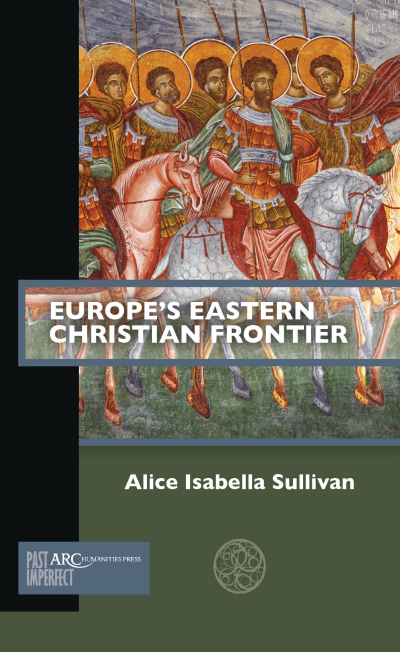
Within the shifting political landscapes of Eastern Europe during the late Middle Ages, the principality of Moldavia (extending over today's northeastern third of Romania and the Republic of Moldova) emerged as an eastern Christian frontier—indeed, a bastion, a “gate of Christianity”—in the face of the advancing Ottoman armies and Tatar forces. Moldavia’s leaders—among them Peter I Mușat, Alexander I, and Stephen III—established political, military, and economic contacts in efforts to strengthen and protect their domain, and, by extension, the rest of Europe. After the fall of Constantinople in 1453, Moldavia under Stephen III also refashioned Byzantine traditions in a new context, thereby preserving and transforming the legacies of the former Byzantine Empire to the north of the Danube River. This book argues for Moldavia’s central role in the political, military, economic, and cultural spheres of Eastern Europe from the second half of the fourteenth century to the turn of the sixteenth century.
Schlagworte
Publikation durchsuchen
Bibliographische Angaben
Auflage
1/2024
Copyrightjahr
2024
ISBN-Print
978-1-64189-079-3
ISBN-Online
978-1-80270-189-0
ePub ISBN
9781802701890
Verlag
Arc Humanities Press, Yorkshire
Reihe
Past Imperfect
Sprache
Deutsch
Seiten
130
Produkttyp
Monographie
Inhaltsverzeichnis
KapitelSeiten
Contents Kein Zugriff
List of Illustrations Kein Zugriff
Acknowledgments Kein Zugriff
Introduction Kein Zugriff
Chapter 1: Formative Periods Kein Zugriff Seiten 1 - 26
Chapter 2: Diplomacy and Military Encounters Kein Zugriff Seiten 27 - 46
Chapter 3: Ideologies and Patronage Kein Zugriff Seiten 47 - 68