, um zu prüfen, ob Sie einen Vollzugriff auf diese Publikation haben.
Monographie Kein Zugriff
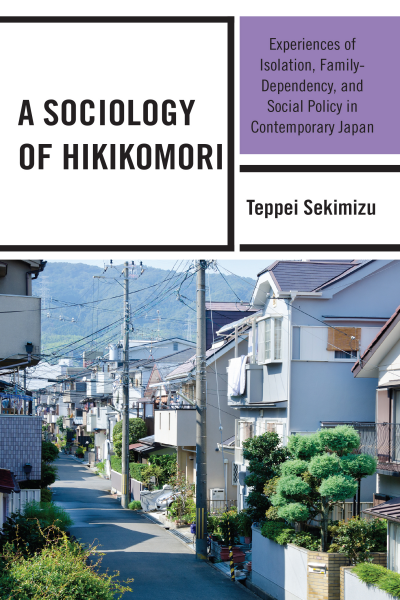
A Sociology of Hikikomori
Experiences of Isolation, Family-Dependency, and Social Policy in Contemporary Japan- Autor:innen:
- Verlag:
- 2022
Schlagworte
Publikation durchsuchen
Bibliographische Angaben
- Auflage
- 1/2022
- Copyrightjahr
- 2022
- ISBN-Print
- 978-1-6669-0094-1
- ISBN-Online
- 978-1-6669-0095-8
- Verlag
- Lexington, Lanham
- Sprache
- Englisch
- Seiten
- 168
- Produkttyp
- Monographie
Inhaltsverzeichnis
KapitelSeiten
- Contents Kein Zugriff
- Acknowledgments Kein Zugriff
- Glossary of Japanese Terms Kein Zugriff
- Overview of My Field Research on Hikikomori Kein Zugriff
- Definition of Terms: Hikikomori Subjects, Hikikomori Experience, and Hikikomori Problems Kein Zugriff
- Objects and Methods of Analysis Kein Zugriff
- Note Kein Zugriff
- Questions in the Hikikomori Experience of Kazuki Ueyama Kein Zugriff
- Despair in Communication Kein Zugriff
- The Case of Mr. A Kein Zugriff
- The Case of Mr. B Kein Zugriff
- The Case of Mr. C Kein Zugriff
- The Case of Ms. D Kein Zugriff
- The Case of Minoru Katsuyama Kein Zugriff
- Discussion of Ambivalence from Arendt’s Perspective Kein Zugriff
- Conclusion Kein Zugriff
- Notes Kein Zugriff
- Hikikomori as a Self-Definition Kein Zugriff
- The Case of Mr. B Kein Zugriff
- The Case of Ms. D Kein Zugriff
- Other Cases Kein Zugriff
- Self-definition of Hikikomori: Relationship with Mental Disorders Kein Zugriff
- Becoming a Hikikomori Subject: Not Subordination to the Category Kein Zugriff
- Conclusion Kein Zugriff
- Notes Kein Zugriff
- The Hikikomori Problem for Families Kein Zugriff
- Perspectives of Analysis: Market, Government, and Family as Actors of Life Security Kein Zugriff
- Development of Life Security through the Labor Market Kein Zugriff
- Decline of Life Security through the Labor Market Kein Zugriff
- Changes in the Quality of the Labor Market Kein Zugriff
- Characteristics of the Social Security System in Postwar Japan Kein Zugriff
- Low Benefits in the Field of Disability Kein Zugriff
- Public Spending on Education Kein Zugriff
- The Historical Changes of the Family Role in Life Security Kein Zugriff
- Parental Duty to Support Immature Children Kein Zugriff
- Non-intervention in the Family: The Case of School Non-attendance Kein Zugriff
- Familialistic Welfare Regime as a Social Foundation of the Hikikomori Problem Kein Zugriff
- The Hikikomori Problem in the Modernization of Japanese Society Kein Zugriff
- Toward the Comparative Study of Hikikomori Problems in Other Countries Kein Zugriff
- Conclusion Kein Zugriff
- Notes Kein Zugriff
- What Is the Hikikomori Problem? Kein Zugriff
- “Dropouts, Apathy, and Hikikomori” (May 1986) Kein Zugriff
- Children’s Relationship Disorders (October 1989) Kein Zugriff
- The Council on Youth Affairs, Opinion Report: “Toward the Realization of Comprehensive Youth Measures” (June 1989) Kein Zugriff
- Summary of the Discourse in the Late 1980s Kein Zugriff
- White Paper on Youth: Current Situation and Measures for Youth Problems (January 1990) Kein Zugriff
- Model Project for Welfare Measures for Hikikomori and School Non-Attendance Children (April 1991) Kein Zugriff
- Report of the Council on Youth Affairs, Basic Measures to Deal with Youth Apathy, Hikikomori, and Other Problematic Behaviors: Toward the Development of Youth with Vitality (December 1991) Kein Zugriff
- Fujiya Tomita, Departure from Hikikomori: A Heartfelt Record of Children Who Refuse to Go to School, Refuse to Work, and Reject Human Beings (September 1992) Kein Zugriff
- Hiroshi Inamura, School Refusal and Hikikomori Q&A (September 1993) Kein Zugriff
- Summary of the Early 1990s Kein Zugriff
- Sadatsugu Kudō, Hey, Hikikomori: It’s Time to Go Outside (August 1997) Kein Zugriff
- Japanese Journal of Clinical Psychiatry, Special Issue on the “Psychopathology of Hikikomori” (September 1997) Kein Zugriff
- Tamaki Saitō, Social Withdrawal: Adolescence without End (December 1998) Kein Zugriff
- Summary of the Late 1990s Kein Zugriff
- An Expanding Target of Psychiatry: Discussion by Psychiatrists Kein Zugriff
- Ministry of Health, Labour and Welfare, the Guideline for Community Mental Health Activities Regarding Hikikomori, Focusing on People in their Teens and Twenties (July 2003) Kein Zugriff
- Government Discourse Regarding Youth Independence (in 2003) Kein Zugriff
- Headquarters for the Promotion of Youth Development, The “National Youth Development Policy Outline” (December 2003) Kein Zugriff
- Summary of the Early 2000s Kein Zugriff
- Setting up Employment Support for Youth in the Late 2000s Kein Zugriff
- Headquarters for the Promotion of Youth Development, the revised “National Youth Development Policy Outline” (December 2008) Kein Zugriff
- Act on Promotion of Development and Support for Children and Youth (July 2009) Kein Zugriff
- Summary of the Late 2000s Kein Zugriff
- Ministry of Health, Labor and Welfare, the Guideline for the Evaluation and Support of Hikikomori (May 2010) Kein Zugriff
- The Cabinet Office, Survey Report on Youth Consciousness (Fact-Finding Survey on Hikikomori) (July 2010) Kein Zugriff
- Headquarters for the Promotion of Support for the Development of Children and Youth, “Vision for Children and Youth” (July 2010) Kein Zugriff
- The Cabinet Office Handbook for Hikikomori Support People (July 2011) Kein Zugriff
- The Social Security Council, Report of Special Subcommittee on Livelihood Support for Those in Need (January 2013) Kein Zugriff
- Act for Supporting the Independence of Those in Need (December 2013) Kein Zugriff
- Summary of the Early 2010s Kein Zugriff
- The Cabinet Office, Survey Report on Youth Living (September 2016) Kein Zugriff
- Headquarters for the Promotion of Support for the Development of Children and Youth, the “Policy Outline for the Promotion of Support for Children and Youth Development” (February 2016) Kein Zugriff
- The Cabinet Office, Survey Report on Living Conditions (March 2019) Kein Zugriff
- Revision of the Social Welfare Act (May 2017) Kein Zugriff
- Kawasaki City Child Murder Case, Nerima Ward Son Murder Case, and the MHLW Announcement (May–June 2019) Kein Zugriff
- Summary of the Late 2010s Kein Zugriff
- Three Contexts of Hikikomori Discourse Kein Zugriff
- Hikikomori in the Employment and Social Welfare Contexts Kein Zugriff
- Hikikomori as a Mental Health Problem Kein Zugriff
- Conclusion Kein Zugriff
- Notes Kein Zugriff
- Focusing on the Situation Rather than the Psychology of Hikikomori Subjects Kein Zugriff
- Narratives and Interpretation Regarding Lack of Recognition Kein Zugriff
- Mutuality as a Requisite for Self-Identity Kein Zugriff
- Hikikomori Experience as an Identity Crisis Kein Zugriff
- The Need to Focus on the Logic of the Situation Kein Zugriff
- The Situated Self as a Derivative of a Situation Kein Zugriff
- Participation and the Person-Role Formula Kein Zugriff
- Achieving Proper Person-Role in Mr. B’s Case Kein Zugriff
- Imagining a Person as a Virtual Focus Kein Zugriff
- Between the Situated Self and the Self-Identity Kein Zugriff
- Practical Implications for Hikikomori Support People Kein Zugriff
- Conclusion Kein Zugriff
- Notes Kein Zugriff
- Time in the Narratives of Hikikomori Experiences Kein Zugriff
- Narrative Theory of Time Kein Zugriff
- The Teller of the Restitution Narrative Kein Zugriff
- Skepticism about the Restitution Narrative Kein Zugriff
- Creating Alternative Stories Kein Zugriff
- The Dominant Story and Unique Subjectivity Kein Zugriff
- Telling “Our” Hikikomori Stories Kein Zugriff
- Interactive-Practical Process of Retelling Kein Zugriff
- Conclusion Kein Zugriff
- Notes Kein Zugriff
- Conformism and Its Social Background Kein Zugriff
- The Ambivalence and Nature of Hikikomori Subjects Kein Zugriff
- Japanese Life Security System and Assimilationism Kein Zugriff
- The Assimilationism and Pursuit of Happiness Kein Zugriff
- Concluding Remark Kein Zugriff
- Notes Kein Zugriff
- References Kein Zugriff Seiten 149 - 162
- Index Kein Zugriff Seiten 163 - 166
- About the Author Kein Zugriff Seiten 167 - 168