, um zu prüfen, ob Sie einen Vollzugriff auf diese Publikation haben.
Monographie Kein Zugriff
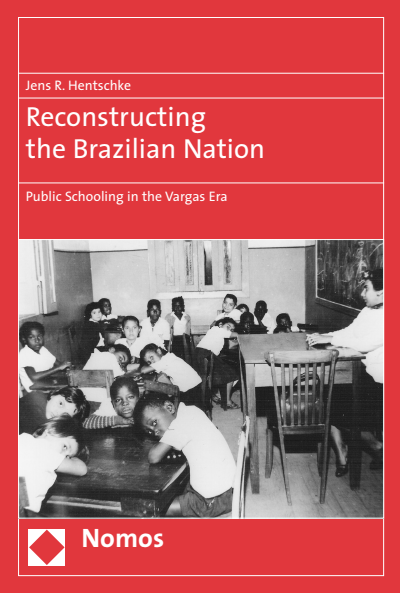
Reconstructing the Brazilian Nation
Public Schooling in the Vargas Era- Autor:innen:
- Verlag:
- 2007
Zusammenfassung
Hentschkes Studie über Bildungspolitik in Brasilien unter Getúlio Vargas geht weiter über die reine Analyse von nationalen Debatten, Institutionen und Gesetzen hinaus: Das Werk thematisiert sowohl die Wirkung regionaler Politik auf die „nationale Rekonstruktion“ des Landes als auch das beschränkte Ausmaß, in dem die Politik tatsächlich auf regionaler, kommunaler und individueller Schulebene umgesetzt wurde.
Publikation durchsuchen
Bibliographische Angaben
- Auflage
- 1/2007
- Copyrightjahr
- 2007
- ISBN-Print
- 978-3-8329-3031-8
- ISBN-Online
- 978-3-8452-0481-9
- Verlag
- Nomos, Baden-Baden
- Sprache
- Englisch
- Seiten
- 518
- Produkttyp
- Monographie
Inhaltsverzeichnis
KapitelSeiten
- Titelei/Inhaltsverzeichnis Kein Zugriff Seiten 2 - 15Autor:innen:
- List of Tables Kein Zugriff Seiten 16 - 18Autor:innen:
- List of Charts Kein Zugriff Seiten 19 - 19Autor:innen:
- List of Photographs Kein Zugriff Seiten 20 - 22Autor:innen:
- List of Abbreviations Kein Zugriff Seiten 23 - 25Autor:innen:
- Maps Kein Zugriff Seiten 26 - 28Autor:innen:
- Why a New Approach to Social Legislation in the Vargas Era? Kein Zugriff Seiten 29 - 31Autor:innen:
- Research Design Kein Zugriff Seiten 31 - 36Autor:innen:
- Historiographical and Methodological Remarks Kein Zugriff Seiten 36 - 52Autor:innen:
- Transition from Monarchy to Republic: Impact on Education Policy Kein Zugriff Seiten 53 - 60Autor:innen:
- Primary and Normal Schooling in the Old Republic. The Case of Rio de Janeiro State Kein Zugriff Seiten 60 - 64Autor:innen:
- Vocational and Reform Schools versus Secondary Schools in the Old Republic: Education for the “Less Favored” and for the Elites Kein Zugriff Seiten 64 - 68Autor:innen:
- The Impact of World War I on Education Policy Kein Zugriff Seiten 68 - 75Autor:innen:
- Rio Grande do Sul: Brazil’s Deviant Case. Origins Kein Zugriff Seiten 75 - 80Autor:innen:
- Impact of the Positivist Project on Rio Grande’s Public Schooling Kein Zugriff Seiten 80 - 86Autor:innen:
- Project and Implementation: What Really Did Change in Education? Kein Zugriff Seiten 86 - 91Autor:innen:
- Private and Community Schools in the Zones of German and Italian Colonization Kein Zugriff Seiten 91 - 97Autor:innen:
- Rio Grande do Sul and Brazil’s Reform Movement of the 1920s Kein Zugriff Seiten 97 - 98Autor:innen:
- Rio Grande do Sul’s Legacy for the Vargas Era Kein Zugriff Seiten 98 - 104Autor:innen:
- Vargas’s “National Reconstruction”: Political Context of the Debates Kein Zugriff Seiten 105 - 113Autor:innen:
- The Struggle for Alternatives in Education Policy after 1930 Kein Zugriff Seiten 113 - 122Autor:innen:
- TheEstadoNovo’sAuthoritarian Reform Kein Zugriff Seiten 122 - 133Autor:innen:
- Renewed Debate and Search for a Compromise in the Postwar Period Kein Zugriff Seiten 133 - 147Autor:innen:
- Reforma Campos and 1934 Constitution Kein Zugriff Seiten 147 - 153Autor:innen:
- 1937 Constitution and Reforma Capanema Kein Zugriff Seiten 153 - 161Autor:innen:
- 1946 Constitution and 1961 Lei de Diretrizes e Bases da Educaçâo Kein Zugriff Seiten 161 - 169Autor:innen:
- Increasing Cognitive Capacity of the State: The Search for Accurate Statistics Kein Zugriff Seiten 169 - 179Autor:innen:
- Autor:innen:
- O que os números dizem sobre o ensino primário no Brasil: Point of Departure Kein ZugriffAutor:innen:
- Resultados da Educaçâo Nacional: An Intermediary Balance Kein ZugriffAutor:innen:
- Demographic and School Censuses of the 1950s and Early 1960s: Achievements of Vargas’s Education Policy Kein ZugriffAutor:innen:
- “To Populate, To Unite, To Educate”: Projects for a National Convention on Education and colônias-escolas Kein Zugriff Seiten 205 - 216Autor:innen:
- 1930: Break with the Past? Kein Zugriff Seiten 217 - 222Autor:innen:
- “Ruralizing” Education and “Valorizing” the Population: Priorities of the Ernani do Amaral Peixoto Administration Kein Zugriff Seiten 222 - 233Autor:innen:
- Decentralization and the Peixoto Governorship: Continuity in Change? Kein Zugriff Seiten 233 - 249Autor:innen:
- Selection of Four Case Study Zones and Municipalities Kein Zugriff Seiten 249 - 255Autor:innen:
- A Traditional Community, its Benefactor, and the State: Vassouras (Zone of Vassouras) and its Grupo Escolar “Tiago Costa” Kein Zugriff Seiten 255 - 268Autor:innen:
- Struggling Backwater: Cantagalo (Zone of Cantagalo) and its Curso Normal Rural Kein Zugriff Seiten 268 - 284Autor:innen:
- Rival of the State Capital: Campos de Goytacazes (Zone of the Baixada de Goytacazes) and its Liceu de Humanidades Kein Zugriff Seiten 284 - 300Autor:innen:
- “European” Cultural Oasis: Nova Friburgo (Zone of the Alto da Serra) and its Colegio Nova Friburgo Kein Zugriff Seiten 300 - 321Autor:innen:
- 1930: Continuity in Change? Kein Zugriff Seiten 321 - 329Autor:innen:
- “Unity of Command” and “Plurality in Decision-Making”: J. P. Coelho de Souza’s Authoritarian-Nationalist Policies Kein Zugriff Seiten 329 - 347Autor:innen:
- The Ambiguities of Decentralization: Break with the Past? Kein Zugriff Seiten 347 - 355Autor:innen:
- Selection of Three Case Study Zones and Municipalities Kein Zugriff Seiten 355 - 363Autor:innen:
- Frontier Modernization in the gaúcho Zone: Bagé (Campanha) and the Transition from the Colégio Elementar “XV de Novembro” to the Grupo Escolar “Silveira Martins” Kein Zugriff Seiten 363 - 380Autor:innen:
- Confrontation and Resistance in the German Zone: Sao Leopoldo (Colonia Baixa) and its Grupo Escolar “Visconde de Sao Leopoldo” Kein Zugriff Seiten 380 - 396Autor:innen:
- Assimilation and Accomodation in the Italian Zone: Caxias do Sul (Colonia Alta) and its Colégio Elementar “José Bonifácio” and Escola Complementar “Duque de Caxias” Kein Zugriff Seiten 396 - 421Autor:innen:
- Concepts of Citizenship in the Old Republic and the Legacy of castilhismo Kein Zugriff Seiten 421 - 429Autor:innen:
- Options and Choices in the Shaping of a New Education Policy Kein Zugriff Seiten 429 - 440Autor:innen:
- Actual Changes in States and Municipalities - A Comparative Approach Kein Zugriff Seiten 440 - 454Autor:innen:
- Final Remarks Kein Zugriff Seiten 454 - 458Autor:innen:
- Bibliography Kein Zugriff Seiten 459 - 490Autor:innen:
- Index Kein Zugriff Seiten 491 - 518Autor:innen: