, um zu prüfen, ob Sie einen Vollzugriff auf diese Publikation haben.
Sammelband Kein Zugriff
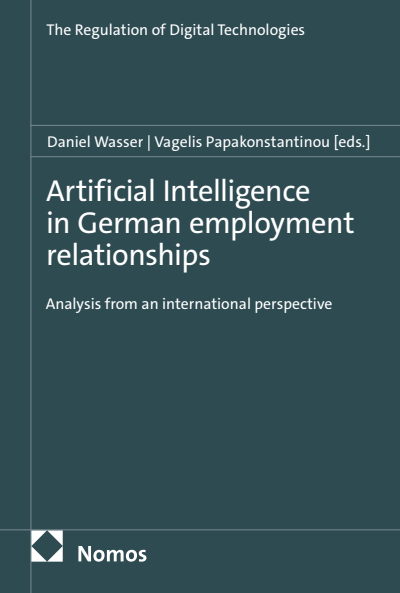
Artificial Intelligence in German employment relationships
Analysis from an international perspective- Herausgeber:innen:
- |
- Reihe:
- The Regulation of Digital Technologies, Band 3
- Verlag:
- 2026
Zusammenfassung
Künstliche Intelligenz findet zunehmend Eingang in Arbeitsverhältnisse. Dennoch stehen viele Arbeitgeber ihrem Einsatz noch zurückhaltend gegenüber. Gründe hierfür sind insbesondere ein fehlendes gemeinsames technisches und rechtliches Verständnis des Begriffs der KI sowie stark divergierende rechtliche Vorgaben, selbst innerhalb der EU. International tätige Unternehmen zögern daher häufig, KI in den Arbeitsverhältnissen ausländischer Tochtergesellschaften einzusetzen. Vor diesem Hintergrund konzentriert sich dieses Handbuch auf den Einsatz von KI in deutschen Arbeitsverhältnissen und zielt darauf ab, typische Vorbehalte gegenüber der Nutzung von KI im Beschäftigungskontext abzubauen.
Schlagworte
Publikation durchsuchen
Bibliographische Angaben
- Auflage
- 1/2026
- Copyrightjahr
- 2026
- ISBN-Print
- 978-3-7560-4333-0
- ISBN-Online
- 978-3-7489-7194-8
- Verlag
- Nomos, Baden-Baden
- Reihe
- The Regulation of Digital Technologies
- Band
- 3
- Sprache
- Deutsch
- Seiten
- 335
- Produkttyp
- Sammelband
Inhaltsverzeichnis
KapitelSeiten
- Titelei/Inhaltsverzeichnis Kein Zugriff Seiten 1 - 6
- Introduction Kein Zugriff Seiten 7 - 8
- Autor:innen:
- I. Preliminary Note Kein Zugriff
- II. Introduction Kein Zugriff
- III. Definitions Kein Zugriff
- IV. Targeted, measurable, and appropriate deployment Kein Zugriff
- V. Expert Systems Kein Zugriff
- VI. Linear Models Kein Zugriff
- VII. Deep Learning Kein Zugriff
- VIII. Neural networks Kein Zugriff
- 1. Large Language Models (LLMs) and statistics Kein Zugriff
- 2. Multimodal models Kein Zugriff
- 3. Agentic systems Kein Zugriff
- 4. Knowledge structures and data integration Kein Zugriff
- 5. RAG (Retrieval-Augmented Generation) Kein Zugriff
- 6. Building a database Kein Zugriff
- 7. Retrieval Kein Zugriff
- 8. Augmentation & generation Kein Zugriff
- 9. Ontologies Kein Zugriff
- 10. Knowledge Graphs Kein Zugriff
- X. Conclusion Kein Zugriff
- Reference list Kein Zugriff
- Autor:innen:
- I. Introduction Kein Zugriff
- a. Defining Discrimination Kein Zugriff
- 1. Flaws in Algorithmic Design Kein Zugriff
- 2. Bias in Data Kein Zugriff
- 3. Intransparency (Black Box) Kein Zugriff
- 4. Self-Reinforcing Discrimination through Feedback Loops Kein Zugriff
- ii. Data Protection Kein Zugriff
- 1. German Constitution (Grundgesetz) Kein Zugriff
- 2. General Equal Treatment Act (AGG) Kein Zugriff
- 2. German Federal Data Protection Act (BDSG) Kein Zugriff
- 3. German Works Constitution Act (BetrVG) Kein Zugriff
- 4. Impact of discrimination on employees throughout the employment relationship Kein Zugriff
- a. Recruitment / Initial Stage of Employment Kein Zugriff
- 1. Enhance Employee Training and AI Literacy Kein Zugriff
- 2. Ensure Transparency and thorough documentation: Kein Zugriff
- 3. Develop clear internal policies and contracts with providers Kein Zugriff
- 4. Use diverse and representative training Data Kein Zugriff
- 5. Establish comprehensive Algorithmic Impact Assessments (AIAs) Kein Zugriff
- 6. Maintain Human Oversight (Human-in-the-Loop) Kein Zugriff
- 7. Integrate Worker Participation Kein Zugriff
- 8. Establish Accessible Complaint and Regress Mechanisms Kein Zugriff
- 9. Collaborate in Ethical Ecosystems Kein Zugriff
- VI. Challenges and Outlook Kein Zugriff
- Reference List Kein Zugriff
- Autor:innen: | |
- I. Developing the understanding of data protection Kein Zugriff
- II. 1950–1980: Solely few ethical guidelines and start of the ‘first AI-Winter’ Kein Zugriff
- III. Still mainly non-AI specific Regulations from 1980–2000 Kein Zugriff
- 1. Non-governmental initiatives Kein Zugriff
- 2. Guidelines and other instruments from or in cooperation with the European Union Kein Zugriff
- 3. Legislative Actions from the European Union Kein Zugriff
- 4. Peculiarities in Germany Kein Zugriff
- 5. Latest Developments in Legislation Regarding AI-generated Deepfakes Kein Zugriff
- V. Conclusion Kein Zugriff
- Reference List Kein Zugriff
- Autor:innen:
- 1. Problem definition and relevance Kein Zugriff
- 2. Objectives and scope of the study Kein Zugriff
- 3. Course of the investigation Kein Zugriff
- 1. Automated decisions and liability principles Kein Zugriff
- a. Fundamentals of labor law Kein Zugriff
- b. Contractual and tortious liability Kein Zugriff
- c. Product liability Kein Zugriff
- d. EU AI Regulation Kein Zugriff
- e. General Data Protection Regulation Kein Zugriff
- f. Interim result Kein Zugriff
- 2. Employee liability for incorrect use of AI Kein Zugriff
- a. Incorrect operation of an AI system Kein Zugriff
- b. Insufficient review of AI decisions Kein Zugriff
- c. Expected monitoring obligations of the employee Kein Zugriff
- d. Disregard of operational guidelines or safety mechanisms Kein Zugriff
- e. Liability for AI as vicarious agents Kein Zugriff
- a. The role of employee will in autonomous AI decisions Kein Zugriff
- b. Contributory negligence of the employer Kein Zugriff
- 4. Causality problems Kein Zugriff
- 5. Case law and statutory regulations Kein Zugriff
- 6. Interim result Kein Zugriff
- a. Liability for operational risks Kein Zugriff
- b. Liability according to § 278 BGB for vicarious agents Kein Zugriff
- c. Liability under Section 831 BGB for AI as vicarious agent Kein Zugriff
- a. Implementation and selection of suitable AI systems Kein Zugriff
- b. Training and instruction of employees Kein Zugriff
- c. Establishment of control and monitoring mechanisms Kein Zugriff
- 3. Data protection obligations Kein Zugriff
- 4. Interim result Kein Zugriff
- V. Manufacturer and developer liability Kein Zugriff
- VI. Need for reform and influence of the AI Regulation Kein Zugriff
- VII. Conclusion Kein Zugriff
- Reference list Kein Zugriff
- Autor:innen:
- I. Introduction Kein Zugriff
- 1. Essential cybersecurity principles Kein Zugriff
- 2. Intersection of AI and cybersecurity Kein Zugriff
- 3. Unique risks in employment-related AI systems Kein Zugriff
- 4. Practical example: recruitment platforms Kein Zugriff
- 1. The General Data Protection Regulation (GDPR) Kein Zugriff
- 2. The German Federal Data Protection Act (BDSG) Kein Zugriff
- 3. The EU AI Act Proposal Kein Zugriff
- 4. Practical Example: Compliance Adaptation by German Companies Kein Zugriff
- 5. Concluding Observations Kein Zugriff
- Data poisoning: Manipulation of training data Kein Zugriff
- Adversarial attacks: Exploiting model weaknesses Kein Zugriff
- Privacy breaches: Exposure of sensitive employee data Kein Zugriff
- Practical example: Vulnerabilities in AI monitoring software Kein Zugriff
- Conclusion Kein Zugriff
- Technical safeguards Kein Zugriff
- Organisational measures Kein Zugriff
- Employee training and awareness Kein Zugriff
- Practical example: AI-driven performance monitoring tools Kein Zugriff
- Employer liability Kein Zugriff
- Employee rights and obligations Kein Zugriff
- Case study analysis Kein Zugriff
- Regulatory and judicial responses Kein Zugriff
- Practical example Kein Zugriff
- Outlook Kein Zugriff
- Divergences between Germany and the United States Kein Zugriff
- The United Kingdom as a middle path Kein Zugriff
- Emerging jurisdictions and global fragmentation Kein Zugriff
- Practical compliance challenges Kein Zugriff
- Case examples of multinational strategies Kein Zugriff
- Recommendations for harmonisation Kein Zugriff
- VIII. Conclusion Kein Zugriff
- Reference list Kein Zugriff
- Autor:innen:
- I. Artificial Intelligence in the United Arab Emirates Kein Zugriff
- 1. Regulations directly governing the use of AI Kein Zugriff
- 2. Regulations indirectly affecting and governing the use of AI Kein Zugriff
- a. Lawful Basis for Data Processing Kein Zugriff
- b. Automated processing and Individual decision-making Kein Zugriff
- c. Requirements of non-discrimination Kein Zugriff
- a. Principle of duty to personal work performance Kein Zugriff
- b. Declarations of intent under UAE labour law: disciplinary actions, notices, and terminations Kein Zugriff
- c. Data protection aspects Kein Zugriff
- d. Protection of trade secrets and confidential information in the context of AI-system use Kein Zugriff
- IV. Conclusion Kein Zugriff
- Reference list Kein Zugriff
- Autor:innen:
- A. Introduction Kein Zugriff
- B. The EU Directives 2019/770 and 2019/771 for the supply of digital content, digital services and goods with digital elements Kein Zugriff
- C.1. Preliminary step: Definition of AI according to the existing EU legal framework Kein Zugriff
- C.2. Intermediate step: Software as ‘digital content’ or ‘digital service’ or ‘good with digital elements’ under DSC and SCD Kein Zugriff
- C.3. Interim conclusion: AI as ‘digital content’, ‘digital service’ or ‘goods with digital elements’ Kein Zugriff
- D.1. The special nature of AI technology Kein Zugriff
- (a) Definition of contractual object: Kein Zugriff
- (aa) Conformity assessment based on subjective requirements: Kein Zugriff
- (bb) Conformity assessment based on objective requirements: Kein Zugriff
- (cc) Conformity assessment and third-party rights: Kein Zugriff
- (c) Remedies: Kein Zugriff
- (d) Modification: Kein Zugriff
- E. Conclusions Kein Zugriff
- Bibliography Kein Zugriff
- Autor:innen: |
- 1. Introduction Kein Zugriff
- 2. Special features of individual rights Kein Zugriff
- 2.2. Employer's right to give instructions and limits on the use of AI Kein Zugriff
- 2.3. AI company guidelines Kein Zugriff
- a) Prohibited practices Kein Zugriff
- b) High-risk AI systems Kein Zugriff
- 3.1. Consultation of experts Kein Zugriff
- 3.2. Duty to inform Kein Zugriff
- 3.3. Co-determination rights Kein Zugriff
- Autor:innen:
- A. Introduction Kein Zugriff
- B.1. Operation and traits of autonomous AI systems Kein Zugriff
- B.2. AI in recruitment Kein Zugriff
- C.1.1. Kein Zugriff
- C.1.2. Kein Zugriff
- C.1.3. Kein Zugriff
- C.1.4. Kein Zugriff
- C.2.1. Kein Zugriff
- C.2.2. Kein Zugriff
- C.2.3. Kein Zugriff
- C.3.1. Kein Zugriff
- C.3.2. Kein Zugriff
- D. Civil liability for unequal and discriminative treatment during AI recruitment Kein Zugriff
- E. Concluding remarks Kein Zugriff
- Bibliography Kein Zugriff
- Autor:innen:
- I. Introduction and examples of AI-based behaviour control Kein Zugriff
- 1. Classification as a high-risk AI system Kein Zugriff
- 2. Regulatory requirements for high-risk AI systems Kein Zugriff
- a) Special labour law regulation of Art. 88 GDPR in conjunction with § Section 26 (1) sentence 1 Federal Data Protection Act (Bundesdatenschutzgesetz; BDSG) Kein Zugriff
- b) Consent pursuant to Section 26 (2) BDSG or Art. 6 (1) a), 7 GDPR Kein Zugriff
- c) Collective agreement pursuant to Art. 88 GDPR in conjunction with § Section 26 para. 4 BDSG Kein Zugriff
- d) Legitimate interest pursuant to Art. 6 para. 1 f) GDPR Kein Zugriff
- 2. Rights of data subjects Kein Zugriff
- 3. Processing, Art. 28 GDPR Kein Zugriff
- 4. Joint controllership, Art. 26 GDPR and reference to third countries Kein Zugriff
- 5. Data protection impact assessment, Art. 35 Kein Zugriff
- 6. Prohibition of automated decision-making, Art. 22 GDPR Kein Zugriff
- 1. Consultation of an expert pursuant to Section 80 (3) BetrVG Kein Zugriff
- 2. Right of co-determination pursuant to Section 87 (1) No. 1 BetrVG Kein Zugriff
- 3. Right of co-determination for the introduction and use of technical equipment pursuant to Section 87 (1) No. 6 BetrVG Kein Zugriff
- 4. Co-determination at AI in occupational health and safety Kein Zugriff
- 5. Planning of work procedures and processes pursuant to Section 90 (1) No. 3 (and No. 2) BetrVG Kein Zugriff
- 6. Selection guidelines pursuant to Section 95 (2a) BetrVG Kein Zugriff
- 7. Operational change pursuant to Section 111 BetrVG if AI changes work processes, operational organisation, operational purpose or operational facilities Kein Zugriff
- V. Anti-discrimination law Kein Zugriff
- 1. Personal rights of employees Kein Zugriff
- 2. Equity as the limit of the right to issue instructions Kein Zugriff
- Reference list Kein Zugriff
- Autor:innen:
- I. Introduction Kein Zugriff
- II. General principles of creatorship on work results in employment Kein Zugriff
- III. International Perspective on Copyright in Employment Relationships Kein Zugriff
- IV. German Legal Framework for Copyright in Employment Kein Zugriff
- V. AI-generated and AI-assisted creation Kein Zugriff
- VI. Protectability of AI Generated Work Results Kein Zugriff
- VII. Impact of Non-Protection on Certain Processes and Business Models Kein Zugriff
- VIII. Labelling Requirements Kein Zugriff
- IX. Copyright/Trademark Infringements in Work Results by Unlicensed AI Training Data Kein Zugriff
- X. Liability of Employer Kein Zugriff
- XI. Practical Considerations for Employers in Germany Kein Zugriff
- XII. Possibilities of German Employment Law Kein Zugriff
- XIII. Practical Checklist for Employers Kein Zugriff
- XIV. Conclusion Kein Zugriff
- Reference list Kein Zugriff
- Autor:innen:
- I. Introduction Kein Zugriff
- 1. Job transformation Kein Zugriff
- a) Organisation of work and conduct of employees (section 87 para. 1 no. 1 BetrVG) Kein Zugriff
- c) Health and safety of employees (section 87 para. 1 no. 7 BetrVG) Kein Zugriff
- a) AI expert (section 80 para. 3 sentence 2 BetrVG) Kein Zugriff
- b) Information and consultation (section 90 para. 1 no. 3 and para. 2 sentence 1 BetrVG) Kein Zugriff
- c) Approval of AI-generated selection criteria (section 95 para. 2 lit. a BetrVG) Kein Zugriff
- d) Privacy protection (section 75 para 2 BetrVG) Kein Zugriff
- e) Change in operations (section 111 BetrVG) Kein Zugriff
- III: Conclusion Kein Zugriff
- Bibliography Kein Zugriff
- Authors Kein Zugriff Seiten 333 - 335