, um zu prüfen, ob Sie einen Vollzugriff auf diese Publikation haben.
Monographie Kein Zugriff
Lightning in the Age of Benjamin Franklin
Facts and Fictions in Science, Religion, and Art
Autor:innen:
Verlag:
2023
Zusammenfassung
Thunder and lightning have been seen from time immemorial as God’s instruments of punishment. Until the invention of the lightning rod by Benjamin Franklin in 1752. In Lightning in the Age of Benjamin Franklin. Facts and Fictions in Science, Religion, and Art Jan Wim Buisman shows how the Enlightenment and Romanticism have changed our scientific, religious and artistic image of natural violence forever. In the eighteenth century, thunderstorms are experienced less and less as a threat and more and more as something extraordinary. The image of God and the image of nature changed radically. The religion of enlightened people, for example, was more determined by joy than by fear. And nature was almost experienced as a girlfriend. That had significant consequences because those who no longer had to be afraid of the thunderstorm could play with it without hesitation. That’s what poets, painters and musicians did to their heart’s content. Never before the beauty of the storm was depicted as much in the western culture as during the transition from the Enlightenment to Romanticism.
Publikation durchsuchen
Bibliographische Angaben
Auflage
1/2023
Copyrightjahr
2023
ISBN-Print
978-90-8728-387-2
ISBN-Online
978-94-006-0433-9
Verlag
Leiden University Press, Leiden
Sprache
Englisch
Seiten
265
Produkttyp
Monographie
Inhaltsverzeichnis
KapitelSeiten
Table of Contents Kein Zugriff
List of Figures Kein Zugriff
List of Tables Kein Zugriff
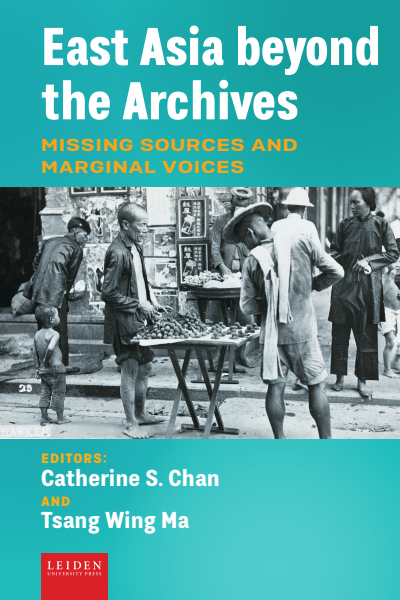
Rewriting East Asia: No Victors, No Vanquished Kein Zugriff Seiten 9 - 20
Autor:innen: |
Chapter 1. The Failure of Abdication as a Regular Method of Monarchic Power Succession: A Study of the Tang Yu zhi dao Manuscript Kein Zugriff Seiten 23 - 38
Autor:innen:
Chapter 2. The Monumentalisation of Communal Memories in Eastern Han China, 25–220 CE Kein Zugriff Seiten 39 - 76
Autor:innen:
Chapter 3. Commemorating the Dead for the Living: Two Eastern Han (25 – 220 CE) Stelae from Southwest China Kein Zugriff Seiten 77 - 102
Autor:innen:
Chapter 4. Chinese Treasures Buried in Private Japanese Libraries: Popular Confucian Works Known as Accounts of Filial Children Kein Zugriff Seiten 105 - 134
Autor:innen:
Chapter 5. Sino-Japanese Exchanges during a Tribute Hiatus: Sources from the Buddhist Archives Kein Zugriff Seiten 135 - 152
Autor:innen:
Chapter 6. “Boys,” “Mandarins,” and “Coolies”: Searching for Hong Kong’s Chinese Community in the Colonial Archive Kein Zugriff Seiten 155 - 178
Autor:innen:
Chapter 7. Uncommon Sources on an Uncommon Life: Cantonese Opera Music Master Wong Toa (1914-2015) Kein Zugriff Seiten 179 - 200
Autor:innen:
Chapter 8. Revisiting Cold War Hong Kong: Chinese Tailors, American Servicemen, and Suit-Making Experiences, 1950-1980 Kein Zugriff Seiten 203 - 220
Autor:innen:
Chapter 9. The Orient is Hong Kong? Cultural Representations of Hong Kong in Tourism Materials and the Missing Voices of the Tourists Kein Zugriff Seiten 221 - 242
Autor:innen:
Chapter 10. What Joss-Stick Community? Issues in the Inventory and Interpretation of Intangible Cultural Heritage in Macau Kein Zugriff Seiten 243 - 258