Extended search
1
Subject
Law
Law deals with norms, procedures, and case law in constitutional, civil, criminal, and public law as well as in specialized areas. The field connects legal dogmatics with methodology, comparative law, and current practice.

Series
Publisher: Nomos Verlagsgesellschaft mbH & Co. KG, Baden-Baden
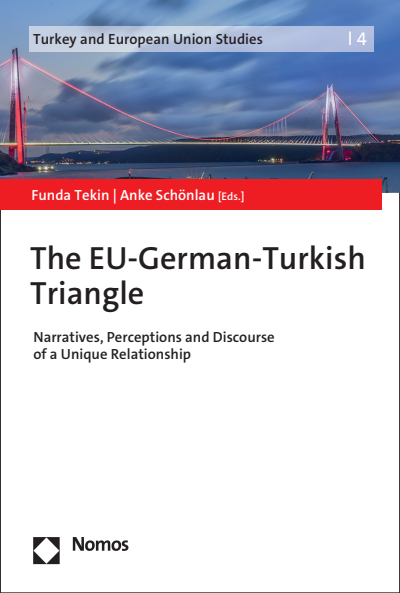
EU-Turkey relations have a long historic trajectory. Turkey is in future likely to remain, despite political tensions, an important country for the EU in economic, political and geostrategic terms. On the one hand, recent developments affecting the EU have motivated the Heads of State or Government to rediscover Turkey‘s relevance as ‚key strategic partner‘. On the other hand, prospects of Turkey‘s accession to the EU have reached an all-time low in the light of Turkey distancing itself from the political accession criterion as well as the multiple internal crises the EU has been confronted with. This renders EU-Turkey relations a highly topical issue for academic research. The Centre for Turkey and European Union Studies (CETEUS) aims at providing a framework for publications dealing with Turkey, the European Union as well as EU/German-Turkish relations regarding multiple thematic dimensions as well as geographic contexts including the neighbourhood and the global scene.
Go to series 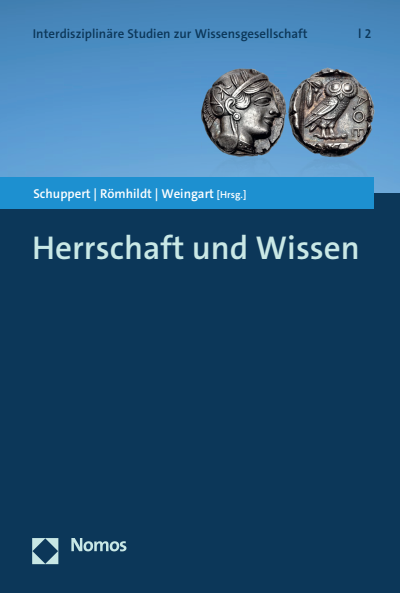
Series
Publisher: Nomos Verlagsgesellschaft mbH & Co. KG, Baden-Baden
Talk of the knowledge society is now almost universally accepted as a representation of social reality. Socially relevant actors have to adjust to it and (learn) to deal with it on a daily basis. However, academic reflections on this situation should not only state how strongly contemporary society depends on knowledge. They must also ask what is known about this knowledge itself and about society’s dependence on it. The question of knowledge in the knowledge society thus leads to the question of the opportunities and limits of the knowable, the intertwining of knowledge and non-knowledge with various forms of social logic, and an increase in knowledge conflicts. In this regard, the editors of this series want to offer an interdisciplinary discussion forum on this subject.
Go to series