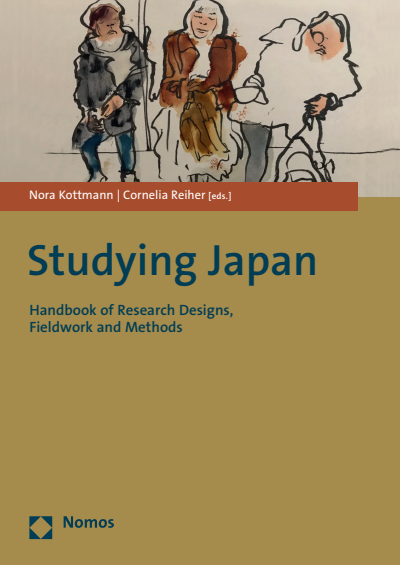
Studying Japan
Handbook of Research Designs, Fieldwork and Methods- Editors:
- |
- Publisher:
- 2020
Summary
Studying Japan is the first comprehensive guide on qualitative methods, research designs and fieldwork in social science research on Japan. More than 70 Japan scholars from around the world provide an easy-to-read overview on qualitative methods used in research on Japan’s society, politics, culture and history. The book covers the entire research process from the outset to the completion of a thesis, a paper, or a book. The authors provide basic introductions to individual methods, discuss their experiences when applying these methods and highlight current trends in research on Japan. The book serves as a foundation for a course on qualitative research methods and is, but can also be used as a reference for all researchers in Japanese Studies, the Social Sciences and Area Studies. It is an essential reading for students and researchers with an interest in Japan!With contributions by: Chapter: Celeste L. Arrington, David Chiavacci, Andreas Eder-Ramsauer, James Farrer, Roger Goodman, Carola Hommerich, Nora Kottmann, Gracia Liu-Farrer, Levi McLaughlin, Chris McMorran, Caitlin Meagher, Kaori Okano, Theresia B. Peucker, Cornelia Reiher, Katja Schmidtpott, Christian Tagsold, Katrin Ullmann, Gabriele Vogt, Cosima Wagner, Akiko Yoshida and Urs Matthias Zachmann.Essays: Shinichi Aizawa, Noor Albazerbashi, Daniel P. Aldrich, Allison Alexy, Verena Blechinger-Talcott, Christoph Brumann, Genaro Castro-Vázquez, David Chiavacci, Jamie Coates, Emma E. Cook, Laura Dales, James Farrer, Flavia Fulco, Isaac Gagné, Nana Okura Gagné, Sonja Ganseforth, Sheldon Garon, Julia Gerster, Christopher Gerteis, Markus Heckel, Steffen Heinrich, Joy Hendry, Swee-Lin Ho, Barbara Holthus, Katharina Hülsmann, Jun Imai, Hanno Jentzsch, Aya H. Kimura, Emi Kinoshita, Susanne Klien, Gracia Liu-Farrer, Patricia L. Maclachlan, Wolfram Manzenreiter, Kenneth M. McElwain, Lynne Y. Nakano, Scott North, Robin O’Day, Robert J. Pekkanen, Saadia M. Pekkanen, Isabelle Prochaska-Meyer, Nancy Rosenberger, Richard J. Samuels, Annette Schad-Seifert, Katja Schmidtpott, Tino Schölz, Kai Schulze, Kay Shimizu, Karen Shire, David H. Slater, Celia Spoden, Brigitte Steger, Nicolas Sternsdorff-Cisterna, Christian Tagsold, Akiko Takeyama, Daisuke Watanabe, Daniel White, Anna Wiemann and Tomiko Yamaguchi.Foreword: Ilse Lenz and Franz Waldenberger.
Search publication
Bibliographic data
- Edition
- 1/2020
- Copyright year
- 2020
- ISBN-Print
- 978-3-8487-5085-6
- ISBN-Online
- 978-3-8452-9287-8
- Publisher
- Nomos, Baden-Baden
- Language
- English
- Pages
- 376
- Product type
- Edited Book
Table of contents
- Titelei/Inhaltsverzeichnis No access Pages 1 - 18
- Authors: |
- 1. Introduction No accessAuthors: |
- 2. Why this handbook and why now? No accessAuthors: |
- 3. What this handbook is about No accessAuthors: |
- 4. Editorial decisions No accessAuthors: |
- 5. How to use this handbook No accessAuthors: |
- 6. Structure and content of this handbook No accessAuthors: |
- 7. Summary and future perspectives No accessAuthors: |
- Authors:
- 1. Introduction No accessAuthors:
- 2. The importance of personal biography No accessAuthors:
- 3. Interrogating the relationship between the person and society No accessAuthors:
- 4. Example of the impact of theoretical assumptions on research on contemporary Japan No accessAuthors:
- 5. Japanology versus Japanese Studies No accessAuthors:
- 6. Practical steps for beginning graduate research on Japan No accessAuthors:
- 7. Summary No accessAuthors:
- 1.1 Positioning one’s own research in Japanese Studies: Between Area Studies and discipline No access Pages 40 - 42Authors:
- Authors:
- Puzzles from the real world No accessAuthors:
- From personal experience to a research project No accessAuthors:
- The challenge of Japan’s presumed uniqueness No accessAuthors:
- Be flexible! No accessAuthors:
- Authors:
- Finding a field site No accessAuthors:
- Settling in No accessAuthors:
- Some final thoughts on taking notes No accessAuthors:
- Further reading No accessAuthors:
- References No accessAuthors:
- Authors:
- 1. Introduction No accessAuthors:
- 2. What is the core of a research question? No accessAuthors:
- 3. Types of research questions: The common denominator and specific forms No accessAuthors:
- Authors:
- 4.1 Relevance No accessAuthors:
- 4.2 Originality No accessAuthors:
- 4.3 Rigour No accessAuthors:
- Authors:
- 5.1 The process: Ping-ponging back and forth No accessAuthors:
- 5.2 Narrowing down your research question: Don’t bite off more than you can chew No accessAuthors:
- 6. How the research question affects your methodological choices: Quantitative, qualitative and mixed method approaches No accessAuthors:
- 7. Summary No accessAuthors:
- 2.1 Your research questions may change and that is ok No access Pages 65 - 67Authors:
- Authors:
- Studying electoral politics and LDP single-party dominance No accessAuthors:
- What’s new is what’s old: Public opinion and economic performance No accessAuthors:
- Some concluding thoughts No accessAuthors:
- Authors:
- Research question first: From the question to the project No accessAuthors:
- Struggling with research questions No accessAuthors:
- Asking questions about non-change No accessAuthors:
- Concluding remarks No accessAuthors:
- Further reading No accessAuthors:
- References No accessAuthors:
- Authors:
- 1. Introduction No accessAuthors:
- 2. Case studies No accessAuthors:
- 3. Different approaches of case studies No accessAuthors:
- 4. Selecting cases: Analysis of a single case or multiple cases No accessAuthors:
- 5. The Kobe women’s panel study: An evolving project No accessAuthors:
- 6. Bounding cases and units of analysis No accessAuthors:
- 7. Knowledge production: The theory building and theory testing continuum No accessAuthors:
- 8. Summary No accessAuthors:
- 3.1 Developing a comparative study: Single women in Hong Kong, Tokyo and Shanghai No access Pages 88 - 90Authors:
- 3.2 Contained serendipity as fieldwork in Japan: Studying Chinese people in Japan No access Pages 91 - 94Authors:
- Authors:
- Research project: Studying institutional change in Japan through the lens of agricultural cooperatives No accessAuthors:
- Research design No accessAuthors:
- Problems and potential solutions No accessAuthors:
- General advice No accessAuthors:
- Further reading No accessAuthors:
- References No accessAuthors:
- Authors:
- 1. Introduction No accessAuthors:
- 2. Reviewing literature: Two kinds of review No accessAuthors:
- 3. Getting started: The scope of searching for secondary literature No accessAuthors:
- Authors:
- 4.1 Primary sources No accessAuthors:
- 4.2 Secondary literature No accessAuthors:
- 5. Finding secondary literature No accessAuthors:
- 6. Cultivating a sense for the ‘best source’ No accessAuthors:
- 7. An inclusive approach to literature: Literature in Japanese and other languages No accessAuthors:
- 8. Reading secondary literature: Some practical advice No accessAuthors:
- 9. Identifying relevant debates and situating one’s own research No accessAuthors:
- 10. Writing the literature review No accessAuthors:
- 11. When to start writing No accessAuthors:
- 12. Summary No accessAuthors:
- Authors:
- Definitions No accessAuthors:
- Secondary sources No accessAuthors:
- Primary sources No accessAuthors:
- Bookstores in Japan: Some concluding thoughts No accessAuthors:
- Authors:
- Beyond disciplinarity: Positioning one’s own research No accessAuthors:
- Literature research: Hunting for relevant multilingual sources No accessAuthors:
- The politics of research: Blurred boundaries and ambiguous sources No accessAuthors:
- Engaged scholarship No accessAuthors:
- Authors:
- Zoning in: Localising the research No accessAuthors:
- Reorienting: Continued literature review in the field No accessAuthors:
- Zoning out: Situating your study No accessAuthors:
- Drawing on publications in Japanese No accessAuthors:
- Concluding remarks No accessAuthors:
- Further reading No accessAuthors:
- References No accessAuthors:
- Authors:
- 1. Introduction No accessAuthors:
- 2. What qualitative data collection methods are there? No accessAuthors:
- 3. What is each method useful for? No accessAuthors:
- 4. Which data collection method should you select for your research? No accessAuthors:
- 5. How to prepare your research? No accessAuthors:
- 6. How to position yourself when collecting data? No accessAuthors:
- 7. Summary No accessAuthors:
- Authors:
- Project methods No accessAuthors:
- Problems and ongoing problem-solving No accessAuthors:
- General advice No accessAuthors:
- Authors:
- Transnational research design: Following the staffing agencies and tracing mobility patterns No accessAuthors:
- Qualitative interviewing methods No accessAuthors:
- Patterns of cross-border labour mobility: The case of JiaIi Kobayashi No accessAuthors:
- Conclusion No accessAuthors:
- Authors: |
- Access to the field and the interviewees No accessAuthors: |
- Experimental design: Coming to terms with happiness No accessAuthors: |
- Reflections No accessAuthors: |
- Further reading No accessAuthors: |
- References No accessAuthors: |
- Authors:
- 1. Introduction No accessAuthors:
- 2. Getting started: Connecting with a Japanese university No accessAuthors:
- 3. Forging new ties in Japan No accessAuthors:
- 4. Pitches No accessAuthors:
- 5. Written self-introductions No accessAuthors:
- 6. Who you are matters No accessAuthors:
- 7. Go for the ask No accessAuthors:
- 8. Fieldwork stuff: Practical considerations No accessAuthors:
- 9. Fieldwork tips No accessAuthors:
- 10. Strategies for notetaking and storing data No accessAuthors:
- 11. The all-important thank you No accessAuthors:
- 12. Ethnography in and outside Japan via social media No accessAuthors:
- 13. Ethical concerns No accessAuthors:
- 14. Conclusion No accessAuthors:
- Authors:
- The practice of fieldwork No accessAuthors:
- Maintaining relationships No accessAuthors:
- The cosmology of fieldwork No accessAuthors:
- 6.2 A mobilities approach to ‘Japan’ fieldwork No access Pages 173 - 176Authors:
- Authors:
- Studying national policies on the local level No accessAuthors:
- Open-ended field research No accessAuthors:
- Further reading No accessAuthors:
- References No accessAuthors:
- Authors: |
- 1. Introduction No accessAuthors: |
- 2. Qualitative interviews No accessAuthors: |
- 3. Choosing the ‘right’ type of interview and questions No accessAuthors: |
- 4. Selecting and finding interviewees No accessAuthors: |
- 5. Preparing interviews: Location, timing and things to bring No accessAuthors: |
- 6. Deciding on the language No accessAuthors: |
- 7. The process of interviewing: Listening, contradictions and (non-)verbal expressions No accessAuthors: |
- 8. Negotiating interviewer–interviewee relations and reflexivity No accessAuthors: |
- 9. Recording, taking notes and (not) transcribing No accessAuthors: |
- 10. Following up and keeping in touch No accessAuthors: |
- 11. Summary No accessAuthors: |
- Authors:
- Interview strategies No accessAuthors:
- Recording and ethics No accessAuthors:
- Authors:
- What are qualitative interviews? No accessAuthors:
- What can we learn from qualitative interviews? No accessAuthors:
- The art of interviewing No accessAuthors:
- Authors:
- Further reading No accessAuthors:
- References No accessAuthors:
- Authors: |
- 1. Introduction No accessAuthors: |
- 2. What is participant observation all about? No accessAuthors: |
- 3. Participant observations in Japan: From the 16th to the 21st century No accessAuthors: |
- 4. Selecting field sites No accessAuthors: |
- 5. Gaining access No accessAuthors: |
- 6. Ethical implications No accessAuthors: |
- 7. Positioning oneself in the field No accessAuthors: |
- 8. Cell phones, writing pads and field notes No accessAuthors: |
- 9. Summary No accessAuthors: |
- Authors:
- How to observe No accessAuthors:
- Challenges during preparation and implementation No accessAuthors:
- General recommendations No accessAuthors:
- 8.2 Doing and writing affective ethnographya No access Pages 227 - 230Authors:
- Authors:
- Framing the fields No accessAuthors:
- Selecting sites and sampling subjects No accessAuthors:
- Ethics and positioning in the field No accessAuthors:
- Further reading No accessAuthors:
- References No accessAuthors:
- Authors: | |
- 1. Introduction No accessAuthors: | |
- Authors: | |
- 2.1 Where to start your search? No accessAuthors: | |
- 2.2 How to search the library catalogue No accessAuthors: | |
- 2.3 How to search for Japanese language content in catalogues No accessAuthors: | |
- 2.4 Japan-related library reference tools No accessAuthors: | |
- 3. Libraries in Japan No accessAuthors: | |
- Authors: | |
- 4.1 Regional public archives (chihō kōbunshokan) No accessAuthors: | |
- 4.2 Archives and collections of other public institutions: Libraries, museums, universities No accessAuthors: | |
- 5. Final comment No accessAuthors: | |
- Authors: |
- Private archives: Business archives No accessAuthors: |
- Public space as an archive: War memorials No accessAuthors: |
- Summary No accessAuthors: |
- Authors:
- Discovering the transnational in the sources No accessAuthors:
- Designing a transnational study No accessAuthors:
- Some advice No accessAuthors:
- Authors: |
- White Papers in Japan: Characteristics and access No accessAuthors: |
- Official macro statistics via e-Stat No accessAuthors: |
- Accessing micro datasets from data archives No accessAuthors: |
- Final remarks No accessAuthors: |
- Further reading No accessAuthors: |
- References No accessAuthors: |
- Authors: |
- 1. Introduction No accessAuthors: |
- 2. What are mixed methods designs? No accessAuthors: |
- 3. Overcoming the qualitative–quantitative divide: A pragmatic approach No accessAuthors: |
- 4. Combining qualitative and quantitative data: Three core designs No accessAuthors: |
- Authors: |
- 5.1 Getting started with your research No accessAuthors: |
- 5.2 How to collect data No accessAuthors: |
- 5.3 How to analyse your data No accessAuthors: |
- 5.4 How to present and report your findings No accessAuthors: |
- 5.5 Stumbling blocks and how to avoid them No accessAuthors: |
- 6. Summary: Prospects and challenges No accessAuthors: |
- 10.1 Reflections on multi-method research No access Pages 283 - 286Authors: |
- Authors:
- Researching friendship No accessAuthors:
- Triangulating with contemporary literature No accessAuthors:
- Adding a quantitative lens No accessAuthors:
- Conclusion No accessAuthors:
- Authors:
- Questions as a starting point No accessAuthors:
- Tuning the interpretation via triangulation No accessAuthors:
- Importance of the historical context No accessAuthors:
- Summary No accessAuthors:
- Further reading No accessAuthors:
- References No accessAuthors:
- Authors:
- 1. Introduction No accessAuthors:
- 2. Qualitative data analysis and the research process No accessAuthors:
- 3. Approaches to data analysis No accessAuthors:
- Authors:
- 4.1 Transcribing and exploring the data No accessAuthors:
- 4.2 Summarising and identifying the first themes No accessAuthors:
- 4.3 Coding No accessAuthors:
- 4.4 Identifying patterns and structures No accessAuthors:
- 5. Computer-assisted qualitative data analysis software (CAQDAS): Pros and cons No accessAuthors:
- 6. Ensuring the quality of data analysis: Reflexivity, validity and reliability No accessAuthors:
- 7. Data analysis with Japanese language material No accessAuthors:
- 8. Concluding remarks No accessAuthors:
- 11.1 Negotiating the ethics of gathering research data in a subcultural context No access Pages 310 - 312Authors:
- 11.2 Researching sex and the sexuality of Japanese teenagers: The intricacies of condom use No access Pages 313 - 316Authors:
- Authors:
- Introduction No accessAuthors:
- Employee well-being in China and Japan No accessAuthors:
- Monetary policy No accessAuthors:
- Text-mining tools No accessAuthors:
- Conclusion No accessAuthors:
- Further reading No accessAuthors:
- References No accessAuthors:
- Authors:
- 1. Introduction No accessAuthors:
- 2. Grounded theory as one framework for coding No accessAuthors:
- 3. A blueprint for the process of coding No accessAuthors:
- 4. Data collection: What counts as data? No accessAuthors:
- 5. Identifying and isolating codes and concepts: Initial/open coding No accessAuthors:
- 6. How to do initial coding? No accessAuthors:
- 7. In vivo coding No accessAuthors:
- 8. Developing concepts: Focused/selective coding No accessAuthors:
- 9. How much is enough? Theoretical saturation No accessAuthors:
- 10. Coding as theory: Theoretical coding No accessAuthors:
- 11. Practical considerations: memos and diagrams No accessAuthors:
- 12. Conclusion No accessAuthors:
- Authors:
- Coding No accessAuthors:
- Themes No accessAuthors:
- Authors:
- Grounded theory and coding No accessAuthors:
- Grounded in the data or forced onto it? No accessAuthors:
- Absent or grounded in the data? No accessAuthors:
- Co-construction, self-reflexivity and cultural translation No accessAuthors:
- Authors:
- Further reading No accessAuthors:
- References No accessAuthors:
- Authors:
- 1. Introduction No accessAuthors:
- 2. What are qualitative content analysis and frame analysis? No accessAuthors:
- 3. Getting started: Don’t wait! No accessAuthors:
- Authors:
- 4.1 Interpretivist accounts No accessAuthors:
- 4.2 Correlational or causal accounts No accessAuthors:
- 5. Units of analysis No accessAuthors:
- 6. Coding, categories and concepts No accessAuthors:
- 7. Manual versus computer-assisted analysis and feasibility No accessAuthors:
- 8. Presenting qualitative content analysis and frame analysis findings No accessAuthors:
- 9. Reliability and validity: Annotating and documenting the analysis No accessAuthors:
- 10. Summary No accessAuthors:
- 13.1 Qualitative content analysis: A systematic way of handling qualitative data and its challenges No access Pages 363 - 366Authors:
- Authors:
- Confusion No accessAuthors:
- Decision No accessAuthors:
- Prospects No accessAuthors:
- Authors:
- Further reading No accessAuthors:
- References No accessAuthors:
- Authors: |
- 1. Introduction No accessAuthors: |
- 2. What is discourse? No accessAuthors: |
- 3. What is discourse analysis? No accessAuthors: |
- Authors: |
- Key steps 1–3: Decide on a research topic, explore its context and find a research question No accessAuthors: |
- Key steps 4–6: Clarify if and what type of DA to use and define key concepts No accessAuthors: |
- Key step 7: Select sources No accessAuthors: |
- Key steps 8–9: Find formal (and linguistic) structures and situate statements in their situational and material context No accessAuthors: |
- Key step 10: Interpreting data No accessAuthors: |
- 5. Summary No accessAuthors: |
- Authors:
- Introduction No accessAuthors:
- Step one: The broader theoretical picture No accessAuthors:
- Step two: The socio-economic context No accessAuthors:
- Step three: Material for analysis No accessAuthors:
- Step four: Identifying the actors of discourse No accessAuthors:
- Step five: Content analysis No accessAuthors:
- Step six: Conclusive evaluation of discourse No accessAuthors:
- Authors:
- Discourse and emotion No accessAuthors:
- The sensorial and affect No accessAuthors:
- Interactive approaches No accessAuthors:
- Conclusion No accessAuthors:
- Authors:
- Political discourse in Japan and the discourse on the work-style reform No accessAuthors:
- Salience No accessAuthors:
- Content and context No accessAuthors:
- Concluding remarks No accessAuthors:
- Further reading No accessAuthors:
- References No accessAuthors:
- Authors:
- 1. Introduction No accessAuthors:
- 2. Getting started No accessAuthors:
- Authors:
- 3.1. PhD dissertations No accessAuthors:
- 3.2. Journal articles No accessAuthors:
- 3.3. Books No accessAuthors:
- Authors:
- 4.1 Avoid writing myths No accessAuthors:
- 4.2. Writing routines No accessAuthors:
- 4.3. Write with others No accessAuthors:
- 5. Managing mental health No accessAuthors:
- 6. Conclusions No accessAuthors:
- Authors:
- Write as you go No accessAuthors:
- Making writing social No accessAuthors:
- Writing to different audiences No accessAuthors:
- Conclusion No accessAuthors:
- Authors:
- The power of stories No accessAuthors:
- Storify but don’t get carried away No accessAuthors:
- Conclusion No accessAuthors:
- Authors:
- Further reading No accessAuthors:
- References No accessAuthors:
- Authors: |
- 1. Introduction No accessAuthors: |
- 2. What constitutes reliable and fair research? No accessAuthors: |
- Authors: |
- 3.1 Research design and data collection No accessAuthors: |
- 3.2 Data practices and management No accessAuthors: |
- 3.3 Presenting research results: Things to remember before and while writing No accessAuthors: |
- 4 Closing remarks: Towards open Japan(ese) Studies No accessAuthors: |
- Authors:
- Navigating ‘local moral worlds’ No accessAuthors:
- Writing ethnographies and balancing voices No accessAuthors:
- Final thoughts: The balancing act of cultural translation No accessAuthors:
- Authors: | | |
- Selection of topic No accessAuthors: | | |
- Modes of engagement No accessAuthors: | | |
- Contact and research design No accessAuthors: | | |
- Relationships with stakeholders, collection of data and written release forms No accessAuthors: | | |
- Dissemination of research results No accessAuthors: | | |
- Authors:
- Further reading No accessAuthors:
- References No accessAuthors:
- Authors: |
- 1. Introduction: Reaching your audience No accessAuthors: |
- 2. Think about your audience(s)! No accessAuthors: |
- Authors: |
- 3.1 Conferences and workshops No accessAuthors: |
- 3.2 Academic journals No accessAuthors: |
- 3.3 From dissertations to books No accessAuthors: |
- 3.4 Beware of predators No accessAuthors: |
- 3.5 Promoting your publications No accessAuthors: |
- Authors: |
- 4.1 Talking with journalists No accessAuthors: |
- 4.2 Publishing for a general audience No accessAuthors: |
- 4.3 Film and video No accessAuthors: |
- 4.4 Sharing data No accessAuthors: |
- 4.5 Connecting with a community No accessAuthors: |
- 5. Conclusions: Balancing goals No accessAuthors: |
- Authors:
- Choosing where and how to publish or present No accessAuthors:
- Conference presentations No accessAuthors:
- Some publishing problems: Edited volumes, language concerns No accessAuthors:
- General advice No accessAuthors:
- Authors:
- Pre-production: What story did we want to tell? No accessAuthors:
- Post-production: What story were we going to tell? No accessAuthors:
- Challenges and what we learned No accessAuthors:
- Conclusion: It’s a wrap! No accessAuthors:
- Authors:
- Further reading No accessAuthors:
- References No accessAuthors:
- Notes on contributors No access Pages 480 - 501