Geschichte in Versen vermessen: Annäherung an persische historische Epen (šāhnāmas) aus dem 15.–16. Jahrhundert
Inhaltsverzeichnis
Bibliographische Infos
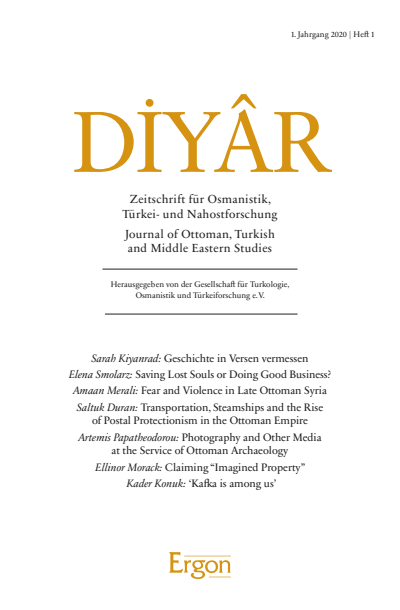
DIYÂR
Jahrgang 1 (2020), Heft 1
- Autor:innen:
- Verlag
- Ergon, Baden-Baden
- Copyrightjahr
- 2020
- ISSN-Online
- 2942-3155
- ISSN-Print
- 2625-9842
Kapitelinformationen
Jahrgang 1 (2020), Heft 1
Geschichte in Versen vermessen: Annäherung an persische historische Epen (šāhnāmas) aus dem 15.–16. Jahrhundert
- Autor:innen:
- ISSN-Print
- 2625-9842
- ISSN-Online
- 2942-3155
- Kapitelvorschau:
Shortly after the completion of Firdausī’s Šāhnāma, historical epics in modern Persian were being written. While sharing in the tradition of šāhnāma-nivīsī, these epics deal with a more recent past. This paper maps out the characteristics of Persian historical epics by means of three examples (ʿAbdallāh Hātifī: Timurnāma and Šāhnāma-yi Hātifī; Qāsimī Gunābādī: Šāhnāma-yi Ismāʿīl). Not only during the Ilkhanid era, but also during later eras these kinds of works were actively being produced in Iran, even though they are as yet largely unexplored. The three aforementioned epics dating from the late Timurid and early Safavid periods (15th and 16th c.) shall illustrate continuities in form and content that transgress the limits of dynastic history, while at the same time acknowledging the three epics’ characteristics to be understood within their particular historical context. It will become clear then that historical epics tied together poetry and historiography consciously. For centuries, the respective authors sought to follow up on Firdausī’s opus and thus to embed the depicted ruler or dynasty/dynasties in a narrative of Iranian history, which apparently greatly appealed to their envisaged audience.
