The European TREVI Conference in the 1970s: Transgovernmental Policy Coordination in the Area of Internal Security
Table of contents
Bibliographic information
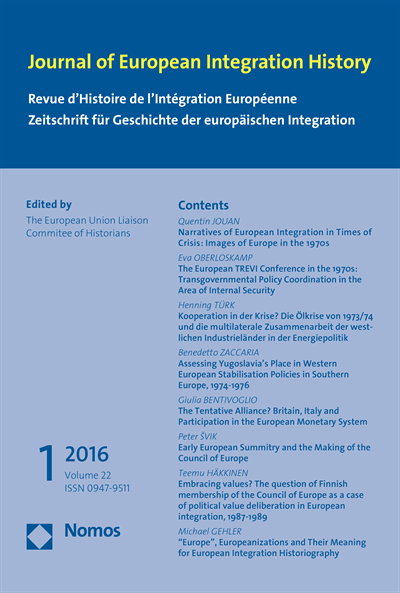
JEIH Journal of European Integration History
Volume 22 (2016), Issue 1
- Authors:
- Publisher
- Nomos, Baden-Baden
- Copyright Year
- 2016
- ISSN-Online
- 2942-321X
- ISSN-Print
- 0947-9511
Chapter information
Volume 22 (2016), Issue 1
The European TREVI Conference in the 1970s: Transgovernmental Policy Coordination in the Area of Internal Security
- Authors:
- ISSN-Print
- 0947-9511
- ISSN-Online
- 2942-321X
- Preview:
Against the background of terrorist threats, but also in the light of European integration objectives, the nine EC member states began during the 1970s to align policies in the area of internal security. The principal forum for this was the so-called TREVI conference - an intergovernmental form of cooperation that largely took place behind closed doors, hidden from the view of the general public. Its key objective was to provide a framework for the systematic cooperation of police forces and security agencies within the EC. The paper analyses how the early TREVI conference functioned. It concludes that the conference’s work was significantly shaped by transgovernmental coordination mechanisms and that ministerial and security officials gained a pronounced influence on agenda-setting and decision-making processes. This underlying momentum was particularly problematic with regard to the democratic accountability of the conference.
