Fear and Violence in Late Ottoman Syria: The Ismaʿilis and the School of Agriculture
Table of contents
Bibliographic information
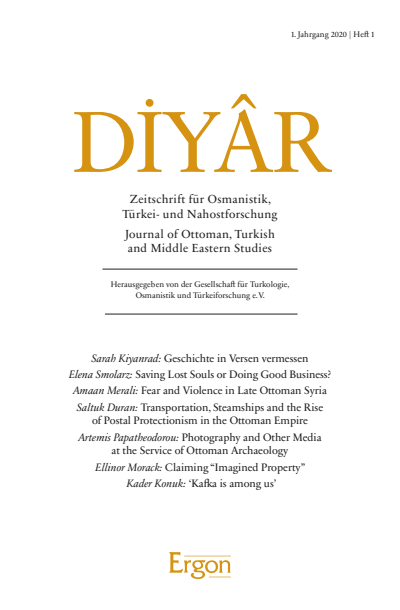
DIYÂR
Volume 1 (2020), Issue 1
- Authors:
- Publisher
- Ergon, Baden-Baden
- Copyright Year
- 2020
- ISSN-Online
- 2942-3155
- ISSN-Print
- 2625-9842
Chapter information
Volume 1 (2020), Issue 1
Fear and Violence in Late Ottoman Syria: The Ismaʿilis and the School of Agriculture
- Authors:
- ISSN-Print
- 2625-9842
- ISSN-Online
- 2942-3155
- Preview:
This article explores the changing relations between state officials and the Shiʿi Nizari Ismaʿilis in early 20th-century Ottoman Syria. It examines the history surrounding the founding of the School of Agriculture in the majority Ismaʿili town of Salamiyya. Ottoman authorities had only recently discovered that the Ismaʿilis were followers of an imam in Bombay, the Aga Khan III. Once the community was associated with a British Empire loyalist like the Aga Khan, officials suspected collusion. Subsequent criminal investigations sanctioned legal and political persecution against the Ismaʿilis. Arresting and imprisoning the Ismaʿilis, however, could only do so much. Officials decided on a policy to correct their beliefs through state schooling and turn the Ismaʿilis into loyal Ottomans. Provincial authorities, meanwhile, took advantage of Istanbul’s doubts over the Ismaʿilis’ loyalty to the Empire. They proceeded to arrest the Ismaʿilis and confiscate tens of thousands of gold liras in cash and jewellery from the community. The cash and valuables were buried in a fund which ultimately paid for the School of Agriculture. This article concludes that violence was mandated by all levels of government and prefigured any educational policy for the Ismaʿilis in Syria because of fears the community was a fifth column.
