REFERENCES
Inhaltsverzeichnis
Bibliographische Infos
Open Access Vollzugriff
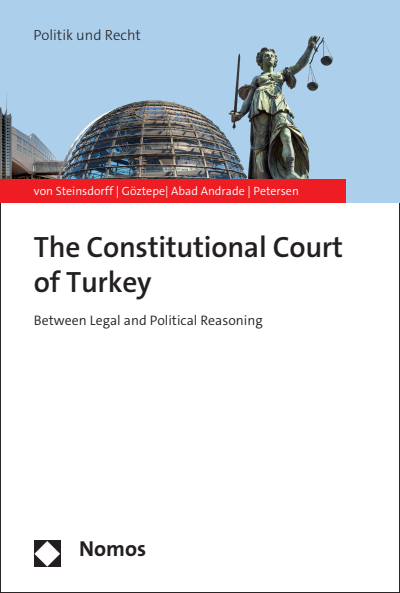
The Constitutional Court of Turkey
Between Legal and Political Reasoning
- Autor:innen:
- Reihe
- Politik und Recht
- Verlag
- Nomos, Baden-Baden
- Copyrightjahr
- 2022
- ISBN-Print
- 978-3-8487-4632-3
- ISBN-Online
- 978-3-8452-8862-8
Kapitelinformationen
Open Access Vollzugriff
REFERENCES
- ISBN-Print
- 978-3-8487-4632-3
- ISBN-Online
- 978-3-8452-8862-8
- Kapitelvorschau:

Literaturverzeichnis
Es wurden keine Treffer gefunden. Versuchen Sie einen anderen Begriff.
- Abad Andrade, Maria 2020. Verfassungsgerichtliche Entscheidungsfindung und ihre Folgen. Das Türkische Verfassungsgericht zwischen Mehrheitslogik und Konsensverfahren. Baden-Baden: Nomos. Google Scholar öffnen doi.org/10.5771/9783845288628
- Ahmad, Feroz 1993. The Making of Modern Turkey. London: Routledge. Google Scholar öffnen doi.org/10.5771/9783845288628
- Akbulut, Olgun 2010. „Criteria Developed by the European Court of Human Rights on the Dissolution of Political Parties” in Form International Law Journal 34, 1, pp. 46-77. Google Scholar öffnen doi.org/10.5771/9783845288628
- Aksoy, Muammer 1962. Anayasa Mahkemesi Üyelerinin Seçim Konusundaki Tartışma (Ve Bunun Ortaya Çıkardığı Kamu Hukuku Meseleleri). Ankara: Sevinç Matbaası. Google Scholar öffnen doi.org/10.5771/9783845288628
- Aliefendioğlu, Yılmaz 1996. Anayasa Yargısı ve Türk Anayasa Mahkemesi. Ankara: Yetkin Yayınları. Google Scholar öffnen doi.org/10.5771/9783845288628
- Altunışık, Meliha Benli; Tür, Özlem 2005. Turkey. Challenges of continuity and change. New York, NY: Routledge. Google Scholar öffnen doi.org/10.5771/9783845288628
- Arato, Andrew 2010. “The Constitutional Reform Proposal of the Turkish Government: The Return of Majority Imposition”, in Constellations 17, 2, pp. 345–50. Google Scholar öffnen doi.org/10.5771/9783845288628
- Arold, Nina-Louisa 2007. The Legal Culture of the European Court of Human Rights. Leiden; Boston: Martinus Nijhoff Publishers. Google Scholar öffnen doi.org/10.5771/9783845288628
- Arsel, İlhan 1970. Anayasa Mahkemesi’nin Bazı Eğilimleri Üzerine Görüşler ve Anayasa Mahkemesi Kararlarından Özetler. Ankara: Sevinç Matbaası. Google Scholar öffnen doi.org/10.5771/9783845288628
- Arslan, Zühtü 2002. “Conflicting Paradigms: Political Rights in the Turkish Constitutional Court”, in Critique: Critical Middle Eastern Studies 11, 1, pp. 9–25. Google Scholar öffnen doi.org/10.5771/9783845288628
- Arslan, Zühtü 2005. Anayasa Teorisi. Ankara: Seçkin. Google Scholar öffnen doi.org/10.5771/9783845288628
- Ars lan, Zühtü 2007. “Reluctantly Sailing Towards Political Liberalism: The Political Role of the Judiciary in Turkey”, in Fighting for Political Freedom. Comparative Studies on the Legal Complex and Political Liberalism, eds. Halliday, Terence C.; Karpik, Lucien; Feeley, Malcom M., pp. 219-246. Oxford, Portland (OR): Hart Publishing. Google Scholar öffnen doi.org/10.5771/9783845288628
- Arslan, Zühtü 2008. “Anayasa Mahkemesinin “Yorum Tekeli”, Yargısal Üstünlük ve Demokrasi”, in Prof. Dr. Ergun Özbudun’a Armağan, Cilt 2, pp. 59–89. Ankara: Yetkin Yayınları. Google Scholar öffnen doi.org/10.5771/9783845288628
- Aybar, Mehmet Ali 2014. Türkiye İşçi Partisi Tarihi. İstanbul: İletişim Yayınları. Google Scholar öffnen doi.org/10.5771/9783845288628
- Aydin-Cakir, Aylin 2018 . “The impact of judicial preferences and political context on Constitutional Court decisions: Evidence from Turkey”, in International Journal of Constitutional Law 16, 4, pp. 1101–1120. Google Scholar öffnen doi.org/10.5771/9783845288628
- Azrak, A. Ülkü 2007. „Die Verfassungsgerichtsbarkeit in der Türkei“, in Verfassungsgerichtsbarkeit in Mittel- und Osteuropa. Teilband I: Berichte, eds. Luchterhandt, Otto; Starck, Christian; Weber, Albrecht, pp. 213–236. Baden-Baden: Nomos. Google Scholar öffnen doi.org/10.5771/9783845288628
- Bailey, Michael A.; Maltzman, Forrest 2011. The constrained court. Law, politics, and the decisions justices make. Princeton, NJ: Princeton University Press. Google Scholar öffnen doi.org/10.5771/9783845288628
- Bâli, Aslı 2010. Unpacking Turkey’s ‘Court-Packing’ Referendum, 11.05.2010, in MERIP. https://merip.org/2010/11/unpacking-turkeys-court-packing-referendum/ (last accessed: 15/07/2020). Google Scholar öffnen doi.org/10.5771/9783845288628
- Bâli, Aslı 2011-2012. “The Perils of Judicial Independence: Constitutional Transition and the Turkish Example”, i n Virginia Journal of International Law 52, 2, pp. 235–320. Google Scholar öffnen doi.org/10.5771/9783845288628
- Bâli, Aslı 2013. “Courts and Constitutional Transition: Lessons from the Turkish Case”, in International Journal of Constitutional Law 11, 3, pp. 666–701. Google Scholar öffnen doi.org/10.5771/9783845288628
- Barkow, Rachel E. 2002. „More Supreme than Court? The Fall of the Political Question Doctrine and the Rise of Judicial Supremacy”, in Columbia Law Review 102, 2, pp. 237-336. Google Scholar öffnen doi.org/10.5771/9783845288628
- Balta, Tahsin Bekir 1968. “Das türkische Verfassungsgericht”, in Hundert Jahre Verfassungsgerichtsbarkeit. Fünfzig Jahre Verfassungsgerichtshof in Österreich, eds. Ermacora, Felix; Klecatsky, Hans; Marcic, René, pp. 47–72. Wien: Europa Verlag. Google Scholar öffnen doi.org/10.5771/9783845288628
- Barın, Taylan 2020. Cumhurbaşkanlığı Kararnamelerinin Hukuki Rejimi ve Anayasallık Denetimi. İstanbul: On İki Levha Yayınları. Google Scholar öffnen doi.org/10.5771/9783845288628
- Başlar, Kemal 2012. „The Fifty Years of the Constitutional Court of Turkey (1962-2012)“, in Law & Justice Review 3, 4, pp. 13–58. Google Scholar öffnen doi.org/10.5771/9783845288628
- Belge, Ceren 2006. “Friends of the Court: The Republican Alliance and Selective Activism of the Constitutional Court of Turkey”, in Law & Society Review 40, 3, pp. 653–692. Google Scholar öffnen doi.org/10.5771/9783845288628
- Benhabib, Seyla 2010. “The Return of Political Theology: The Scarf Affair in Comparative Constitutional Perspective in France, Germany and Turkey”, in Philosophy & Social Criticism 36, 3/4, pp. 451–471. Google Scholar öffnen doi.org/10.5771/9783845288628
- Bilgin, Mehmet Fevzi 2008. “Constitution, Legitimacy and Democracy in Turkey”, in Constitutional politics in the Middle East. With special reference to Turkey, Iraq, Iran, and Afghanistan, ed. Arjomand, Saïd Amir, pp. 123–146. Oxford: Hart Publishing. Google Scholar öffnen doi.org/10.5771/9783845288628
- Boulanger, Christian 2013. Hüten, richten, gründen: Rollen der Verfassungsgerichte in der Demokratisierung Deutschlands und Ungarns. Berlin: epubli. Google Scholar öffnen doi.org/10.5771/9783845288628
- Brown, Nathan J.; Waller, Julian G. 2016. “Constitutional courts and political uncertainty: Constitutional ruptures and the rule of judges”, in International Journal of Constitutional Law 14, 4, pp. 817–850. Google Scholar öffnen doi.org/10.5771/9783845288628
- Bundesverfassungsgericht 2014. Entscheidungen mit oder ohne Sondervotum in der amtlichen Sammlung (BVerfGE), Bände 30-132 (1971-2013). https://www.bundesverfassungsgericht.de/organisation/gb2013/A-I-7.html (last access 28.10.2014). Google Scholar öffnen doi.org/10.5771/9783845288628
- Can, Osman 2012. “The Turkish Constitutional Court as Defender of the Raison d’Etat”, in Constitutionalism in Islamic Countries. Between Upheaval and Continuity, eds. Grote, Rainer; Röder, Tilmann J., pp. 259–278. Oxford: Oxford University Press. Google Scholar öffnen doi.org/10.5771/9783845288628
- Cappelletti, Mauro 1989. The Judicial Process in Comparative Perspective. Oxford: Clarendon Press. Google Scholar öffnen doi.org/10.5771/9783845288628
- Casanova, José 1994. Public Religions in the Modern World. Chicago: University of Chicago Press. Google Scholar öffnen doi.org/10.5771/9783845288628
- Celep, Ödül 2012. “The Political Causes of Party Closures in Turkey”, in Parliamentary Affairs 67, 2, pp. 1–20. Google Scholar öffnen doi.org/10.5771/9783845288628
- Çalışkan, Koray 2018. “Toward a new political regime in Turkey: From competitive toward full authoritarianism”, in New Perspectives on Turkey 58, pp. 5–33. Google Scholar öffnen doi.org/10.5771/9783845288628
- Celep, Ödül 2014. “The Political Causes of Party Closures in Turkey”, in Parliamentary Affairs 67, 2, pp. 371-390. Google Scholar öffnen doi.org/10.5771/9783845288628
- Cohen, Mathilde 2014. „Ex Ante Versus Ex Post Deliberations: Two Models of Judicial Deliberations in Courts of Last Resort“, in American Journal of Comparative Law 62, 4, pp. 401–458. Google Scholar öffnen doi.org/10.5771/9783845288628
- Collins, Paul M. 2008. Friends of the Supreme Court. Interest Groups and Judicial Decision Making. Oxford: Oxford University Press. Google Scholar öffnen doi.org/10.5771/9783845288628
- Coşkun, Vahap 2010. “Turkey’s Illiberal Judiciary: Cases and Decisions”, in Insight Turkey 12, 4, pp. 43–67. Google Scholar öffnen doi.org/10.5771/9783845288628
- Da Silva, Virgílio Afonso 2013. “Deciding Without Deliberating”, in International Journal of Constitutional Law 11, 3, pp. 557–584. Google Scholar öffnen doi.org/10.5771/9783845288628
- Dahl, Robert A. 1957. “Decision-making in a democracy: The Supreme Court as a national policy-maker”, in Journal of Public Law 6, pp. 279–295. Google Scholar öffnen doi.org/10.5771/9783845288628
- Daly, Tom G. 2017. The Alchemists: Questioning our Faith in Courts as Democracy-Builders. Cambridge: Cambridge University Press. Google Scholar öffnen doi.org/10.5771/9783845288628
- Davis, Sue 1999. “The Chief Justice and Judicial Decision-Making: The Institutional Basis of Leadership on the Supreme Court”, in Supreme Court Decision-Making. New Institutionalist Approaches, eds. Clayton, Cornell W.; Gillman, Howard, pp. 135–154. Chicago: University of Chicago Press. Google Scholar öffnen doi.org/10.5771/9783845288628
- Döner, Ayhan 2008. “Anayasa Mahkemesi Kararlarının Gerekçelerinin Bağlayıcılığına İlişkin Bazı Sorunlar”, in Prof. Dr. Ergun Özbudun’a Armağan, Cilt 2, pp. 215-233. Ankara: Yetkin Yayınları. Google Scholar öffnen doi.org/10.5771/9783845288628
- Dyevre, Arthur 2010. “Unifying the Field of Comparative Judicial Politics: Towards a General Theory of Judicial Behaviour”, in European Political Science Review 2, 2, pp. 297–327. Google Scholar öffnen doi.org/10.5771/9783845288628
- Epstein, Lee; Knight, Jack 1997. The Choices Justices Make. Washington D.C.: Congressional Quarterly Press. Google Scholar öffnen doi.org/10.5771/9783845288628
- Epstein, Lee; Knight, Jack; Shvetsova, Olga 2001. “The Role Constitutional Courts in the Establishment and Maintenance of Democratic Systems of Government”, in Law & Society Review 35, 1, pp. 117-164. Google Scholar öffnen doi.org/10.5771/9783845288628
- Epstein, Lee; Segal, Jeffrey; Spaeth, Harold; Walker, Thomas 2012. The Supreme Court Compendium. Data, Decisions, and Developments, 5th ed., Thousand Oaks, CA: CQ Press. Google Scholar öffnen doi.org/10.5771/9783845288628
- Erdem, Fazıl Hüsnü 2004. “Türk Anayasa Mahkemesi ve Avrupa İnsan Hakları Mahkemesi Kararlarında Siyasal Partilerin Kapatılması: Karşılaştırmalı Bir Analiz”, in Hukuk ve Adalet 1, 4, pp. 252–301. Google Scholar öffnen doi.org/10.5771/9783845288628
- Ergül, Ozan (ed.) 2005. Democracy and the Judiciary. Ankara: TBB. Google Scholar öffnen doi.org/10.5771/9783845288628
- Ergül, Ozan 2007. Yeni Kurumsalcı Yaklaşımla Türk Anayasa Mahkemesi ve Demokrasi. Ankara: Adalet Yayınevi. Google Scholar öffnen doi.org/10.5771/9783845288628
- Ergül, Ozan 2014. “On Yıl Süreli Denetim Yasağının Kapsamını Genişleten Anayasa Mahkemesi İçtihadı: Anayasaya Uygunluk Denetiminde Sessiz Bir Geri Adım”, in Akademik Yaşamının 55. Yılı Onuruna Rona Aybay’a Armağan, pp. 863-895. İstanbul: Legal Yayı nları . Google Scholar öffnen doi.org/10.5771/9783845288628
- Ergül, Ozan 2016. Türk Anayasa Mahkemesi Kararlarında İçtihat İstikrarsızlığı. Ankara: Adalet Yayınevi. Google Scholar öffnen doi.org/10.5771/9783845288628
- Esen, Bülent Nuri 1966. Anayasa Mahkemesine Göre Türk Anayasa Hukuku Anlayışı. Ankara: Ankara Üniversitesi Basımevi. Google Scholar öffnen doi.org/10.5771/9783845288628
- Ewert, Stephan; Hein, Michae l 2016. „Der Einfluss der Verfahrensarten auf die Politisierung europäischer Verfassungsgerichte. Deutschland, Bulgarien und Portugal im Vergleich“, in Politische Vierteljahresschrift 57, 1, pp. 53–78. Google Scholar öffnen doi.org/10.5771/9783845288628
- Favoreu, Louis / Loïc, Philip 2009. Les grandes décisions du Conseil constitutionnel, Paris: Dalloz. Google Scholar öffnen doi.org/10.5771/9783845288628
- Ferejohn, John; Pasquino, Pasquale 2002. „Constitutional Courts as Deliberative Institutions: Towards an Institutional Theory of Constitutional Justice“, in Constitutional Justice, East and West. Democratic Legitimacy and Constitutional Courts in Post-Communist Europe in A Comparative Perspective, ed. Sadurski, Wojciech, pp. 21–36. The Hague, New York: Kluwer Law International. Google Scholar öffnen doi.org/10.5771/9783845288628
- Ferejohn, John; Pasquino, Pasquale 2004. “Constitutional Adjudication: Lessons from Europe”, in Texas Law Review 82, 7, pp. 1671–1704. Google Scholar öffnen doi.org/10.5771/9783845288628
- Ferejohn, John; Rosenbluth, Frances; Shipan, Charles 2009. “Comparative Judicial Politics”, in Oxford Handbook of Comparative Politics, eds. Boix, Carles; Stokes, S.C., pp. 727–751. Oxford: Oxford University Press. Google Scholar öffnen doi.org/10.5771/9783845288628
- Feyzioğlu, Turhan 1951. Kanunların Anayasaya Uygunluğunun Kazai Murakabesi. Ankara: Güney Matbaacılık. Google Scholar öffnen doi.org/10.5771/9783845288628
- Gençkaya, Ömer Faruk; Özbudun, Ergun 2009. Democratization and the Politics of Constitution-making in Turkey. Budapest: Central European University Press. Google Scholar öffnen doi.org/10.5771/9783845288628
- Giles, Michael W.; Blackstone, Bethany; Vining, Richard L. 2008. “The Supreme Court in American Democracy. Unraveling the Linkage Between Public Opinion and Judicial Decision Making”, in The Journal of Politics 70, 2, pp. 293–306. Google Scholar öffnen doi.org/10.5771/9783845288628
- Ginsburg, Tom 2003. Judicial review in new democracies. Constitutional courts in Asian Cases. Cambridge: Cambridge University Press. Google Scholar öffnen doi.org/10.5771/9783845288628
- Ginsburg, Tom; Moustafa, Tamir 2008. Rule by law. The politics of courts in authoritarian regimes. Cambridge: Cambridge University Press. Google Scholar öffnen doi.org/10.5771/9783845288628
- Gönenç , Levent 2004. “The 2001 Amendments to the 1982 Constitution of Turkey”, in Ankara Law Review 1, 1, pp. 89-109. Google Scholar öffnen doi.org/10.5771/9783845288628
- Gönenç , Levent 2008. “Presidential elements in government: Turkey”, in European Constitutional Law Review 4, 3, pp. 488–523. Google Scholar öffnen doi.org/10.5771/9783845288628
- Gözler, Kemal 2011. Anayasa Hukukunun Genel Teorisi. Cilt: II. Bursa: Ekin. Google Scholar öffnen doi.org/10.5771/9783845288628
- Gözler, Kemal 2015. Türk Anayasa Hukuku Dersleri, 18. Baskı. Bursa: Ekin. Google Scholar öffnen doi.org/10.5771/9783845288628
- Gözler, Kemal 2020. Türk Anayasa Hukuku Dersleri, 25. Baskı. Bursa: Ekin. Google Scholar öffnen doi.org/10.5771/9783845288628
- Göztepe, Ece 1998. Anayasa Şikayeti. Ankara: AÜHF Yayınları. Google Scholar öffnen doi.org/10.5771/9783845288628
- Göztepe, Ece 2004. “Die Kopftuchdebatte in der Türkei – Eine kritische Bestandsaufnahme für die deutsche Diskussion”, in Aus Politik und Zeitgeschichte 33-34, pp. 32–38. Google Scholar öffnen doi.org/10.5771/9783845288628
- Göztepe, Ece 2007a. “Sevilmeyen Anayasayı Kim Korumak İster? 2007 Cumhurbaşkanlığı Seçimlerinin Hukuki Bir Değerlendirmesi”, in Haziran 2007, 218, pp. 69-84. Google Scholar öffnen doi.org/10.5771/9783845288628
- Göztepe, Ece 2007b. “Türkiye’de Bir Rejim Sorunu Olarak Cumhurbaşkanlığı Seçimi – Karşılaştırmalı Bir Değerlendirme”, in Cumhurbaşkanı Seçimi Öncesi Cumhurbaşkanlığı. Türkiye Barolar Birliği (ed.), Sempozyum – Ankara 12-13 Ocak 2007 içinde, pp. 193-212. Ankara: TBB Yayınları. Google Scholar öffnen doi.org/10.5771/9783845288628
- Göztepe, Ece 2010. "Eine Analyse der Verfassungsänderungen in der Türkei vom 7. Mai 2010: Ein Schritt in Richtung mehr Demokratie?”, in EuGRZ, 22–23, pp. 685–700. Google Scholar öffnen doi.org/10.5771/9783845288628
- Göztepe, Ece 2015. “Die Einführung der Verfassungsbeschwerde in der Türkei – Eine Zwischenbilanz (2012-2014)“, in Jahrbuch des öffentlichen Rechts 63, pp. 485–542. Google Scholar öffnen doi.org/10.5771/9783845288628
- Göztepe, Ece 2017. “Ein Paradigmenwechsel für den Sicherheitsstaat: Die Praxis des Ausnahmezustandes im Südosten der Türkei”, in Ausnahmezustand, ed. Matthias Lemke, pp. 105-127. Wiesbaden: Springer VS. Google Scholar öffnen doi.org/10.5771/9783845288628
- Göztepe, Ece 2018a. Turkey, the Constitutional Amendment of April 2017 as a Transition to a ‘State-Presidential System’, 23.10.2018, in Reset Dialogues. https://www.resetdoc.org/story/constitutional-amendment-april-2017-turkey-crucial-transition-unknown-state-presidential-system/ (last accessed: 15.07.2020). Google Scholar öffnen doi.org/10.5771/9783845288628
- Göztepe, Ece 2018b. “The Permanency of the State of Emergency in Turkey. The Rise of a Constituent Power or Only a New Quality of the State?”, in Zeitschrift für Politikwissenschaft 28, pp. 521–534. Google Scholar öffnen doi.org/10.5771/9783845288628
- Göztepe, Ece 2018c. “Normative Foundations of the Right to Individual Complaint in Turkey with a Case Study on Electoral Rights”, Research and Policy on Turkey, 1/2018, pp. 68-89. Google Scholar öffnen doi.org/10.5771/9783845288628
- Grimm, Dieter; Kirchhof, Paul; Eichberger, Michael, eds., 2007. Entscheidungen des Bundesverfassungsgerichts. Studienauswahl, 3rd ed., Heidelberg: Mohr Siebeck. Google Scholar öffnen doi.org/10.5771/9783845288628
- Grimm, Dieter 2019. “What Exactly Is Political about Constitutional Adjudication?”, in Judicial Power. How Constitutional Courts Affect Political Transformations, ed. Landfried, Christine, pp. 307–317. Cambridge: Cambridge University Press. Google Scholar öffnen doi.org/10.5771/9783845288628
- Grunwald, Wolfgang 1996. „Psychologische Gesetzmäßigkeiten der Gruppenarbeit. Über die Grundbedingungen erfolgreicher Zusammenarbeit“, in Personalführung 9, pp. 740–750. Google Scholar öffnen doi.org/10.5771/9783845288628
- Gülener, Serdar; İrfan Haşlak 2011. “Relations between Politics and Constitutional Review in Turkey with Special Reference to the Referrals of Republican People’s Party: 2002-2010 Period”, in Alternatives. Turkish Journal of International Relations 10, 2-3, pp. 1–19. Google Scholar öffnen doi.org/10.5771/9783845288628
- Gülsoy, Mehmet Tevfik 2007. Özgürlüklerin Korunmasında Anayasa Yargısının Yeri ve Meşruluğu. Ankara: Yetkin Yayınları. Google Scholar öffnen doi.org/10.5771/9783845288628
- Güney, Aylin; Başkan, Filiz 2008. “Party Dissolutions and Democratic Consolidation: The Turkish Case”, in South European Society and Politics 13, 3, pp. 263–281. Google Scholar öffnen doi.org/10.5771/9783845288628
- Güney, Necla 2002. “Das Antiterrorgesetz-Urteil des türkischen Verfassungsgerichts vom 6. Januar 1999”, in Zeitschrift für ausländisches öffentliches Recht und Völkerrecht 62, pp. 461–475. Google Scholar öffnen doi.org/10.5771/9783845288628
- Haimerl, Maria 2017a. „Ein Gericht im Ausnahmezustand: das Türkische Verfassungsgericht nach dem Putschversuch“, in Zeitschrift für Recht und Islam (ZRI) 9, pp. 247–264. Google Scholar öffnen doi.org/10.5771/9783845288628
- Haimerl, Maria 2017b. “The Turkish Constitutional Court under the Amended Turkish Constitution”, in Verfassungsblog. https://verfassungsblog.de/the-turkish-constitutional-court-under-the-amended-turkish-constitution/ (last accessed: 15.07.2020). Google Scholar öffnen doi.org/10.5771/9783845288628
- Hakyemez, Yusuf Şevki 2008. “Anayasa Mahkemesi Karar Gerekçelerinin Bağlayıcılığı Sorunu”, in Prof. Dr. Ergun Özbudun’a Armağan, Cilt 2, pp. 365-398. Ankara: Yetkin. Google Scholar öffnen doi.org/10.5771/9783845288628
- Hakyemez, Yusuf Şevki 2009. Hukuk ve Siyaset Ekseninde Anayasa Mahkemesinin Yargısal Aktivizmi ve İnsan Hakları Anlayışı. Ankara: Yetkin Yayınları. Google Scholar öffnen doi.org/10.5771/9783845288628
- Hanretty, Chris 2012. “Dissent in Iberia: The Ideal Points of Justices on the Spanish and Portuguese Constitutional Tribunals”, in European Journal of Political Research 51, 5, pp. 671–692. Google Scholar öffnen doi.org/10.5771/9783845288628
- Hanretty, Chris 2012. “The Bulgarian Constitutional Court as an Additional Legislative Chamber”, in East European Politics & Societies 28, 3, pp. 540–558. Google Scholar öffnen doi.org/10.5771/9783845288628
- Harding, Andrew; Leyland, Peter (eds.) 2009. Constitutional Courts. A Comparative Study. London: Wildy, Simmonds and Hill. Google Scholar öffnen doi.org/10.5771/9783845288628
- Hazama, Yasushi 1996. “Constitutional Review and the Parliamentary Opposition in Turkey”, in The Developing Economies 34, 3, pp. 316–338. Google Scholar öffnen doi.org/10.5771/9783845288628
- Hazama, Yasushi 2011. “Hegemonic Preservation or Horizontal Accountability: Constitutional Review in Turkey”, in International Political Science Review 33, 4, pp. 421–440. Google Scholar öffnen doi.org/10.5771/9783845288628
- Hein, Michael 2012. “Macht oder Recht? Der Einfluss der Verfahrensarten auf die Politisierung südosteuropäischer Verfassungsgerichte”, in Herrschaft in Südosteuropa. Kultur- und sozialwissenschaftliche Perspektiven, eds. Grigore, Mihai-D.; Dinu, Radu Harald; Živojinović, Marc, pp. 55–78. Göttingen: V&R unipress. Google Scholar öffnen doi.org/10.5771/9783845288628
- Heper, Metin 1985. „The state and public bureaucracies: A comparative and historical perspective”, in Comparative Studies in Society and History 27, 1, pp. 86–110. Google Scholar öffnen doi.org/10.5771/9783845288628
- Hirsch, Ernst E. 1975. “Verfassungsgericht und politische Gewalt in der Türkei. Analyse zweier Entscheidungen des türkischen Verfassungsgerichts”, in Archiv des öffentlichen Rechts, Band: 100, pp. 52–79. Google Scholar öffnen doi.org/10.5771/9783845288628
- Hirschl, Ran 2004. “’Juristocracy’ – Political, not Juridical”, in The Good Society 13, 3, pp. 6–11. Google Scholar öffnen doi.org/10.5771/9783845288628
- Hirschl, Ran 2005. “Preserving Hegemony – Assessing the Political Origins of the EU Constitution”, in International Journal of Constitutional Law 3, 2-3, pp. 269–291. Google Scholar öffnen doi.org/10.5771/9783845288628
- Hirschl, Ran 2007. Towards Juristocracy. The Origins and Consequences of the New Constitutionalism. Cambridge, MA: Harvard University Press. Google Scholar öffnen doi.org/10.5771/9783845288628
- Hirschl, Ran 2018. Verfassungsrecht und vergleichende Politikwissenschaft – an den Grenzen der Disziplinen. In: Die Grenzen der Verfassung Nomos, pp. 15-30. Google Scholar öffnen doi.org/10.5771/9783845288628
- Hönnige, Christoph 2006. „Die Entscheidungen von Verfassungsgerichten – ein Spiegel ihrer Zusammensetzung?“, in Jahrbuch für Handlungs- und Entscheidungstheorie Band 4, eds. Thomas Bräuninger, Joachim Behnke, Wiesbaden: VS Verlag, pp. 179-214. Google Scholar öffnen doi.org/10.5771/9783845288628
- Hübner Mendes, Conrado 2013. Constitutional Courts and Deliberative Democracy. Oxford: Oxford University Press. Google Scholar öffnen doi.org/10.5771/9783845288628
- Ishiyama Smithey, Shannon; Ishiyama, John 2002. “Judicial activism in post-communist politics”, in Law and Society Review 36, 4, pp. 719–742. Google Scholar öffnen doi.org/10.5771/9783845288628
- Issacharoff, Samuel 2015. Fragile Democracies. Contested Power in the Era of Constitutional Courts. Cambridg e: Cambridge University Press. Google Scholar öffnen doi.org/10.5771/9783845288628
- Is iksel, Turkuler 2013. “Between Text and Context: Turkey’s Tradition of Authoritarian Constitutionalism”, in International Journal of Constitutional Law 11, 3, pp. 702–726. Google Scholar öffnen doi.org/10.5771/9783845288628
- Jakab, András 2013. “Judicial Reasoning in Constitutional Courts: A European Perspective”, in German Law Journal 14, 8, pp. 1215-1275. Google Scholar öffnen doi.org/10.5771/9783845288628
- Jakab, András; Dyevre, Arthur; Itzcovich, Giulio 2015. CONREASON – The Comparative Constitutional Reasoning Project. Methodological Dilemmas and Project Design. (MTA Law Working Papers 2015/9). http://jog.tk.mta.hu/uploads/files/mtalwp/2015_09_jakab.pdf, (last access 11.01.2021). Google Scholar öffnen doi.org/10.5771/9783845288628
- Jakab, András; Dyevre, Arthur; Itzcovich, Giulio 2017a. “Introduction”, in Comparative constitutional reasoning, eds. Jakab, András; Dyevre, Arthur; Itzcovich, Giulio, pp. 1–35. Cambridge: Cambridge University Press. Google Scholar öffnen doi.org/10.5771/9783845288628
- Jakab, András; Dyevre, Arthur; Itzcovich, Giulio 2017b. “Conclusion”, in Comparative constitutional reasoning, eds. Jakab, András; Dyevre, Arthur; Itzcovich, Giulio, pp. 761–797. Cambridge: Cambridge University Press. Google Scholar öffnen doi.org/10.5771/9783845288628
- Jakab, András; Dyevre, Arthur; Itzcovich, Giulio 2017c. “Appendix”, in Comparative constitutional reasoning, eds. Jakab, András; Dyevre, Arthur; Itzcovich, Giulio, pp. 798–820. Cambridge: Cambridge University Press. Google Scholar öffnen doi.org/10.5771/9783845288628
- Kaboğlu, İbrahim Ö. 2015. Anayasa Hukuku Dersleri (Genel Esaslar). Yenilenmiş ve Sadeleştirilmiş 10. Baskı. İstanbul: Legal Yayıncılık. Google Scholar öffnen doi.org/10.5771/9783845288628
- Kalaycıoğlu, Ersin 2019. “Elections, Parties, and the Party System”, in The Routledge Handbook of Turkish Politics, eds. Özerdem, Alpaslan; Whiting, Matthew, pp. 83–102. London: Routledge. Google Scholar öffnen doi.org/10.5771/9783845288628
- Kalaycıoğlu, Ersin 2012. "Kulturkampf in Turkey: The Constitutional Referendum of 12 September 2010", in South European Society and Politics 17, 1, pp. 1–22. Google Scholar öffnen doi.org/10.5771/9783845288628
- Kanadoğlu, Korkut 2004. Anayasa Mahkemesi. İstanbul: Beta. Google Scholar öffnen doi.org/10.5771/9783845288628
- Karacaoğlu, Emine 2009. “1982 Anayasasının Anayasa Mahkemesine Üye Seçimi Tercihinden Kaynaklanan Sorunlar”, in Prof. Dr. Yılmaz Aliefendioğlu’na Armağan, pp. 227-254. Ankara: Yetkin Yayınları. Google Scholar öffnen doi.org/10.5771/9783845288628
- Kelemen, Katalin 2007. The Use of Dissenting Opinions by Constitutional Courts of East-Central Europe, Paper presented at the workshop “Constitutional Courts in Central and Eastern Europe: An Overview and Perspectives”, held at the University of Trento. Google Scholar öffnen doi.org/10.5771/9783845288628
- Kelemen, Katalin 2010. “The Road from Common Law to East-Central Europe: The Case of the Dissenting Opinion”, in Legal and Political Theory in the Post-National Age. Selected papers presented at the Second Central and Eastern European Forum for Legal, Political and Social Theorists (Budapest, 21-22 May 2010), eds. Cserne, Péter; Könczöl, Miklós, pp. 118-134. Frankfurt am Main: Peter Lang. Google Scholar öffnen doi.org/10.5771/9783845288628
- Kelemen, Katalin 2013. “Dissenting Opinions in Constitutional Courts”, in German Law Journal 14, 8, pp. 1345–1371. Google Scholar öffnen doi.org/10.5771/9783845288628
- Kelemen, Katalin 2018. Judicial dissent in European constitutional courts. A comparative and legal perspective. Abingdon, New York: Routledge. Google Scholar öffnen doi.org/10.5771/9783845288628
- Kıratlı, Metin 1966. Anayasa Yargısında Somut Norm Denetimi (İtiraz Yolu), Ankara: Sevinç Matbaası. Google Scholar öffnen doi.org/10.5771/9783845288628
- Kneip, Sascha 2009. Verfassungsgerichte als demokratische Akteure. Der Beitrag des Bundesverfassungsgerichts zur Qualität der bundesdeutschen Demokratie. Baden-Baden: Nomos. Google Scholar öffnen doi.org/10.5771/9783845288628
- Koçak, Mustafa; Esin Örücü 2003. “Dissolution of Political Parties in the Name of Democracy: Cases from Turkey and the European Court of Human Rights”, in European Public Law 9, 3, pp. 399–423. Google Scholar öffnen doi.org/10.5771/9783845288628
- Kogacioglu, Dicle 2003. “Dissolution of Political Parties by the Constitutional Court in Turkey. Judicial Delimitation of the Political Domain”, in International Sociology 18, 1, pp. 258–276. Google Scholar öffnen doi.org/10.5771/9783845288628
- Kogacioglu, Dicle 2004. “Progress, Unity, and Democracy: Dissolving Political Parties in Turkey”, in Law & Society Review 38, 3, pp. 433–461. Google Scholar öffnen doi.org/10.5771/9783845288628
- Korteweg, Anna C.; Gökçe Yurdakul 2014. The Headscarf Debates. Conflicts of National Belonging. Stanford: Stanford University Press. Google Scholar öffnen doi.org/10.5771/9783845288628
- Köker, Levent 2010. “Turkey’s Political-Constitutional Crisis: An Assessment of the Role of the Constitutional Court”, in Constellations 17, 2, pp. 328–344. Google Scholar öffnen doi.org/10.5771/9783845288628
- Kranenpohl, Uwe 2010. Hinter dem Schleier des Beratungsgeheimnisses. Der Willensbildungs- und Entscheidungsprozess des Bundesverfassungsgerichts. Wiesbaden: VS Verlag für Sozialwissenschaften.Kurnaz, A. Haluk 2006. “Üye Seçimi ve Bireysel Başvuru ile Bazı Yetki ve Görevleri Açısından Anayasa Mahkemesi”, Yasama Dergisi, 2, pp. 92-122. Google Scholar öffnen doi.org/10.5771/9783845288628
- Landfried, Christine 2019. “Introduction”, in Judicial Power: How Constitutional Courts Affect Political Transformations, ed. Landfried, Christine, pp. 1–18. Cambridge: Cambridge University Press. Google Scholar öffnen doi.org/10.5771/9783845288628
- Lerch, Kent D. 2004. “Recht verstehen, eine Vorbemerkung”, in Die Sprache des Rechts (Band 1), Recht verstehen. Verständlichkeit, Missverständlichkeit und Unverständlichkeit von Recht, ed. Lercht, Kent D., pp. XV-XIX. Berlin / New York: de Gruyter. Google Scholar öffnen doi.org/10.5771/9783845288628
- Loewenstein, Karl 1937a. “Militant Democracy and Fundamental Rights I”, The American Political Science Review, Vol. XXI, No. 3, pp. 417-432. Google Scholar öffnen doi.org/10.5771/9783845288628
- Loewenstein, Karl 1937b. “Militant Democracy and Fundamental Rights I”, The American Political Science Review, Vol. XXI, No. 4, pp. 638-358. Google Scholar öffnen doi.org/10.5771/9783845288628
- Lustig, Doreen; Weiler, Joseph H. H. 2018. „Judicial review in the contemporary world - Retrospective and prospective”, in International Journal of Constitutional Law 16, 2, pp. 315–372. Google Scholar öffnen doi.org/10.5771/9783845288628
- Magalhães, Pedro C.; Coroado, Susana; Garoupa, Nuno 2017. “Judicial Behavior Under Austerity: An Empirical Analysis of Behavioral Changes in the Portuguese Constitutional Court, 2002–2016”, in Journal of Law and Courts 5, 2, pp. 289–311. Google Scholar öffnen doi.org/10.5771/9783845288628
- Moore Kerr, Andrea 1992. Lucy Stone. Speaking out for Equality. New Brunswick: Rutgers University Press. Google Scholar öffnen doi.org/10.5771/9783845288628
- Moral, Mert; Tokdemir, Efe 2017. “Justices ‘en Garde’: ideological determinants of the dissolution of anti-establishment parties”, in International Political Science Review 38, 3, pp. 264–280. Google Scholar öffnen doi.org/10.5771/9783845288628
- Neumann, Ulfrid 2005. “Wahrheit statt Autorität. Möglichkeiten und Grenzen einer Legitimation durch Begründung im Recht“, in Die Sprache des Rechts (Band 2), Recht verhandeln. Argumentieren, Begründen und Entscheiden im Diskurs des Rechts, ed. Lercht, Kent D., pp. 369-384. Berlin / New York: de Gruyter. Google Scholar öffnen doi.org/10.5771/9783845288628
- Onar, Erdal 2003. Kanunların Anayasaya Uygunluğunun Siyasal ve Yargısal Denetimi ve Yargısal Denetim Alanında Ülkemizde Öncüler. Ankara. Google Scholar öffnen doi.org/10.5771/9783845288628
- Öden, Merih 2000. “Türk Anayasa Yargısında On Yıl Süreli Denetim Yasağı”, in Ankara Üniversitesi Siyasal Bilgiler Fakültesi Dergisi 4, 55, pp. 47-81. Google Scholar öffnen doi.org/10.5771/9783845288628
- Öktem, Kerem 2011. Turkey since 1989. Angry nation. Halifax, London, New York: Zed Books. Google Scholar öffnen doi.org/10.5771/9783845288628
- Öngel, Murat 2017. “‚Anayasa’nın Eksiksiz, Tastamam Uygulanması’: Türkiye İşçi Partisi’nin Anayasa Mahkemesi’nde Açtığı İptal Davaları (1963 – 1971)”, ViraVerita E-Dergi 6, pp. 36-100. Google Scholar öffnen doi.org/10.5771/9783845288628
- Örücü, Esin 2009. “The Constitutional Court of Turkey: The Anayasa Mahkemesi as the Protector of the System”, in Constitutional Courts. A Comparative Study, eds. Harding, Andrew; Leyland, Peter, pp. 196–214. London: Wildy, Simmonds and Hill Publishing. Google Scholar öffnen doi.org/10.5771/9783845288628
- Özbudun, Ergun 1997 “Constitution making and democratic consolidation in Turkey”, in Institutions and Democratic Statecraft, ed. Heper, Metin; Ali Kazancigil; Bert A. Rockman, pp. 229-243. Boulder, CO: Westview Press. Google Scholar öffnen doi.org/10.5771/9783845288628
- Özbudun, Ergun 2000. Contemporary Turkish politics. Challenges to democratic consolidation. Boulder, CO: Lynne Rienner Publishers. Google Scholar öffnen doi.org/10.5771/9783845288628
- Özbudun, Ergun 2006. “Political Origins of the Turkish Constitutional Court and the Problems of Democratic Legitimacy”, in European Public Law 12, 2, pp. 213–223. Google Scholar öffnen doi.org/10.5771/9783845288628
- Özbudun, Ergun 2009. “Judicial Review of Constitutional Amendments in Turkey”, in European Public Law 15, 4, pp. 533–538. Google Scholar öffnen doi.org/10.5771/9783845288628
- Özbudun, Ergun 2010. “Party prohibition cases: different approaches by the Turkish constitutional court and the European Court of Human Rights”, in Democratization 17, 1, pp. 125–142. Google Scholar öffnen doi.org/10.5771/9783845288628
- Özbudun, Ergun 2012. “The Turkish Constitutional Court and Political Crisis”, in Democracy, Islam, and Secularism in Turkey, eds. Kuru, Ahmet T.; Stepan, Alfred, pp. 149–165. New York: Columbia University Press. Google Scholar öffnen doi.org/10.5771/9783845288628
- Özbudun, Ergun 2014. Türk Anayasa Hukuku. Gözden geçirilmiş 15. Baskı. Ankara: Yetkin Yayınları. Google Scholar öffnen doi.org/10.5771/9783845288628
- Özbudun, Ergun 2021. Türk Anayasa Hukuku. Gözden geçirilmiş 21. Baskı. Ankara: Yetkin Yayınları. Google Scholar öffnen doi.org/10.5771/9783845288628
- Öztürk, Kâzım 1966. Türkiye Cumhuriyeti Anayasası, izahlı, gerekçeli, anabelgeli ve maddelere göre tasnifli bütün tutanakları (Vol. 2): Türkiye İş Bankası Kültür Yayınları. Google Scholar öffnen doi.org/10.5771/9783845288628
- Pekcanıtez, Hakan 1995. “Mukayeseli Hukukta Medeni Yargıda Verilen Kararlara Karşı Anayasa Şikayeti”, Anayasa Yargısı 12, pp. 257-287. Google Scholar öffnen doi.org/10.5771/9783845288628
- Perilli, Luca 2014. Needs Assessment Report on The Individual Application to the Constitutional Court of Turkey. Brussels: Council of Europe. Google Scholar öffnen doi.org/10.5771/9783845288628
- Peters, Pam 2004. The Cambridge Guide to English Usage. Cambridge: Cambridge University Press. Google Scholar öffnen doi.org/10.5771/9783845288628
- Petersen, Felix; Yanaşmayan, Zeynep 2017. “The Final Trick? Separation of Powers, Checks and Balances, and the Recomposition of the Turkish State”, 28.01.2017, Verfassungsblog. https://verfassungsblog.de/the-final-trick-separation-of-powers-checks-and-balances-and-the-recomposition-of-the-turkish-state/ (last accessed: 15/07/2020). Google Scholar öffnen doi.org/10.5771/9783845288628
- Petersen, Felix; Yanaşmayan, Zeynep 2019. The Failure of Popular Constitution Making in Turkey: Regressing Towards Constitutional Autocracy, New York: Cambridge University Press. Google Scholar öffnen doi.org/10.5771/9783845288628
- Piazolo, Michael 1994. Verfassungsgerichtsbarkeit und politische Fragen, die Political Ques tion Doktrin im Verfahren vor dem Bundesverfassungsgericht und dem Supreme Court der USA. München: Ernst Vögel Verlag. Google Scholar öffnen doi.org/10.5771/9783845288628
- Raffaelli, Rosa 2012. Dissenting Opinions in the Supreme Courts of the Member States, Brussels. http://www.europarl.europa.eu/document/activities/cont/ 201304/20130423ATT64963/20130423ATT64963EN.pdf (last accessed: 29.10.2014). Google Scholar öffnen doi.org/10.5771/9783845288628
- Rawlinson, Kevin 2014. Turkey blocks use of Twitter after prime minister attacks social media site, 21.03.2014, in The Guardian online. https://www.theguardian.com/world/2014/mar/21/turkey-blocks-twitter-prime-minister (last accessed: 19/10/2021). Google Scholar öffnen doi.org/10.5771/9783845288628
- Robertson, David 2010. The Judge as Political Theorist. Contemporary Constitutional Review. Princeton: Princeton University Press. Google Scholar öffnen doi.org/10.5771/9783845288628
- Röhl, Klaus; Röhl, Hans Christian 2008. Allgemeine Rechtslehre. Ein Lehrbuch. Köln: Heymann. Google Scholar öffnen doi.org/10.5771/9783845288628
- Roznai, Yaniv; Serkan Yolcu 2012; “An unconstitutional constitutional amendment – The Turkish perspective: A comment on the Turkish Constitutional Court’s headscarf decision”, in International Journal of Constitutional Law 10, 1, pp. 175–207. Google Scholar öffnen doi.org/10.5771/9783845288628
- Rumpf, Christian 1990. “Türkisches Verfassungsgericht Urteil v. 7.3.1989, Rs. 1989/1, Ents. 1989/121 (‚Kopftuch-Urteil‘)“, in Zeitschrift für Türkeistudien, pp. 135–148. Google Scholar öffnen doi.org/10.5771/9783845288628
- Rumpf, Christian 1992. Das Rechtsstaatsprinzip in der türkischen Rechtsordnung. Bonn: Bouvier. Google Scholar öffnen doi.org/10.5771/9783845288628
- Rumpf, Christian 1998. “Das Verbot der Wohlfahrtspartei: Verteidigung des Laizismusprinzips durch das türkische Verfassungsgericht”, in Zeitschrift für Türkeistudien 2, pp. 285–293. Google Scholar öffnen doi.org/10.5771/9783845288628
- Russell, Peter H. 2006. “Conclusion”, in Appointing judges in an age of judicial power. Critical perspectives from around the world, eds. Russell, Peter H.; Malleson, Kate, pp. 420-436. Toronto: University of Toronto Press. Google Scholar öffnen doi.org/10.5771/9783845288628
- Sabuncu, Yavuz 1982. “Federal Almanya’da Anayasa Şikayeti”, Ankara Üniversitesi Siyasal Bilgiler Fakültesi Dergisi 37, 3-4, pp. 139-152. Google Scholar öffnen doi.org/10.5771/9783845288628
- Sadurski, Wojciech (ed.) 2002. Constitutional Justice, East and West. Democratic Legitimacy and Constitutional Courts in Post-Communist Europe in a Comparative Perspective. The Hague: Kluwer Law International. Google Scholar öffnen doi.org/10.5771/9783845288628
- Sadurski, Wojciech 2009. “Judicial review in Central and Eastern Europe: rationales or rationalizations?”, in Israel Law Review 42, 3, pp. 500–527. Google Scholar öffnen doi.org/10.5771/9783845288628
- Sağlam, Fazıl 1982 . Temel Hakların Sınırlanması ve Özü. Ankara: AÜSB F Yayınları. Google Scholar öffnen doi.org/10.5771/9783845288628
- Sağlam, Fazıl 2005. “Religionsfreiheit und Laizismus nach den Entscheidungen des türkischen Verfassungsg erichts im Vergleich mit der Rechtsprechung des Europäischen Gerichtshofes für Menschenrechte”, in Zwischen Säkularität und Laizismus, eds. Depenheuer, Otto; Doğan, İlyas; Can, Osman, pp. 95–101. Münster: LIT Verlag. Google Scholar öffnen doi.org/10.5771/9783845288628
- Sağlam, Fazıl 2006. “Die Türkei auf dem Weg zum Rechtsstaat – Stand und praktische Umsetzung der Reformen”, in Bitburger Gespräche, Jahrbuch 2005/II. pp. 179–198. München: C.H. Beck. Google Scholar öffnen doi.org/10.5771/9783845288628
- Sağlam, Fazıl 2008. “Der Einfluss der Lehre von Friedrich Müller auf das türkische Verfassungsrecht”, in Rechtstheorie in rechtspraktischer Absicht, Freundesgabe zum 70 Geburtstag von Friedrich Müller, eds. Chistensen, Ralph; Pieroth, Bodo, pp. 217–233. Berlin: Duncker & Humblot. Google Scholar öffnen doi.org/10.5771/9783845288628
- Sağlam, Fazıl 2012. “Anayasa Şikâyeti Anlamı, Kapsamı ve Türkiye Uygulamasında olası Sorunlar”, in Demokratik Anayasa –Görüşler ve Öneriler, eds. Göztepe, Ece; Çelebi, Aykut, pp. 419-465. İstanbul: Metis Yayınları. Google Scholar öffnen doi.org/10.5771/9783845288628
- Sağlam, Fazıl 2013. Anayasa Hukuku Ders Notları, Lefkoşa: Yakın Doğu Üniversitesi Hukuk Fakültesi Yayını.Sağlam, Fazıl 2018. “Devlet Güçlerinin OHAL KHK Rejimi ve 2017 Anayasa Değişikliğinden Sonraki Görünümü”, Anayasa Hukuku Dergisi 7, Sayı 13, pp. 21-102. Google Scholar öffnen doi.org/10.5771/9783845288628
- Sağlam, Fazıl 2020. “Anayasa Mahkemesi’nin Ürettiği Yapay Bir Kavram: “Ortak Koruma Alanı”“, Metin Günday Armağanı, Ankara: Atılım Üniversitesi Yayınları, pp. 1101-1163. Google Scholar öffnen doi.org/10.5771/9783845288628
- Sağlam, Musa; Göksu, Hasan Tuna (eds.) 2014. Kabul Edilebilirlik Kriterleri Rehber. Ankara: Anayasa Mahkemesi Yayınları. Google Scholar öffnen doi.org/10.5771/9783845288628
- Saygılı, Abdurrahman 2010. “What is Behind the Headscarf Ruling of the Turkish Constitutional Court?”, in Turkish Studies 11, 2, pp. 127–141. Google Scholar öffnen doi.org/10.5771/9783845288628
- Scheppele, Kim Lane 2005. „Democracy by Judiciary (Or Why Courts Can Sometimes Be More Democratic than Parliaments)”, in Rethinking the Rule of Law after Communism, eds. Czarnota, Adam; Krygier, Martin; Sadurski, Wojciech, pp. 25-60. Budapest, New York: Central European University Press. Google Scholar öffnen doi.org/10.5771/9783845288628
- Schwartz, Herman 2000. The Struggle for Constitutional Justice in Post-Com munist Europe. Chicago: Chicago University Press. Google Scholar öffnen doi.org/10.5771/9783845288628
- Segal, Jeffrey Allan; Spaeth, Harold J. 1993. The Supreme Court and the Attitudinal Model. Cambridge: Cambridge University Press. Google Scholar öffnen doi.org/10.5771/9783845288628
- Segal, Jeffrey Allan; Spaeth, Harold J. 2002. The Supreme Court and the Attitudinal Model Revisited. Cambridge: Cambridge University Press. Google Scholar öffnen doi.org/10.5771/9783845288628
- Spaeth, Harold J.; Segal, Jeffrey Allan 2000. Majority rule or minority will. Adherence to precedent on the U.S. Supreme Court. Cambridge: Cambridge University Press. Google Scholar öffnen doi.org/10.5771/9783845288628
- Sevinç, Murat 2005. Anayasa Mahkemesi Kararlarının Resmi Gazete'de Yayımı ile Bağlayıcılığı Arasındaki İlişki, in Ankara Üniversitesi Siyasal Bilgiler Fakültesi Dergisi, 60, 1, pp. 173-190. Google Scholar öffnen doi.org/10.5771/9783845288628
- Shambayati, Hootan 2008. “The Guardian of the Regime: the Turkish Constitutional Court in Comparative Perspective”, in Constitutional Politics in the Middle East: With special reference to Turkey, Iraq, Iran, and Afghanistan, ed. Arjomand, Said Amir, pp. 99–121. Oxford: Hart Publishing. Google Scholar öffnen doi.org/10.5771/9783845288628
- Shambayati, Hootan 2009. “In Pursuit of ‘Contemporary Civilization’: Judicial Empowerment in Turkey”, in Political Research Quarterly 62, 4, pp. 767–780. Google Scholar öffnen doi.org/10.5771/9783845288628
- Shambayati, Hootan; Güliz Sütçü 2012. “The Turkish Constitutional Court and the Justice and Development Party”, in Middle Eastern Studies 48, 1, pp. 107–123. Google Scholar öffnen doi.org/10.5771/9783845288628
- Shapiro, Martin; Stone Sweet, Alec 2002. On Law, Politics, and Judicialization. Oxford: Oxford University Press. Google Scholar öffnen doi.org/10.5771/9783845288628
- Shapiro, Martin 2005. “Law, courts and politics”, in Institutions and Public Law: Comparative Approaches, eds. Ginsburg, Tom; Kagan, Robert A., pp. 275-297. New York, NY: Peter Lang. Google Scholar öffnen doi.org/10.5771/9783845288628
- Simon, Manfred 1980. “The Trial of the Türkiye Emekçi Partisi (Turkish Worker’s Party) Before the Constitutional Court of Turkey”, in The Review (International Commission of Jurists), pp. 53–64. Google Scholar öffnen doi.org/10.5771/9783845288628
- Slaughter, Anne-Marie 2000. “Judicial Globalization”, in Virginia Journal of International Law 40, 4, pp. 1103–1124. Google Scholar öffnen doi.org/10.5771/9783845288628
- Spaeth, Harold J.; Segal, Jeffrey A. 1999. “The US Supreme Court Judicial Data Base: Providing New Insights into the Court”, in Judicature 83, pp. 228–235. Google Scholar öffnen doi.org/10.5771/9783845288628
- Steinsdorff, Silvia von 2010. “Verfassungsgerichte als Demokratie-Versicherung? Ursachen und Grenzen der wachsenden Bedeutung juristischer Politikkontrolle”, in Analyse demokratischer Regierungssysteme, eds. Schrenk, Klemens H.; Soldner, Markus, pp. 479–498. Wiesbaden: VS Verlag. Google Scholar öffnen doi.org/10.5771/9783845288628
- Steinsdorff, Silvia von; Petersen, Felix 2016. “Die ʻKopftuchʼ-Debatte(n) der Gerichte: Bezüge zwischen der Rechtsprechung des EGMR und nationalen Verfassungs- und Obergerichten in Deutschland, Frankreich, Großbritannien und der Türkei”, in Gerichtsverbünde, Grundrechte und Politikfelder in Europa, eds. Rehder, Britta; Schneider, Ingrid, pp.177-232. Baden-Baden: Nomos. Google Scholar öffnen doi.org/10.5771/9783845288628
- Steinsdorff, Silvia von 2017. Presidentialism à la Turka or what? The (missing) logic behind constitutional amendments, 13.02.2017, in Verfassungsblog. https://verfassungsblog.de/presidentialism-a-la-turka-or-what-the-missing-logic-behind-the-constitutional-amendments/ (last accessed 15.07.2020). Google Scholar öffnen doi.org/10.5771/9783845288628
- Steinsdorff, Silvia von 2019. „(Verfassungs-)Richterliches Entscheiden“, in Interdisziplinäre Rechtsforschung, eds. Boulanger, Christian; Rosenstock, Julika; Singelnstein, Tobias, pp. 207–226. Wiesbaden: Springer VS. Google Scholar öffnen doi.org/10.5771/9783845288628
- Stüwe, Klaus 2006. „Bundesverfassungsgericht und Opposition“, in: Das Bundesverfassungsgericht im politischen System, eds. van Ooyen, Robert; Möllers, Martin, pp. 215-228. Wiesbaden: Springer VS. Google Scholar öffnen doi.org/10.5771/9783845288628
- Sunar, Kemal Sahir 1978, Anayasa İle Anayasa Mahkemesi Üzerine Düşünce ve Eleştiriler. İstanbul: Mars. Google Scholar öffnen doi.org/10.5771/9783845288628
- Stone Sweet, Alec 2002. Governing with Judges. Constitutional Politics in Europe. Oxford: Oxford University Press. Google Scholar öffnen doi.org/10.5771/9783845288628
- Stone Sweet, Alec 2012. “Constitutional Courts”, in The Oxford Handbook of Comparative Constitutional Law, eds. Rosenfeld, Michel; Sajó, András, pp. 816–830. Oxford: Oxford University Press. Google Scholar öffnen doi.org/10.5771/9783845288628
- Tanör, Bülent; Necmi Yüzbaşıoğlu 2015. 1982 Anayasasına Göre Türk Anayasa Hukuku. 14. Baskı. İstanbul: Beta. Google Scholar öffnen doi.org/10.5771/9783845288628
- Taşkın, Yüksel 2013 “Hegemonizing Conservative Democracy and the Problems of Democratization in Turkey: Conservatism without Democrats”, in Turkish Studies 14, 2, pp. 292–310. Google Scholar öffnen doi.org/10.5771/9783845288628
- Tezcür, Murat Tezcan 2009. “Judicial Activism in Perilous Times: The Turkish Case”, in Law & Society Review 43, 2, pp. 305–336. Google Scholar öffnen doi.org/10.5771/9783845288628
- Teziç, Erdoğan 2009. Anayasa Hukuku. 13. Baskı. İstanbul: Beta. Google Scholar öffnen doi.org/10.5771/9783845288628
- Trochev, Alexei 2006. “Judicial selection in Russia: Towards accountability and centralization”, in Appointing judges in an age of judicial power: Critical perspectives from around the world, eds. Russel, Peter H.; Malleson, Kate, pp. 375–394. Toronto: University of Toronto Press. Google Scholar öffnen doi.org/10.5771/9783845288628
- Tsebelis, Georg 2002. Veto players. How political institutions work. Princeton: Princeton University Press. Google Scholar öffnen doi.org/10.5771/9783845288628
- Turan, İlter 2019. “Turkey’s never-ending search for democracy”, in The Routledge Handbook of Turkish Politics, eds. Özerdem, Alpaslan; Whiting, Matthew, pp. 27–36. London: Routledge. Google Scholar öffnen doi.org/10.5771/9783845288628
- Turhan, Mehmet 2007. “Hukukta “Özgürlükçü” Yorum ve Refah Partisi Kapatma Davaları”, Hukuk Felsefesi ve Sosyolojisi Arşivi 17. Kitap, pp. 73-96. Google Scholar öffnen doi.org/10.5771/9783845288628
- Türkiye Barolar Birliği Anayasa Önerisi 2007. Ankara: Türkiye Barolar Birliği Yayınları. Google Scholar öffnen doi.org/10.5771/9783845288628
- Uzun, Mehmet Cengiz 2009/2010. “The Protection of Laicism in Turkey and the Turkish Constitutional Court: The Example of the Prohibition on the Use of the Islamic Veil in Higher Education”, in Penn State International Law Review 28, 3, pp. 383–426. Google Scholar öffnen doi.org/10.5771/9783845288628
- Ünsal, Artun 1980. Siyaset ve Anayasa Mahkemesi (“Siyasal Sistem” Teorisi Açısından Türk Anayasa Mahkemesi). Ankara: AÜSBF Yayınları. Google Scholar öffnen doi.org/10.5771/9783845288628
- Ünsal, Artun 2002. Umuttan Yalnızlığa – Türkiye İşçi Partisi (1961–1971). İstanbul: Tarih Vakfı Yurt Yayınları. Google Scholar öffnen doi.org/10.5771/9783845288628
- Vanberg, Georg 2005. The Politics of Constitutional Review in Germany. Cambridge: Cambridge University Press. Google Scholar öffnen doi.org/10.5771/9783845288628
- Varol, Ozan O.; Dalla Pellegrina, Lucia; Garoupa, Nuno 2017. „An Empirical Analysis of Judicial Transformation in Turkey “, in The American Journal of Comparative Law 65, 1, pp. 187–216. Google Scholar öffnen doi.org/10.5771/9783845288628
- Venice Commission 2009, Opinion No. 489/2008 on the constitutional and legal provisions relevant to the prohibition of political parties in Turkey, CDL-AD (2009) 006. Google Scholar öffnen doi.org/10.5771/9783845288628
- Vorländer, Hans 2006. “Deutungsmacht – die Macht der Verfassungsgerichtsbarkeit”, in Die Deutungsmacht der Verfassungsgerichtsbarkeit, ed. Vorländer, Hans, pp. 9–33. Wiesbaden: VS Verlag. Google Scholar öffnen doi.org/10.5771/9783845288628
- Wefing, Heinrich 2017. In dunkler Nacht, 27.12.2017, in Zeit Online. https://www.zeit.de/2018/01/justiz-rechtsstaatlichkeit-europa-polen-tuerkei-ungarn/komplettansicht (last accessed: 17.12.2018). Google Scholar öffnen doi.org/10.5771/9783845288628
- Wrase, Michael / Boulanger, Christian 2013. Die Politik des Verfassungsrechts: interdisziplinäre und vergleichende Perspektiven auf die Rolle und Funktion von Verfassungsgerichten. Baden-Baden: Nomos. Google Scholar öffnen doi.org/10.5771/9783845288628
- Yazıcı, Serap 2006. A Guide to the Turkish Public Law Order and Legal Research, September 2006, in nyulawglobal.org. (http://www.nyulawglobal.org/globalex/turkey.htm#_Fundamental_Rights_and_Liberties, last accessed: 29/08/2021). Google Scholar öffnen doi.org/10.5771/9783845288628
- Yazıcı, Serap 2012. “1982 Anayasası ve Parti Yasakları”, in Demokratik Anayasa. Görüşler ve Öneriler, eds. Göztepe, Ece; Çelebi, Aykut, pp. 228–269. İstanbul: Metis Yayınları. Google Scholar öffnen doi.org/10.5771/9783845288628
- Yılmaz, Zafer 2019. “The genesis of the ‘Exceptional’ Republic: the permanency of the political crisis and the constitution of legal emergency power in Turkey”, in British Journal of Middle Eastern Studies 46, 5, pp. 714–734. Google Scholar öffnen doi.org/10.5771/9783845288628